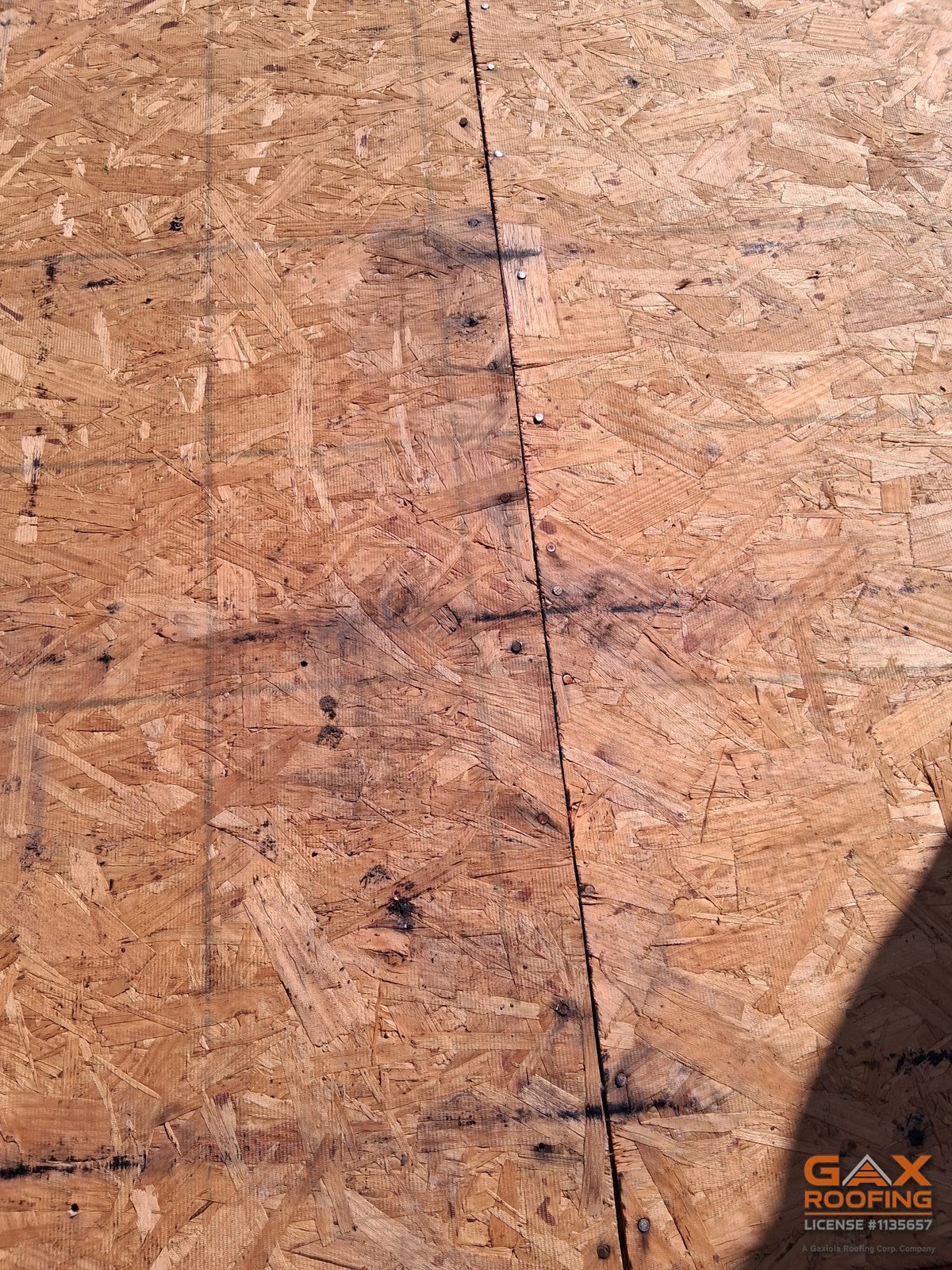
Roof Deck
The wood everything is nailed to. Nobody knows its real condition until the old roof is off, which is why our contracts put a wood allowance in writing instead of guessing.
What's under your roof →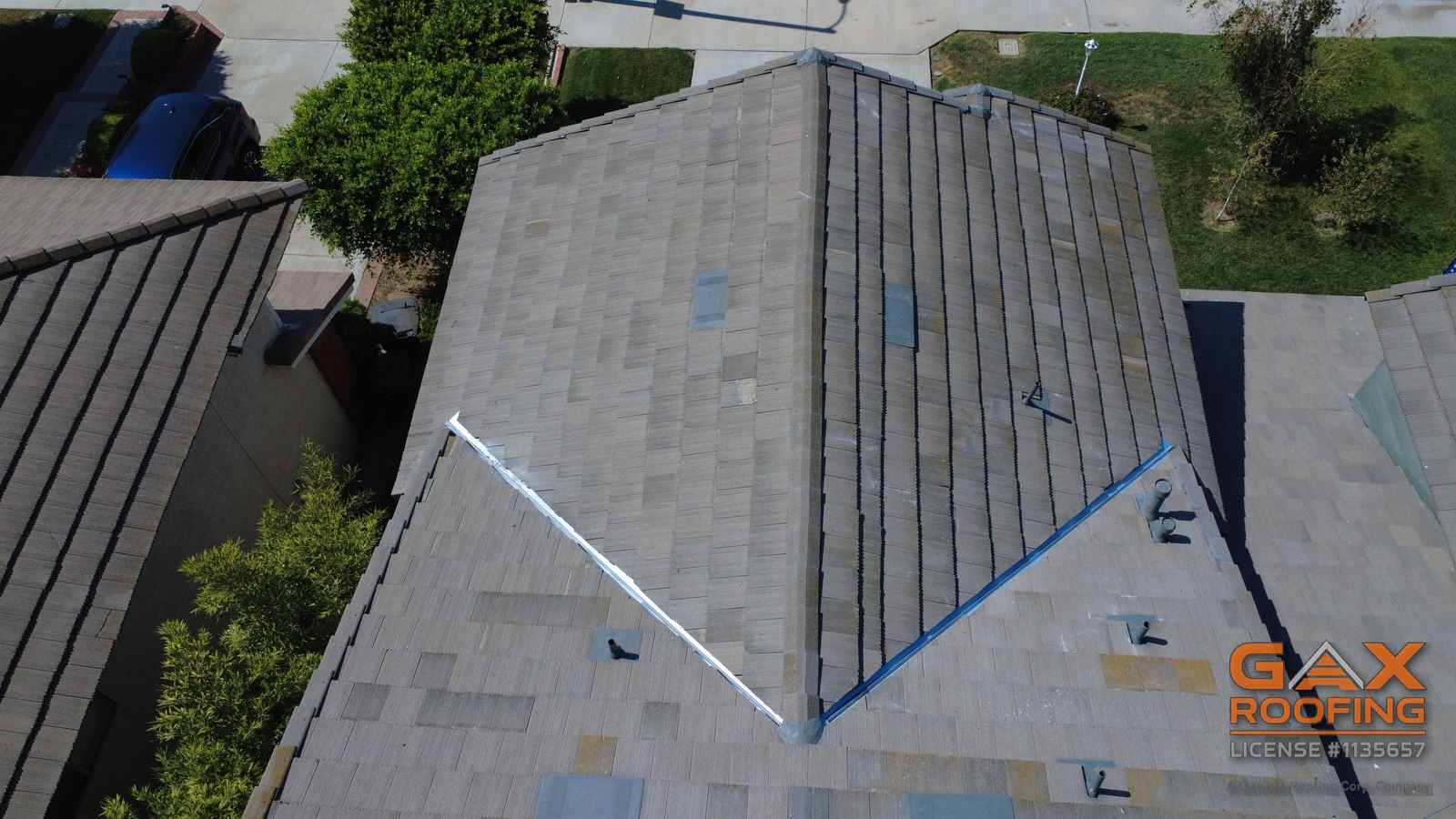
The part you see from the street is not the part that keeps the water out. Here is how a roof is actually built, what wears out first, and how we decide between a repair, a lift and relay and a replacement.
Get a Free Inspection →Shingles and tile are the armor. Under them is the waterproof layer, under that is the wood deck everything is fastened to, and at every edge, wall and pipe there is metal flashing. When a roof leaks, the cause is almost always in one of those hidden layers, not the part you can see from the driveway.
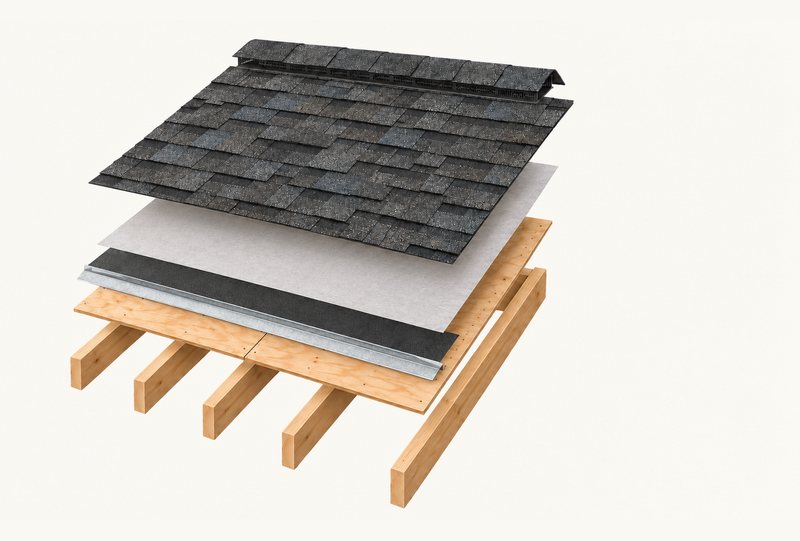
These two drawings show the layers from the framing up. The numbers match the list under each one.
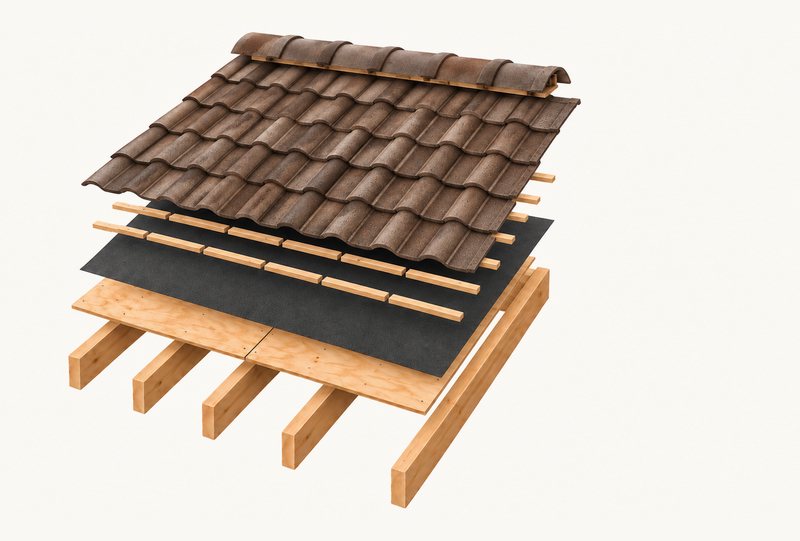
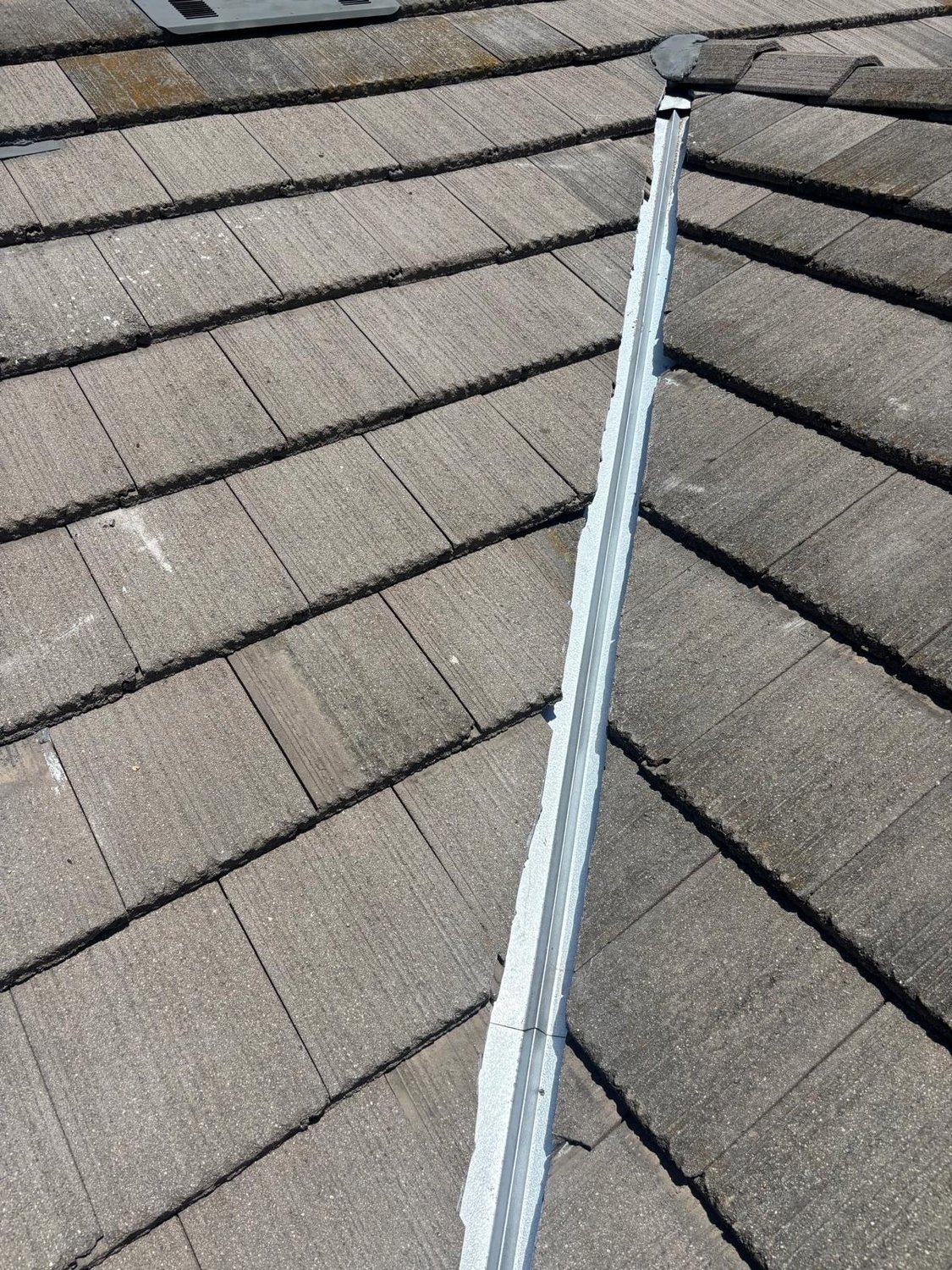
Concrete tile is tough. In my experience it usually outlasts the underlayment under it. From the street the tile can look like the day it went on, while the layer underneath has dried out, cracked or torn, and that hidden layer is the one keeping water out of the house.
So an honest tile inspection looks under the tile, not just at it. When the tile is still good and the underlayment is not, you don't need new tile. That is exactly what a lift and relay is for: your own tile comes up, new underlayment goes down, and the same tile goes back on.
If you only learn six words about your roof, learn these. They are where leaks start and where a cheap bid usually saves its money.
The wood everything is nailed to. Nobody knows its real condition until the old roof is off, which is why our contracts put a wood allowance in writing instead of guessing.
What's under your roof →The layer that actually keeps water out. A self-adhered membrane seals around the nails that go through it, a backup old felt never had.
Felt vs. modern underlayment →Metal where the roof meets a wall, a chimney or an edge. Flashing is the seal. Caulk smeared over a gap is not flashing, it's a delay.
Why caulk is not flashing →Where two slopes meet, the valley carries the water off both. It needs an open channel. Tile run too far into it turns it into a dam.
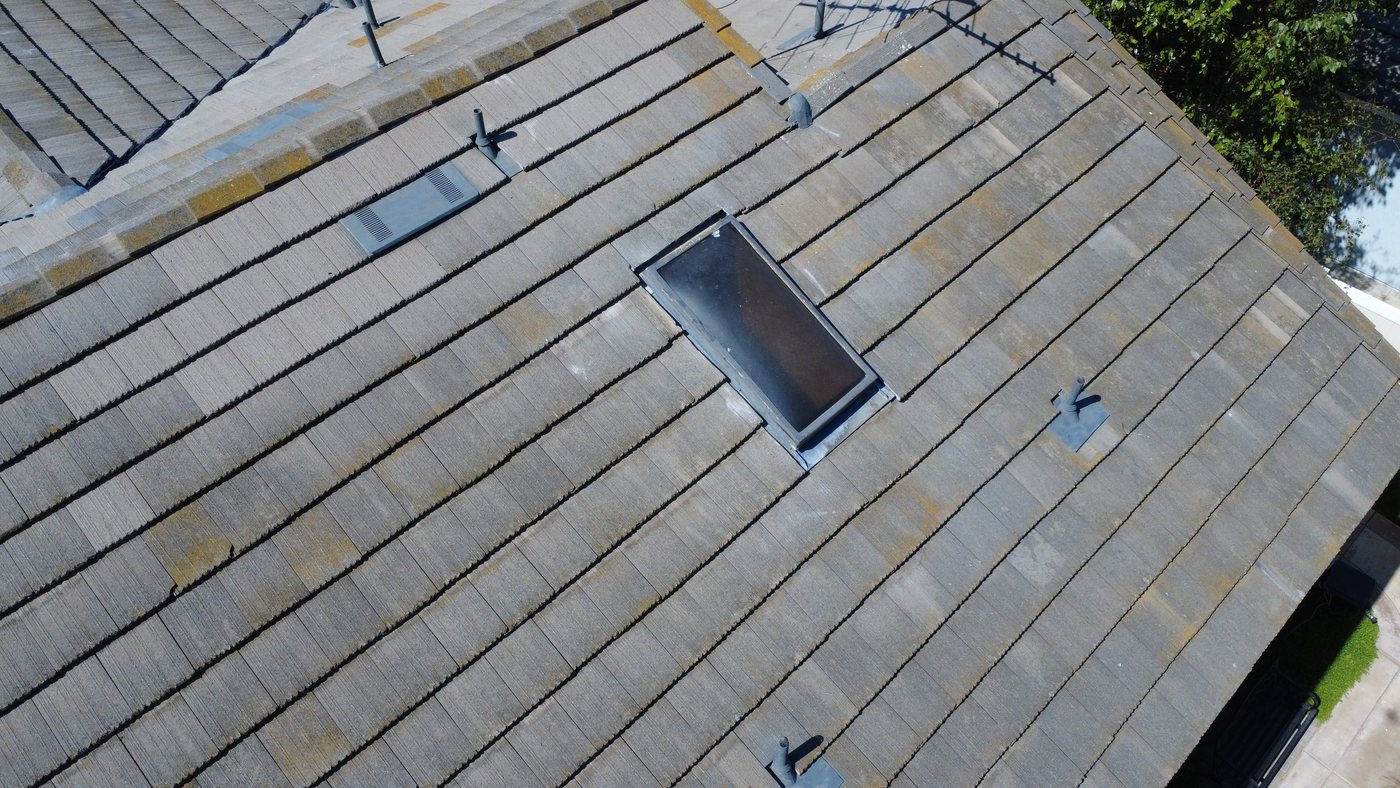
Why valleys leak →Every pipe, vent, skylight and solar mount is a hole in the roof. Each one needs its own flashing. On tile, that means a flashing at the tile and another at the deck.
Solar mounts and your roof →Hot attic air needs a way in low, at the eaves, and a way out high, at a ridge vent or low-profile vents. Without it, the attic bakes the roof from below and the heat comes back into the house.
The attic that hit 157 degrees →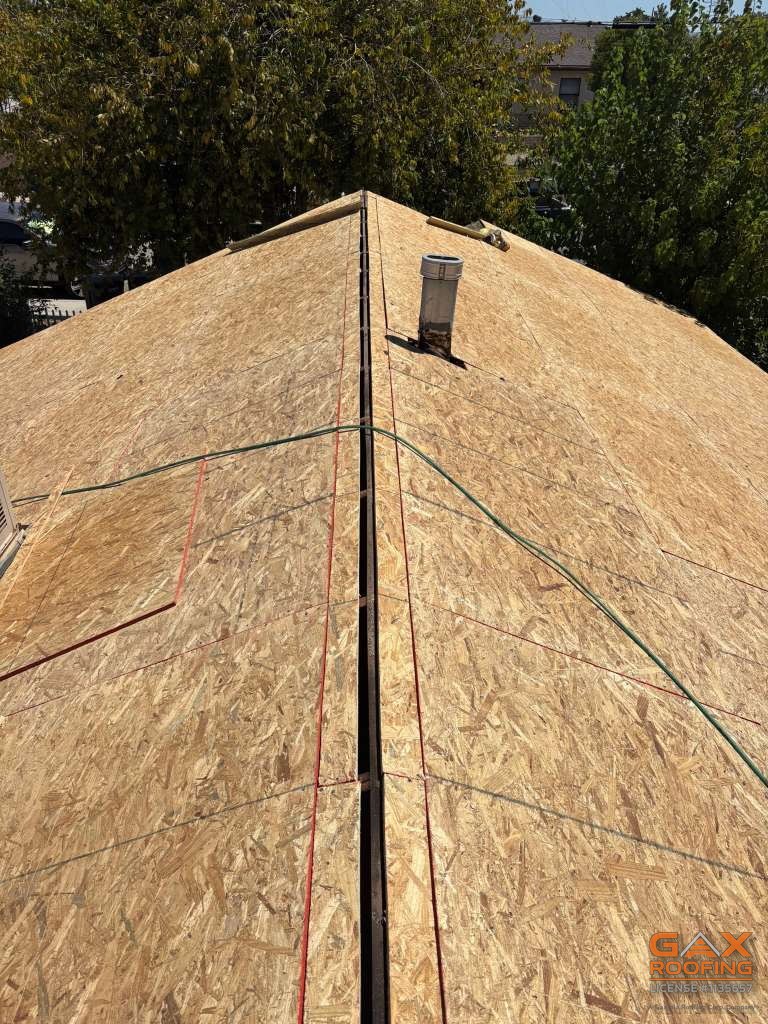
Roof shapes at a glance. Shape describes the roof's form, not the material covering it.
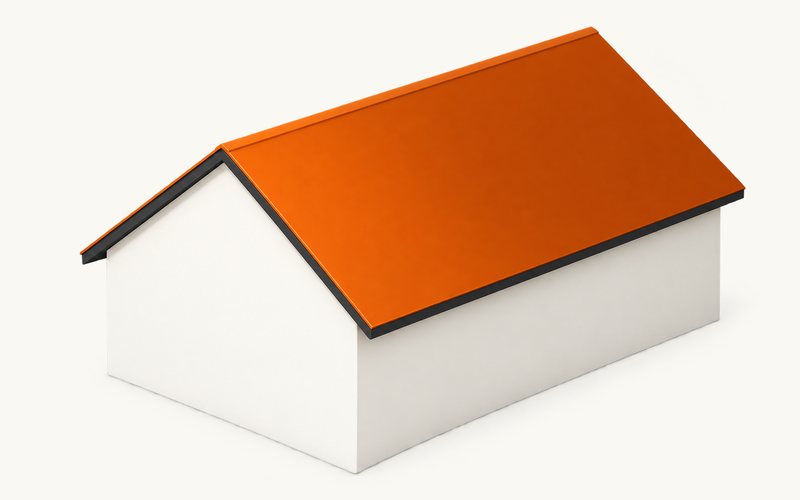
Two sloped sides meet at a ridge above triangular end walls.
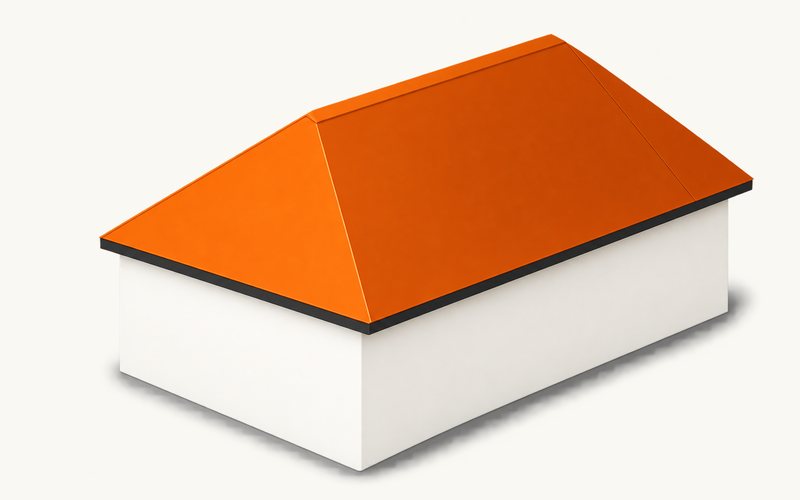
Four sloping sides meet at hips and a short ridge.
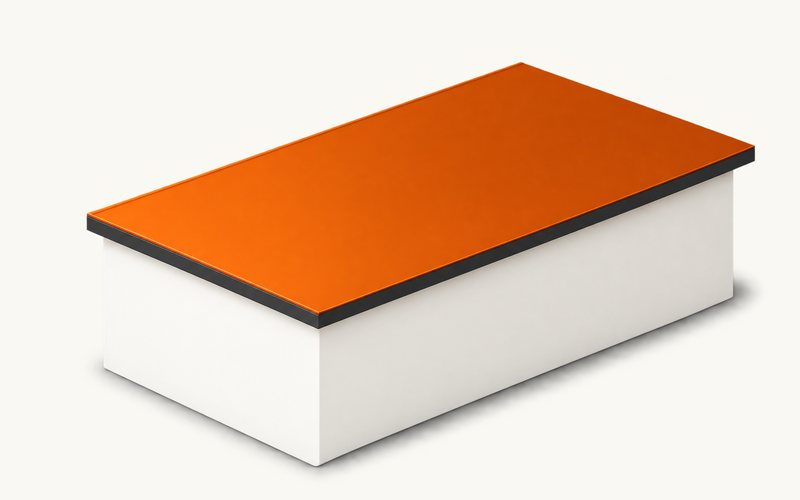
A nearly level roof surface with a slight slope for drainage.
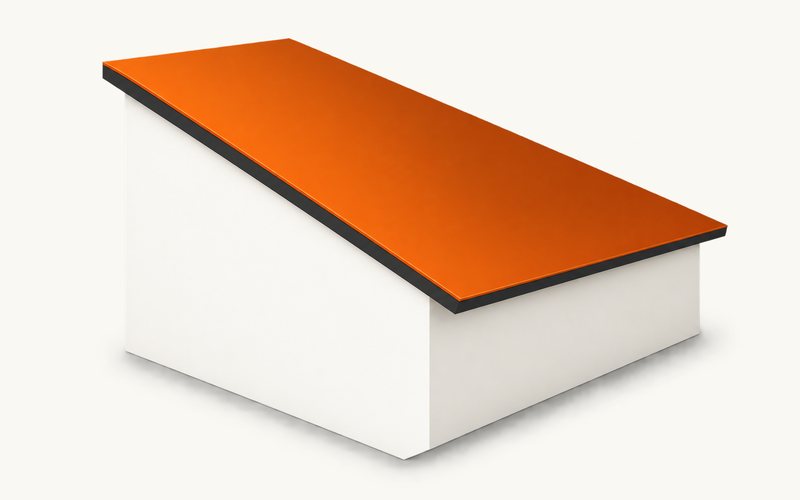
One continuous roof plane slopes from a higher wall to a lower wall.
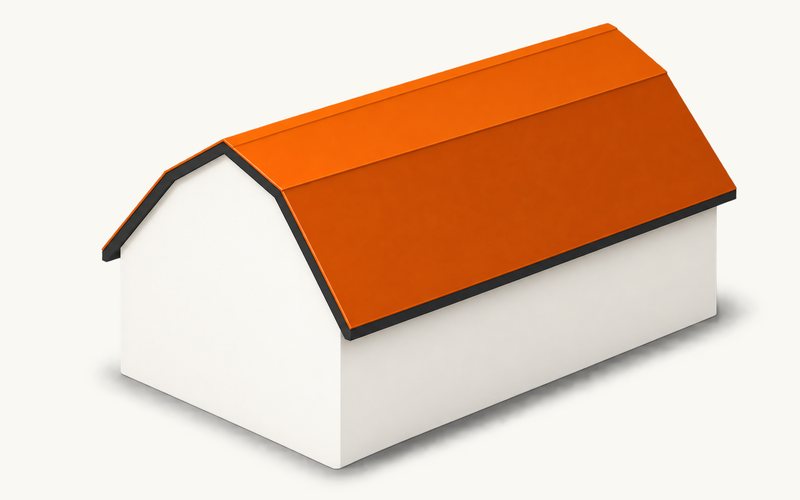
Two roof sides each change pitch, with vertical gable ends.
Illustrations use GAX brand colors to highlight shape. They are not product color samples or construction details.
None of these alone tells you what a roof needs. They tell you it's time for someone to get up there and look.
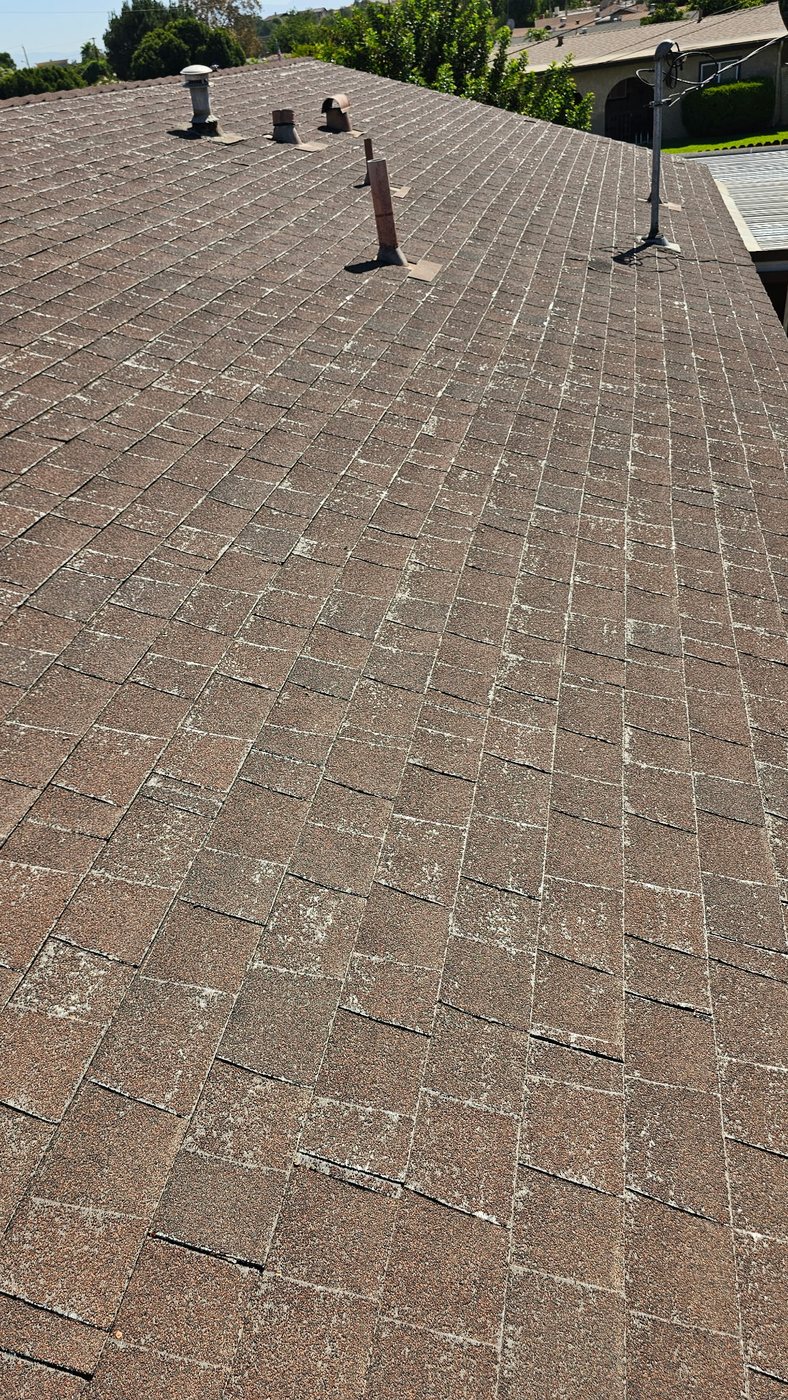
When the granules wear off, the shingle looks shiny and the fiberglass mat shows through. In my experience, that roof is near the end of its life.
A few cracked tiles can be swapped. A lot of them, or tile sliding out of line, is a reason to look at what's underneath.
How long tile roofs last →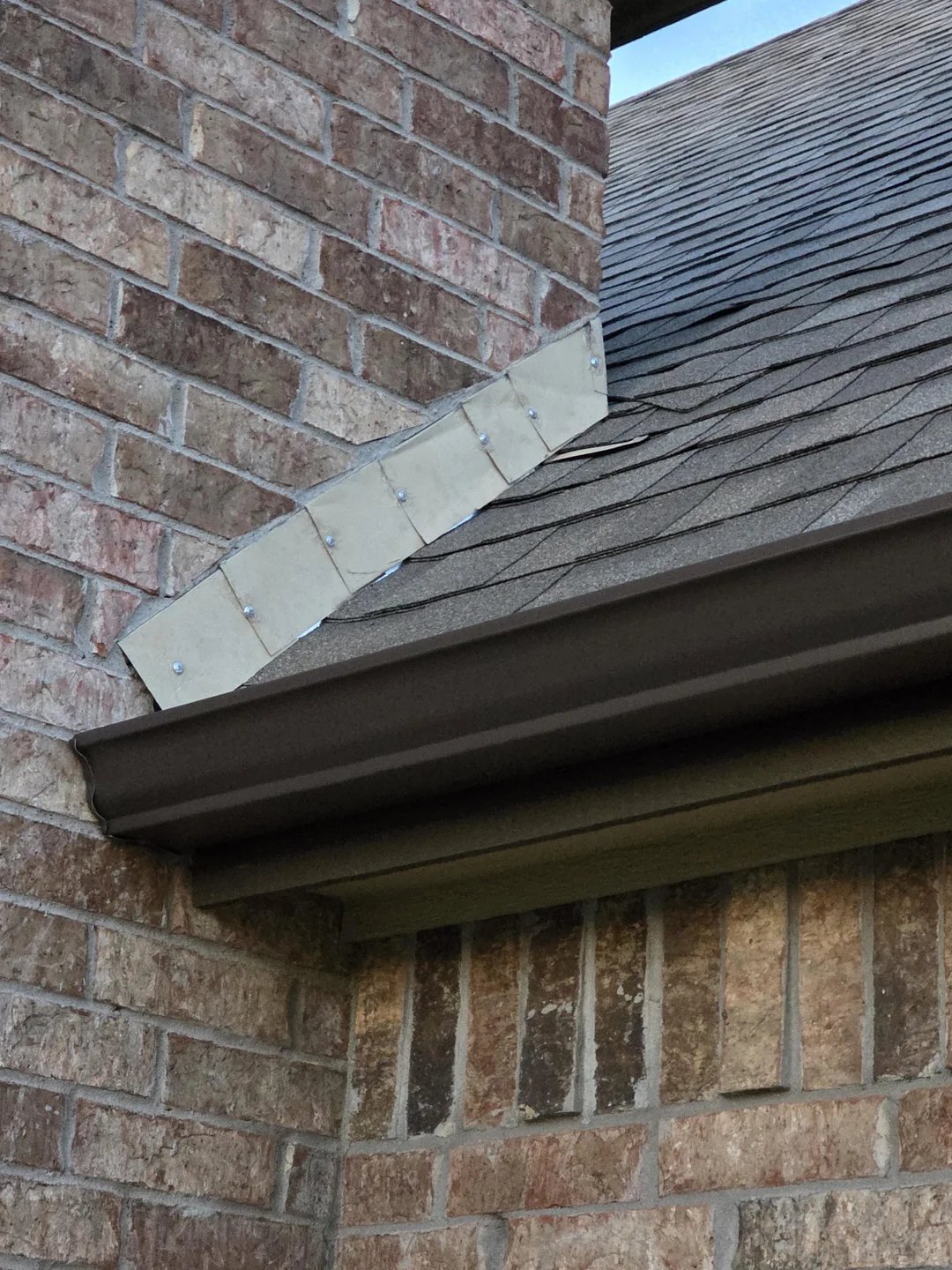
Nail heads through the face of the metal and caulk where metal should be lapped are shortcuts that leak later.
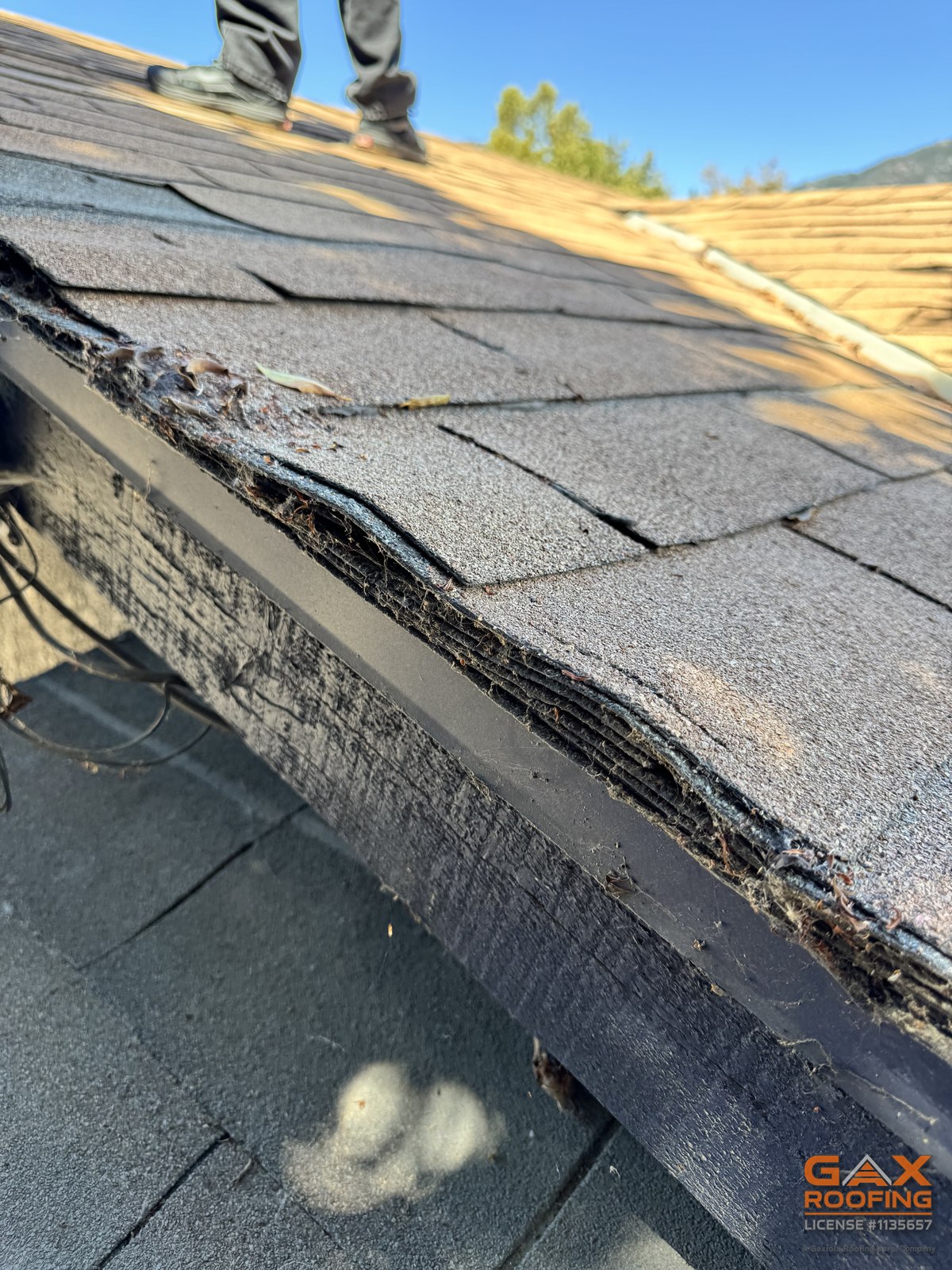
More than one layer of shingles hides the deck and adds weight. On every shingle job we do, all of it comes off. We'll look at yours and tell you how many are up there.
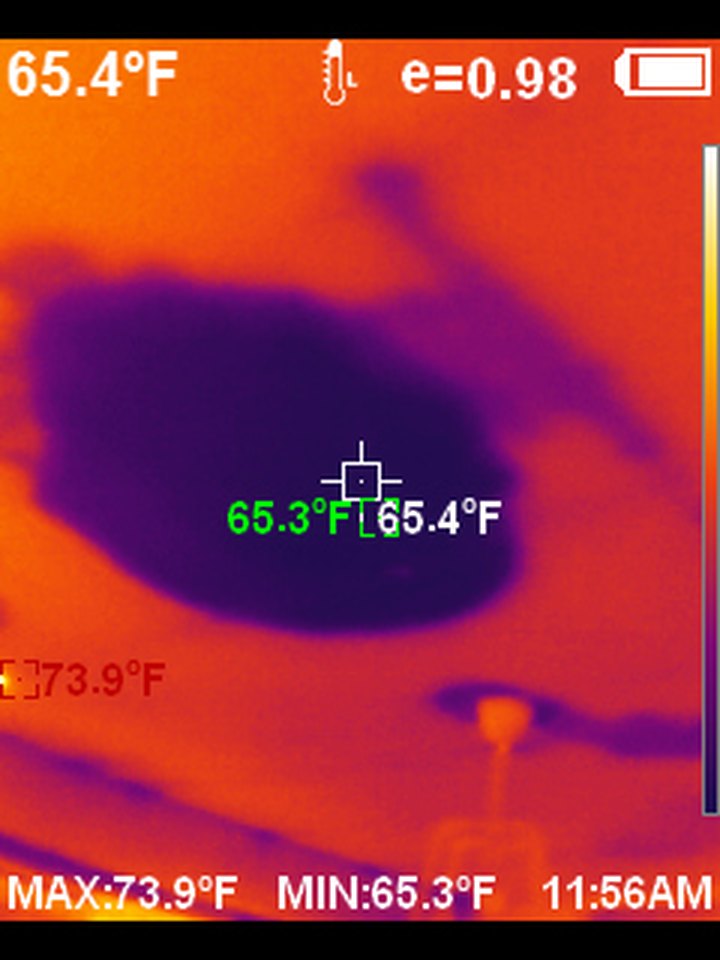
A thermal camera can show a cold, wet spot in a ceiling. The attic confirms it. The stain is rarely right under the leak.
One patch, then a new leak somewhere else, usually means the underlayment is done, not that you've had bad luck.
Why the leak came back →We decide on the roof, not over the phone, and not by the age of the house alone. Here is what usually points each way.
A few shingles off after wind, one failed pipe boot, flashing pulled away from a chimney, on a roof that is otherwise sound.
Roof repairs →Your own tile comes up, new underlayment goes down, the same tile goes back on. You keep the look and fix what failed.
Tile lift and relay →Shingles past their life, or leaks that keep showing up in new places. On shingles that is a full tear-off. On tile, a tile replacement with new tile.
Roof replacement →Flat sections have their own systems (most get torch-down modified bitumen; TPO, PVC or EPDM when a roof calls for one). See flat roofs, and if you're weighing the options, repair vs. replacement walks through how we think it through.
If you want a straight answer about your roof, we'll come out, get up there and show you what we find, with photos you keep. Asphalt shingle roofs, tile replacement with new tile, tile lift and relay, and flat roofs, across the Inland Empire.
Get a Free Inspection →Pages checked October 5, 2026. Everything else on this page comes from what we see on our own jobs.