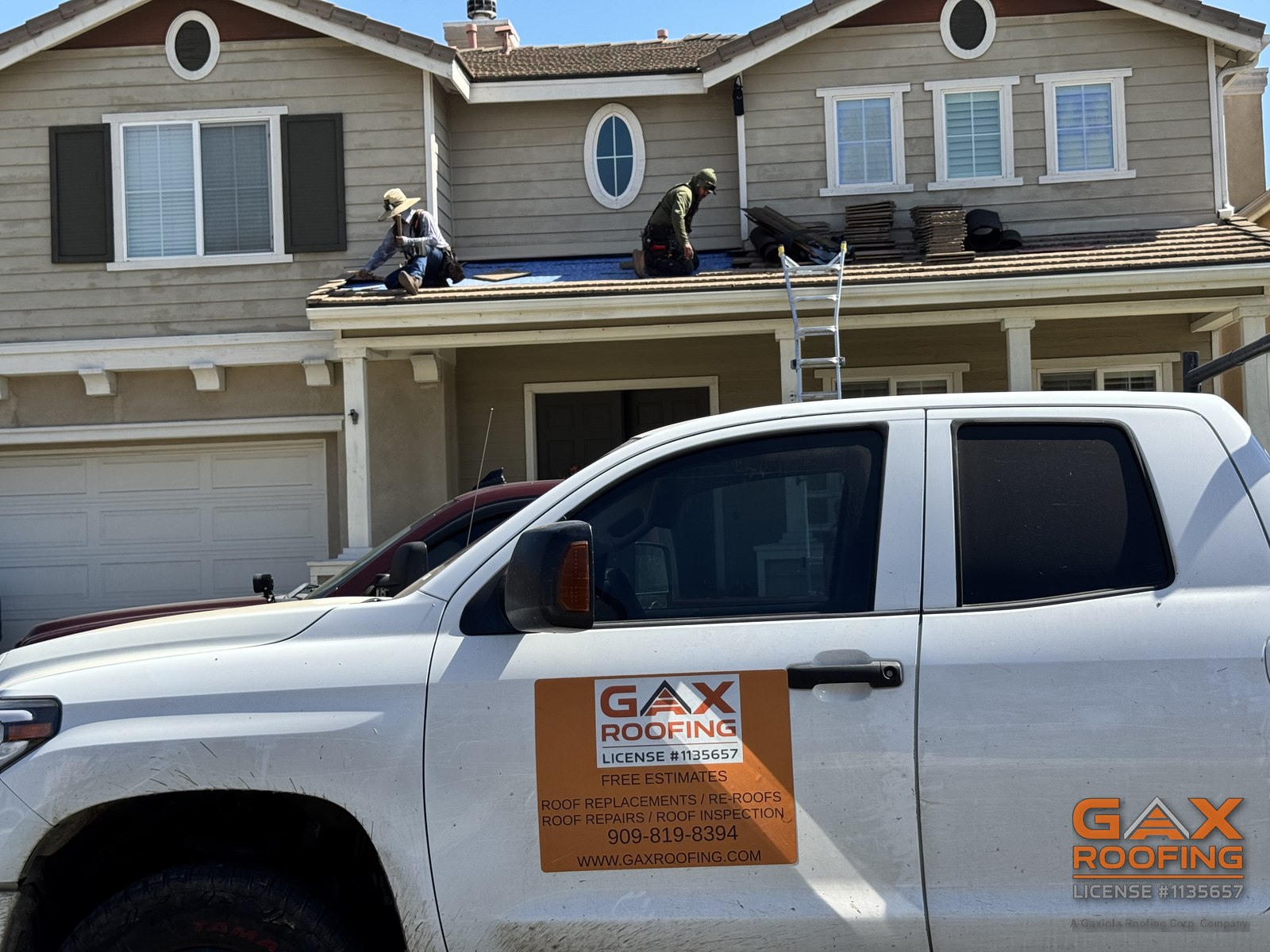
The Homeowner Shows Us the Stain.
The Drone Shows Us the Roof.
How we find a leak before anyone lifts a tile: listen to the person who lives there, fly the roof, then match the two. Here is how that went on a Huntington Beach house that leaked at the front door every time it rained.

Start Inside, With the Person Who Lives There
Before I look at a roof, I want to hear about the leak from the person who lives under it. Where it shows up. Whether it is every rain or only the big ones. How long it has been going on. In my experience the homeowner knows more about that leak than I do when I pull up, and the fastest way to find water is to listen first.
In Huntington Beach it was water at the front door, every rain. That is two clues, not one. Every rain means it is not a wind-driven fluke. And the front door sits under the patio roof, which sits under the second story. So before I flew anything, I already had a suspect: the lower roof, somewhere along the wall.
Then Fly the Roof
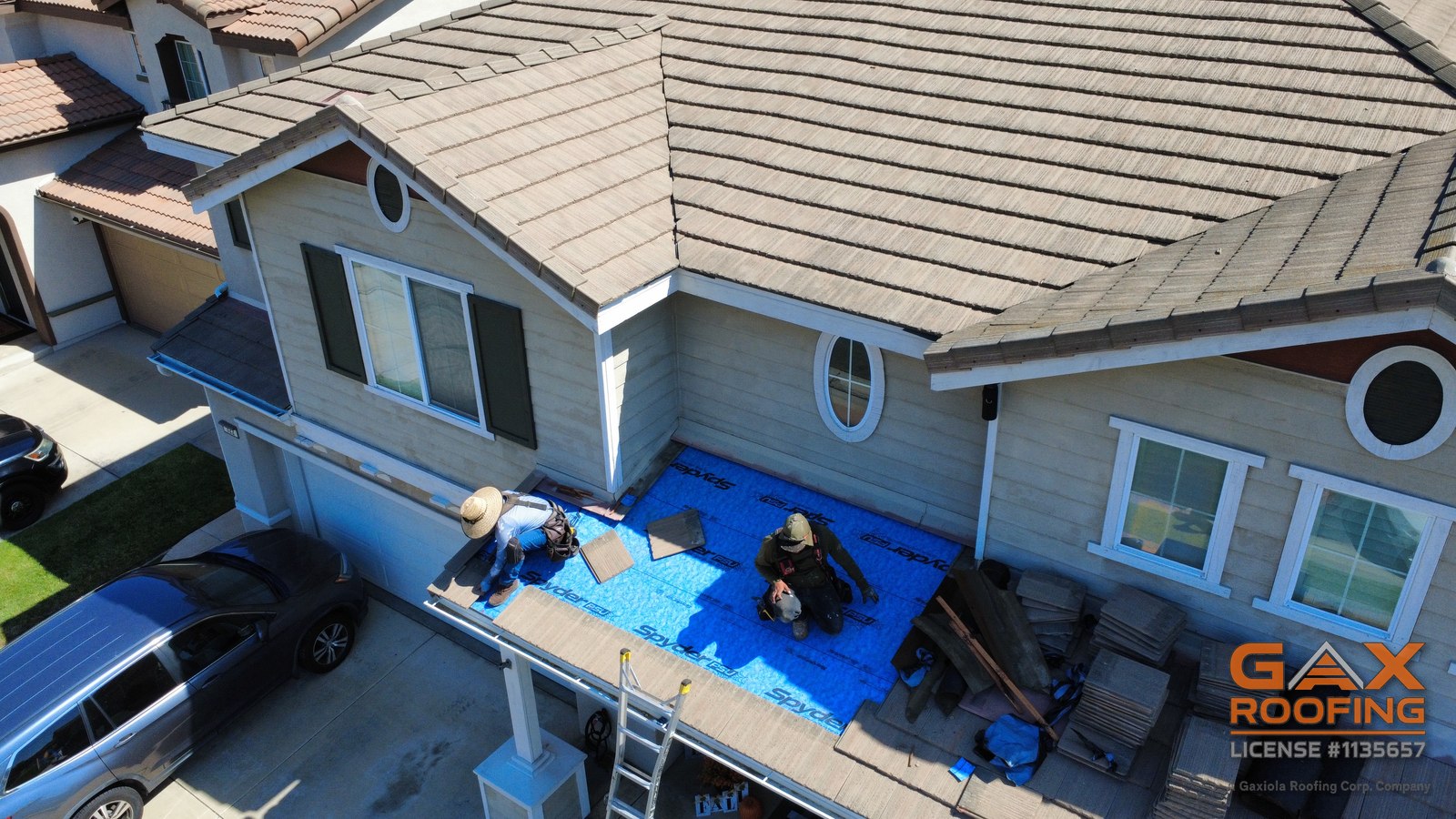
Then we put the drone up. Not for the photos, although you get those. For the geometry. From above you can see the whole roof at once: which planes drain where, where an upper roof dumps onto a lower one, where a wall rises out of a roof and the flashing has to carry the water. On a two-story house that is the part you cannot see from the driveway, and in my experience it is usually where the trouble is.
There is a second reason I fly a tile roof before I walk it. Every step on a tile roof is a chance to break a tile, and I would rather know exactly where I am putting my feet before I put them anywhere.
The drone showed a simple picture. The upper roof sheds straight onto the patio roof. Water lands on the tile below and splashes. Some goes forward to the gutter. Some goes backward, toward the wall. Back there is the roof-to-wall flashing, and that is the strip that has to hold. Nothing on that roof was broken. The tile was fine. The water was not coming down through the roof. It was bouncing up under it.
The Drone Does Not Get the Last Word
Here is where I want to be careful, because I have written before that a satellite or a drone cannot tell you what is under the tile. That is still true. The drone gave me a theory and a place to look. It did not confirm anything. The confirmation is what you find when you get up there and lift something: the tile comes up along that wall, and what is underneath tells you whether the water has been there. On this house the leak inside lined up with the wall line above it, the drone showed the splash landing on that exact strip, and the section came up and got new waterproofing from the wall to the eave. Instruments point. People confirm. Same rule as the thermal camera.
The reason this matters is what happens when a roofer skips the first two steps. Walk the roof looking for broken tile, find none, and the easy conclusion is a bead of sealant on the flashing and a handshake. Caulk is not flashing, and a patch on a joint that takes a second story's worth of splash every rain is a countdown, not a repair.
What the Fix Was
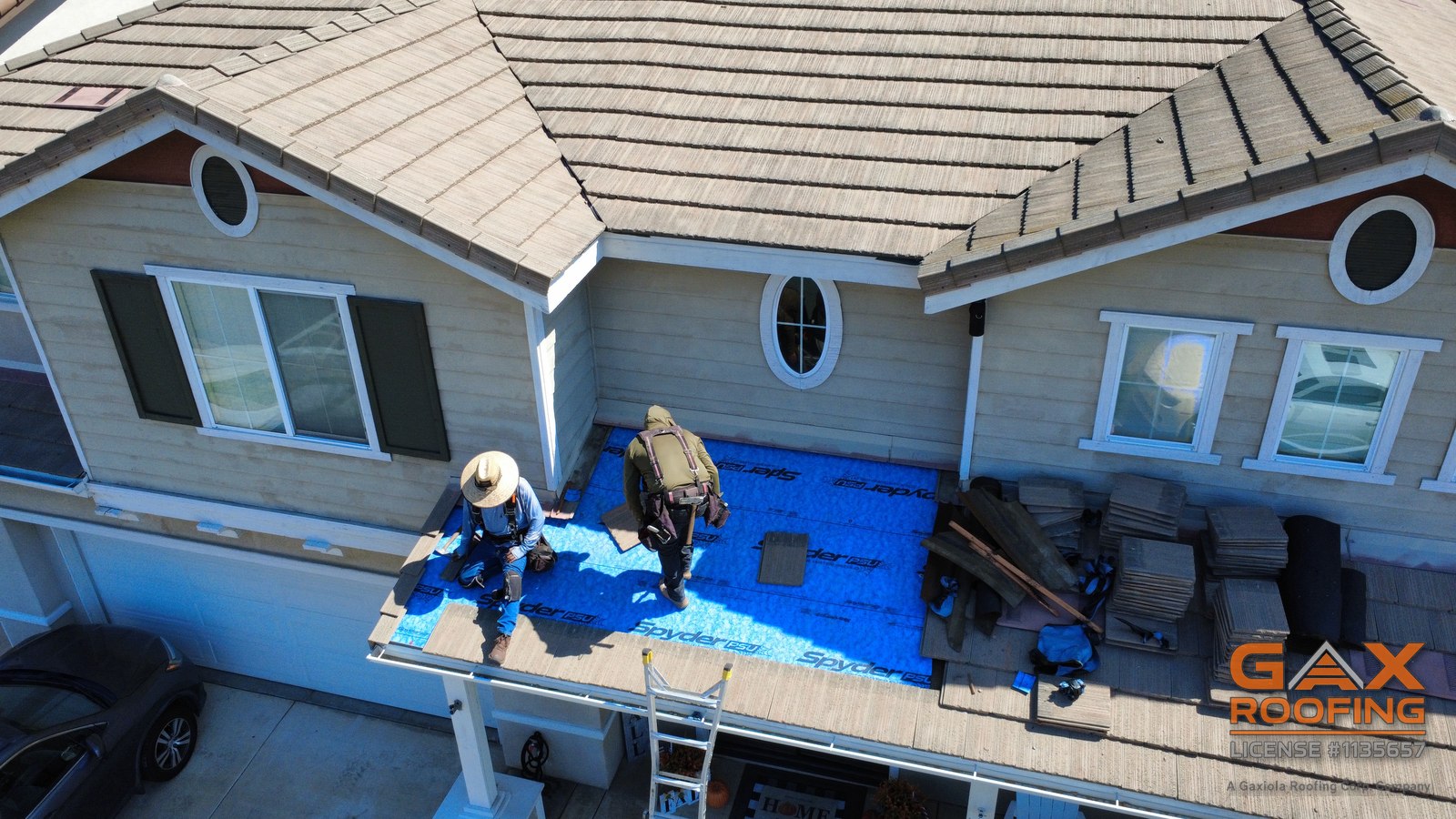
The section, not the spot. Tile up and stacked, deck cleared, peel and stick underlayment across the whole patio section, same tile back down. I wrote that job up on its own: the leak at the front door.
What to Tell Your Roofer
If you have a leak you cannot place, this is the part you control. Before anyone climbs a ladder, have these ready:
- Exactly where the water shows up inside, and a photo of it wet if you can get one.
- Whether it happens every rain or only in a hard, windy one.
- How long it has been going on, and whether anyone has patched it before.
- Whether there is a roof above the spot: a second story, a dormer, a wall that rises out of the roof.
Then ask the roofer how they found it, not just what they plan to do. If the answer is "I walked it and did not see anything broken," you have a roofer who looked for a spot when your leak is a path.
A leak is a path, not a spot. Find the path first.
Have a Leak You Cannot Place?
Free inspection. We listen first, fly your roof, and show you the drone photos of where the water is going. You keep the photos either way.
(909) 819-8394Book an Inspection