Why Roof Valleys Leak: The Crowding Problem Most People Never See
A valley is where two roof planes meet and all the water funnels down. It is the hardest-working part of your roof, and one of the most common places I see done wrong.

A valley is where two roof planes meet and all the water funnels down. It is the hardest-working part of your roof, and one of the most common places I see done wrong.
Every roof has a few spots that do most of the work when it rains. The valley is the biggest one. It is the channel where two slopes come together, and all the water off both planes pours into it and runs down to the gutter. Get the valley right and the roof sheds water for decades. Get it wrong and it is a leak waiting for the first hard storm.
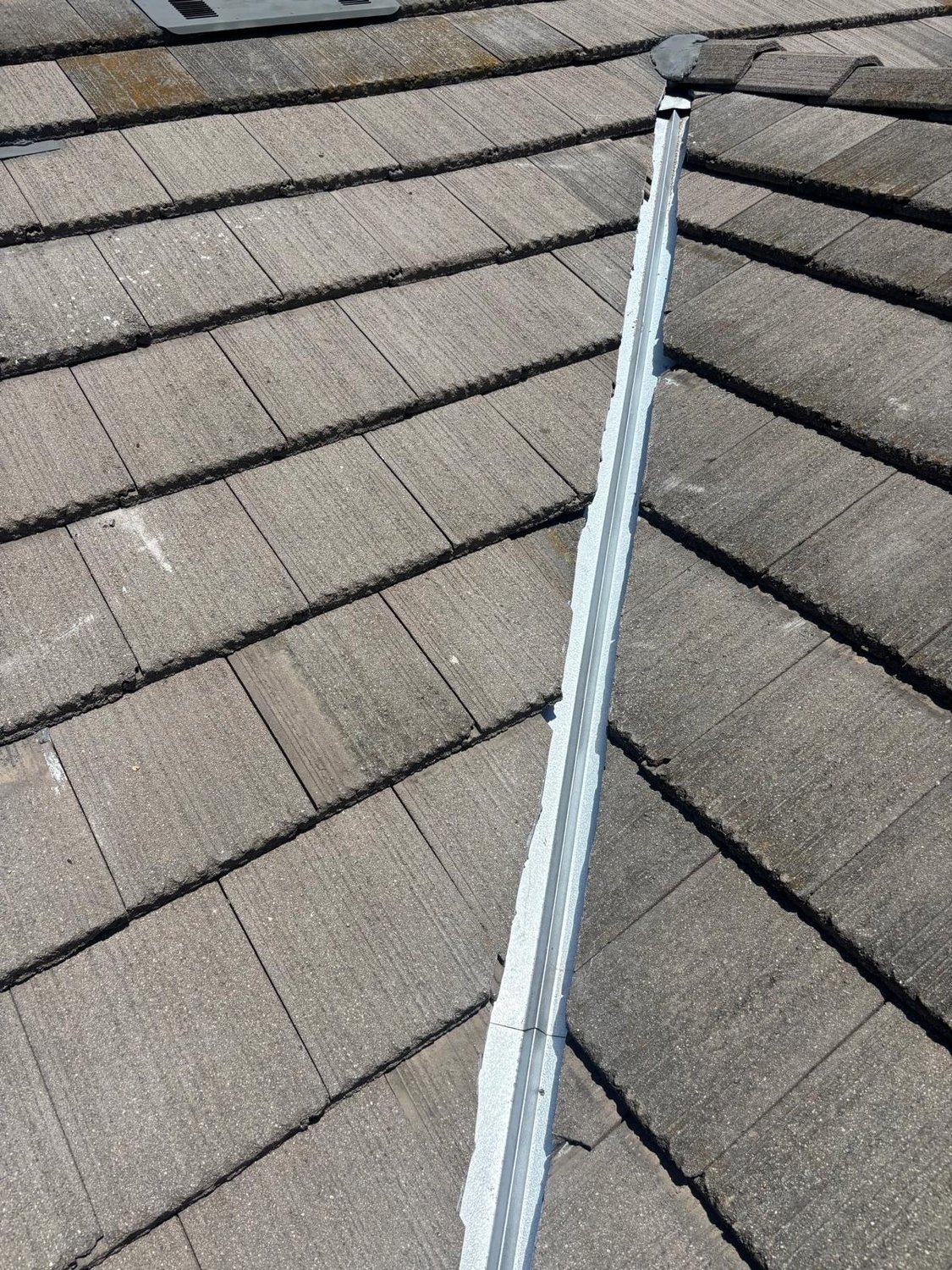
Here is the mistake I see over and over on tile roofs: the tiles get run too far into the valley, until they are almost crashing into each other from both sides. It looks fine from the ground. Up close, that crowded valley is a dam.
When the tiles pinch the waterway shut, water cannot move the way it needs to. And it gets worse with time, because a tight valley catches everything: leaves, needles, dirt, roofing grit. That debris packs into the choke point, the water backs up behind it, and backed-up water does what water always does. It finds the lowest gap, runs sideways under the tile, and soaks the underlayment and the deck. The leak never shows up in the valley itself. It shows up three feet away, in a bedroom ceiling, and nobody thinks to blame the valley.
A valley needs an open waterway. The metal runs up the center, usually with a raised rib down the middle so water on one side cannot wash across to the other, and the tiles get cut back and held off the channel so there is a clear, open path for water and debris to flush straight through.
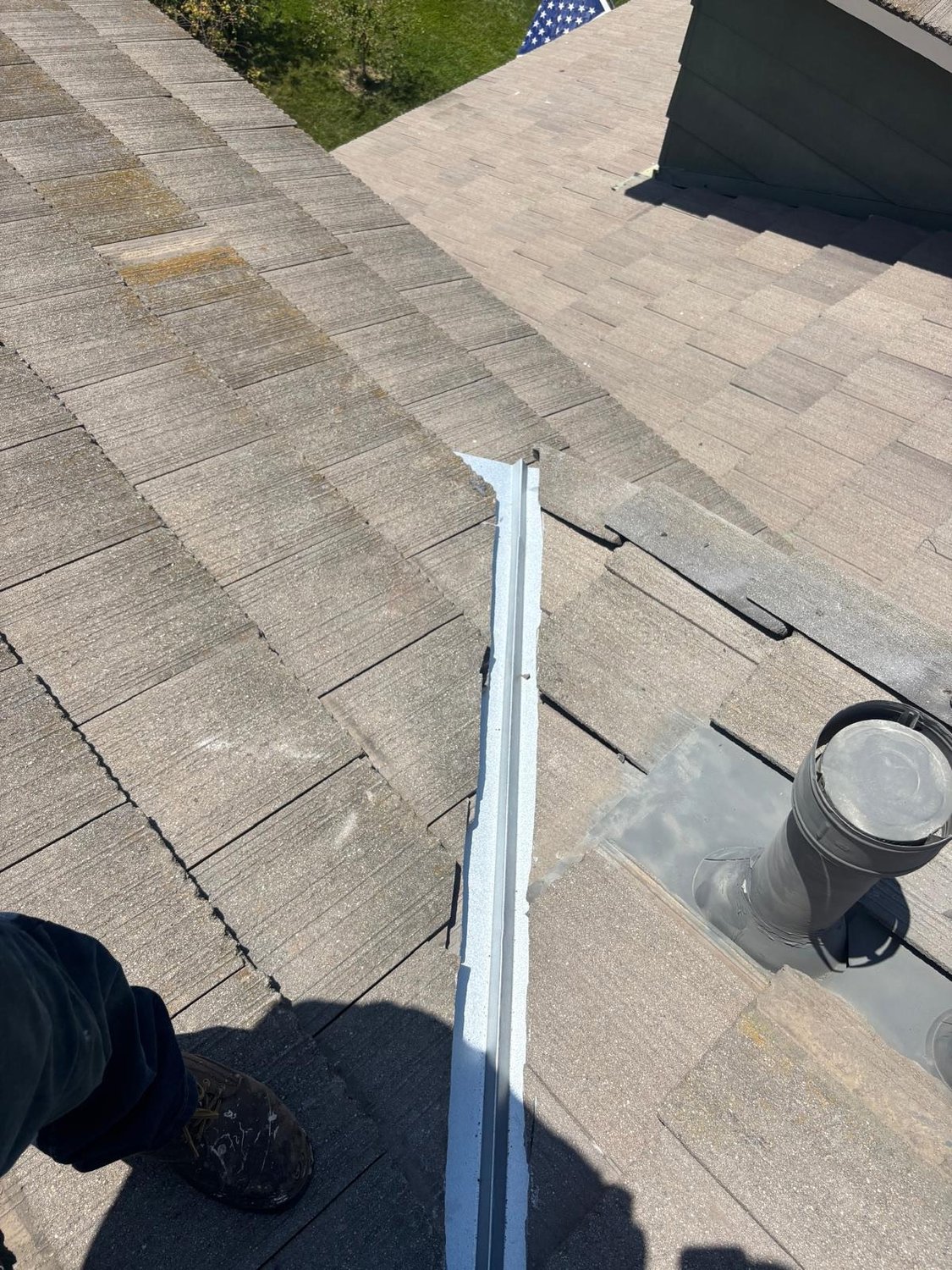
These are from a tile job we did in Yorba Linda. Look at the space on either side of the metal. That gap is not sloppiness, it is the whole point. A little rain or a lot, leaves or no leaves, the water has somewhere to go and nothing to climb over. That valley will be moving water long after the rest of us are gone.
You do not need to get on the roof. From a window or a ladder at the edge, look down a valley line. If you can see a clean channel of metal running the length of it, good. If the tiles look like they are closing in on each other, or the valley is full of leaves and packed debris, that is the crowding problem, and it is worth having someone look before the next rainy season instead of after.
The same answer I would give a family member: a crowded valley is not an emergency today. It is a leak scheduled for the next big storm. Clearing it or reworking it now is a lot cheaper than drywall, insulation, and paint later.
This is a valley repair in San Dimas. I want to walk it because the valley is the one part of the roof where a homeowner can sometimes see the problem coming, and almost nobody knows what to look for.
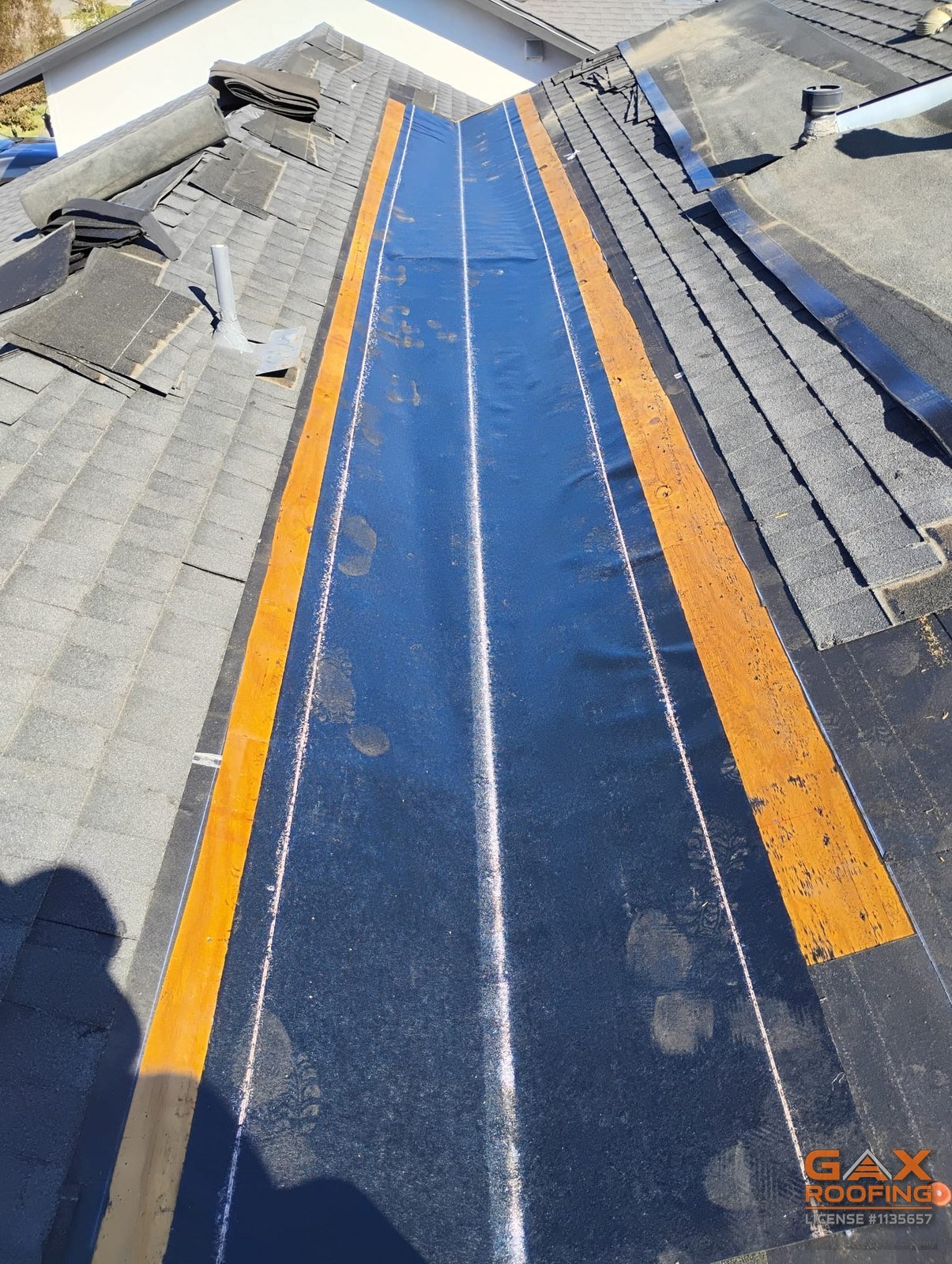
When we opened it up, the reason showed itself. This is the part I wish every homeowner could see once.
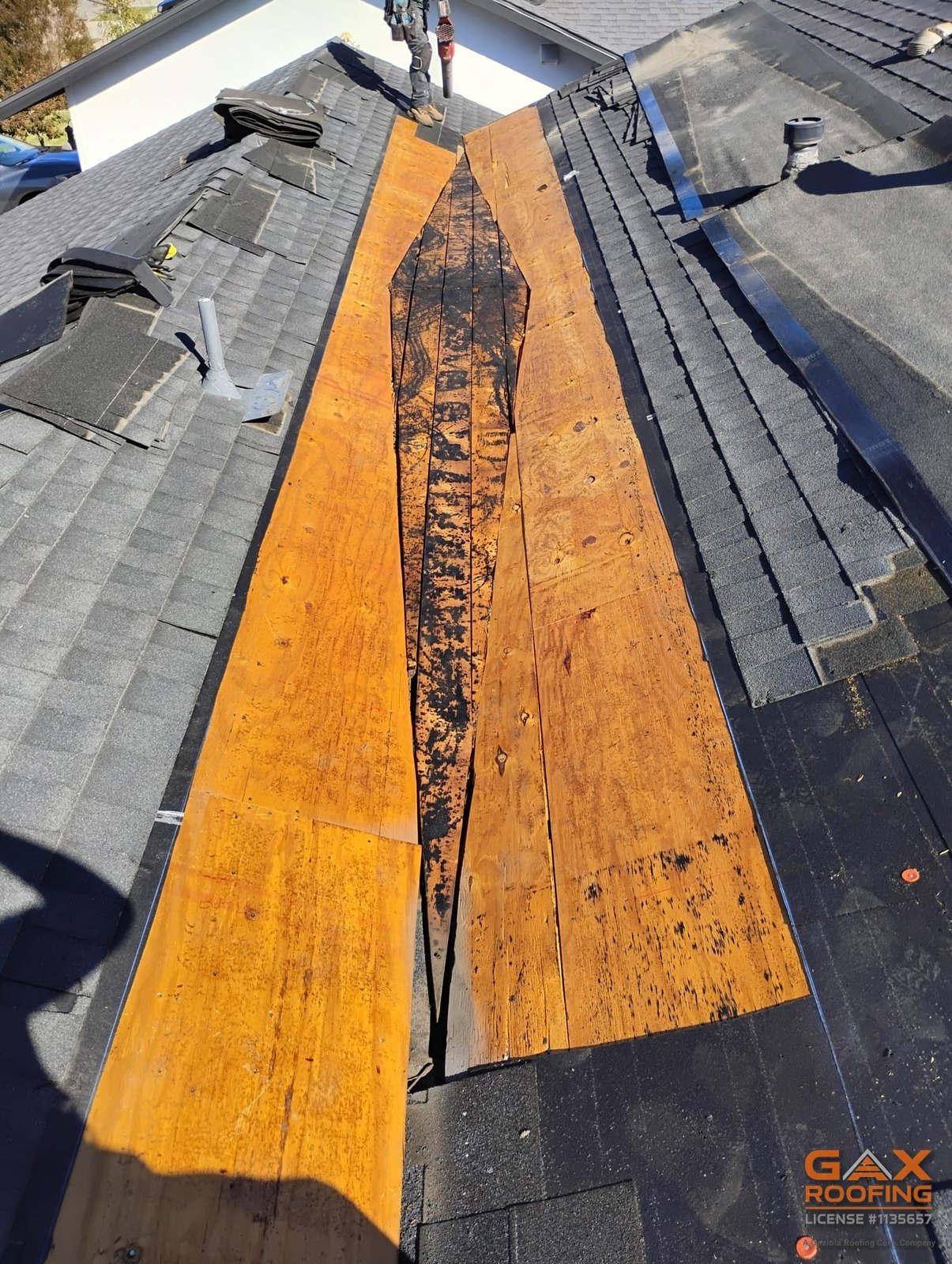
A stain like that does not happen in one storm. It is the record of water getting past the valley for a long time, a little at a time, while everything looked fine from the ground. By the time it shows up on a ceiling inside, the wood has usually been wet on and off for years.
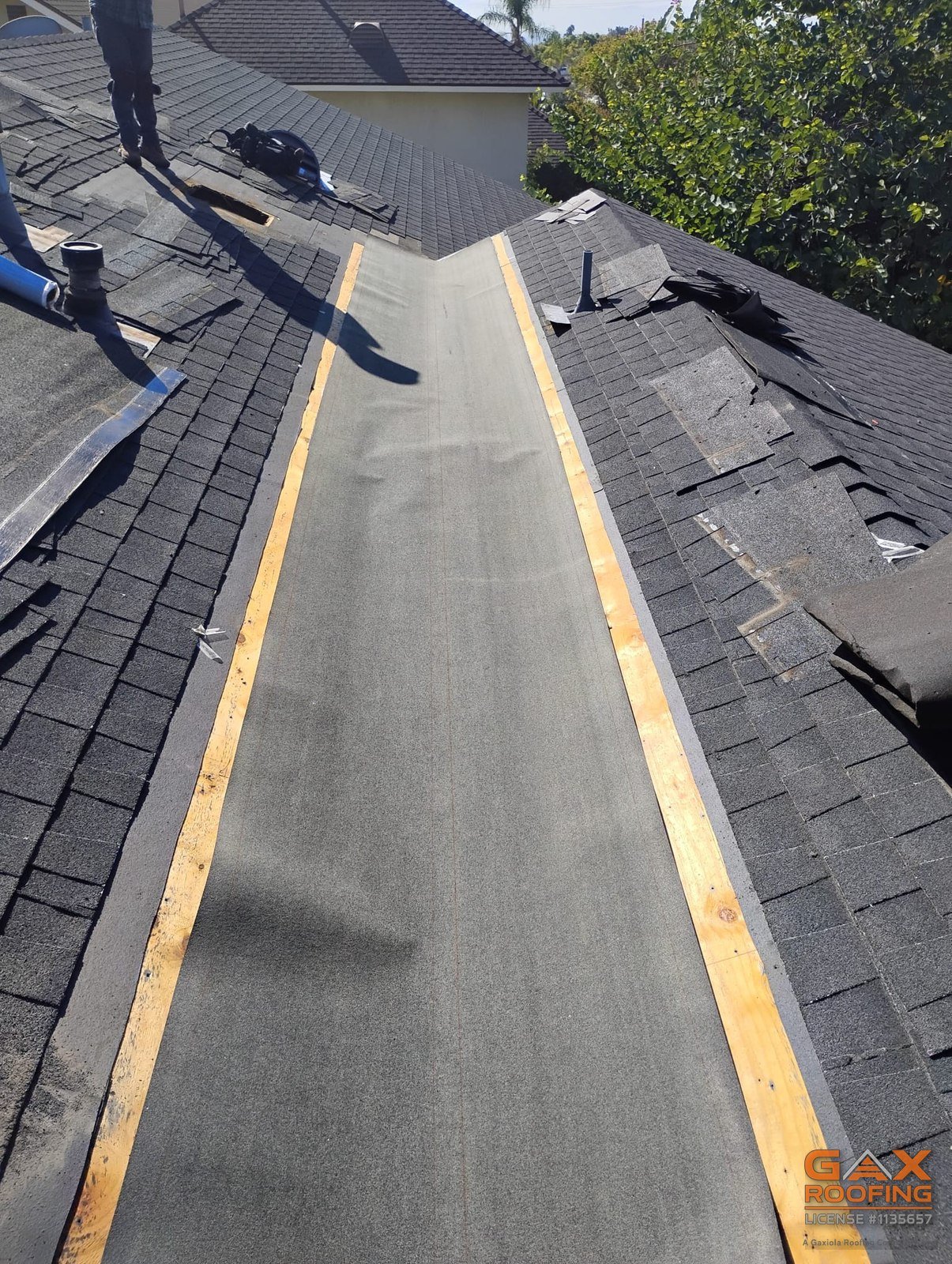
The fix is not complicated. It is just work, and it has to be done at the source instead of smeared over the top. Anybody who offers to seal a valley from above with a bucket of goo is treating a symptom.
We will walk the roof, check every valley and flashing point, and tell you straight whether it needs work or it is fine for now. Free, no pressure, no obligation.
(909) 819-8394