What's Actually Under Your Roof, And Why It Matters More Than the Shingles
You've looked at the color of your shingles from the street your whole life. But the deck, the underlayment, and the ventilation underneath are what actually protect your home, and they're where the real difference between roofing bids lives.
Arthur G.
Owner, GAX Roofing · C39 Licensed Contractor
"Shingles are the jacket. The waterproofing is everything you don't see. Guess which one matters."
I Show Every Homeowner How a Roof Is Built
When I sit down with a homeowner, I bring material samples and a short presentation, because most people have never been shown how a roof is actually put together. They've looked at the color of the shingles from the street their whole life. They've never seen what's holding the whole system together underneath. That's not their fault, nobody ever showed them. So that's where I start.
Here's the thing most people don't realize: a lot of the homes I walk are still on their original roof, or something 15-plus years old. That means there's a good chance they've never had a modern synthetic or peel-and-stick underlayment up there, just old felt paper. When the roof is dry enough, I'll lift a few shingles and take a picture of what's underneath so the homeowner can see it with their own eyes. It's usually the first time they've ever looked at it.
The Felt Problem
Felt paper used to be the best thing since sliced bread. For a long time it was just the way you did it. But let me put it in terms anyone can picture.
Take a paper towel and get it wet. It puffs up and swells with the water. Then it dries out and goes brittle. Now do that over and over, wet, dry, wet, dry, season after season. Eventually that paper towel falls apart in your hands. That's exactly what old felt does on your roof. In fact, 30-lb felt will tear if you just pull on it with your bare hands.
"So my question to a homeowner is simple: why would you put that back on your roof?"
The Deck You Can't See
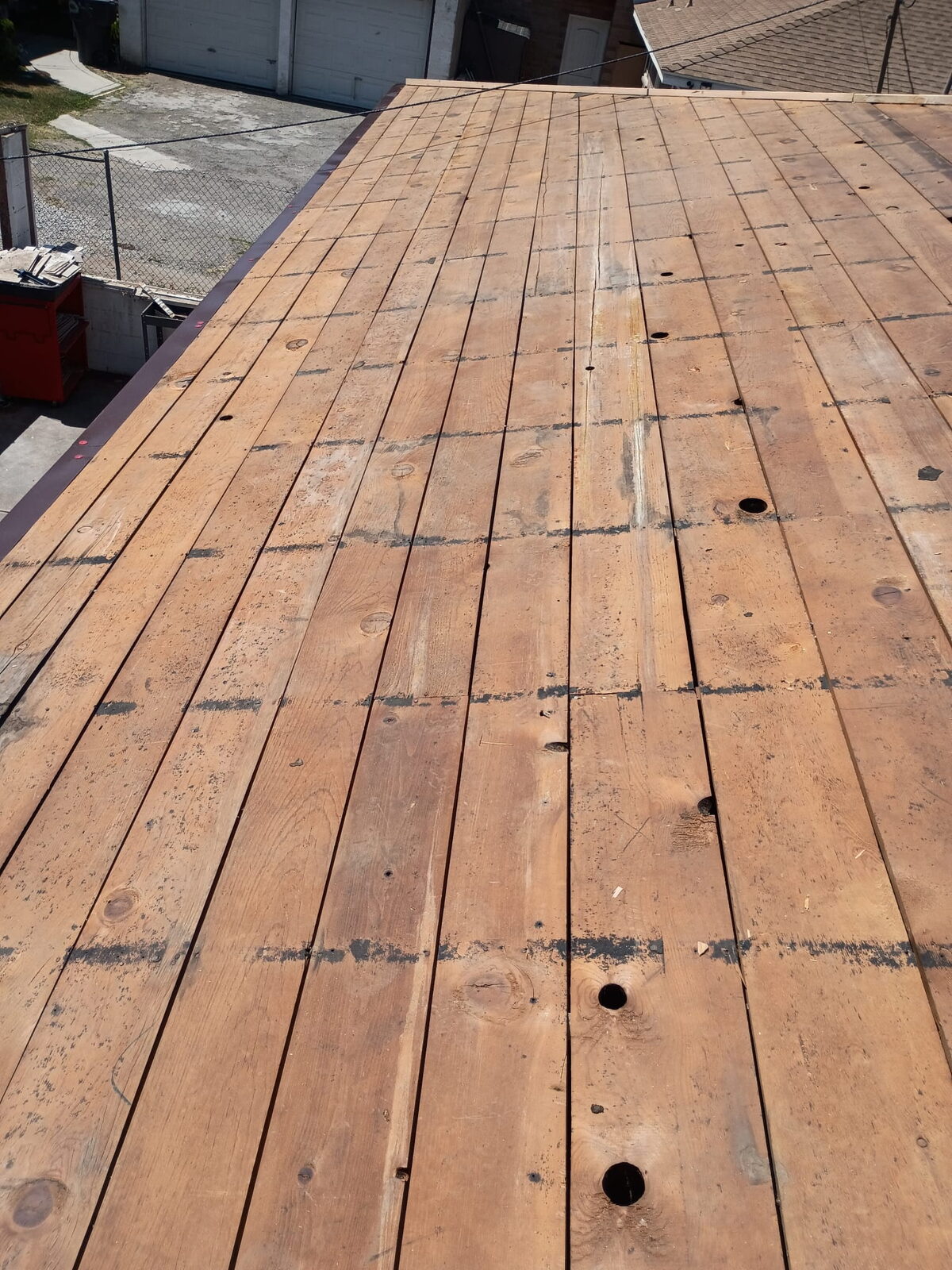
Under the underlayment is the roof deck, the wood sheathing that everything else is nailed to. And here's the honest truth: we don't actually know the condition of that deck until we tear off and expose it.
People will tell me their wood is fine because it looks okay from inside the attic. But the attic side and the weather side are two different worlds. Wood can look perfectly solid from below and be completely shot on the surface, where the sun and water have been beating on it for years.
That's why on every replacement we include a 10% allowance on OSB to replace damaged sheathing, because in my experience there is almost always some damaged wood on a roof that is twenty-plus years old. Not every roof, but enough of them that I'd rather plan for it up front, in writing, and fix it right than pretend it isn't there and roof over rot.
Fresh decking going down during a tear-off, you only find out what the wood is really like once the old roof is off.
What We Actually Put Down
Once the deck is solid, the underlayment is what protects your home. And not all underlayment is the same.
Modern synthetics and peel-and-sticks have far better tensile strength than felt, they don't tear, they don't get brittle, they hold up. On a shingle roof, I install a quality synthetic underlayment across the deck, the exact one gets matched to whichever shingle system you choose, with peel-and-stick ice & water protection in the sensitive areas where leaks actually start.
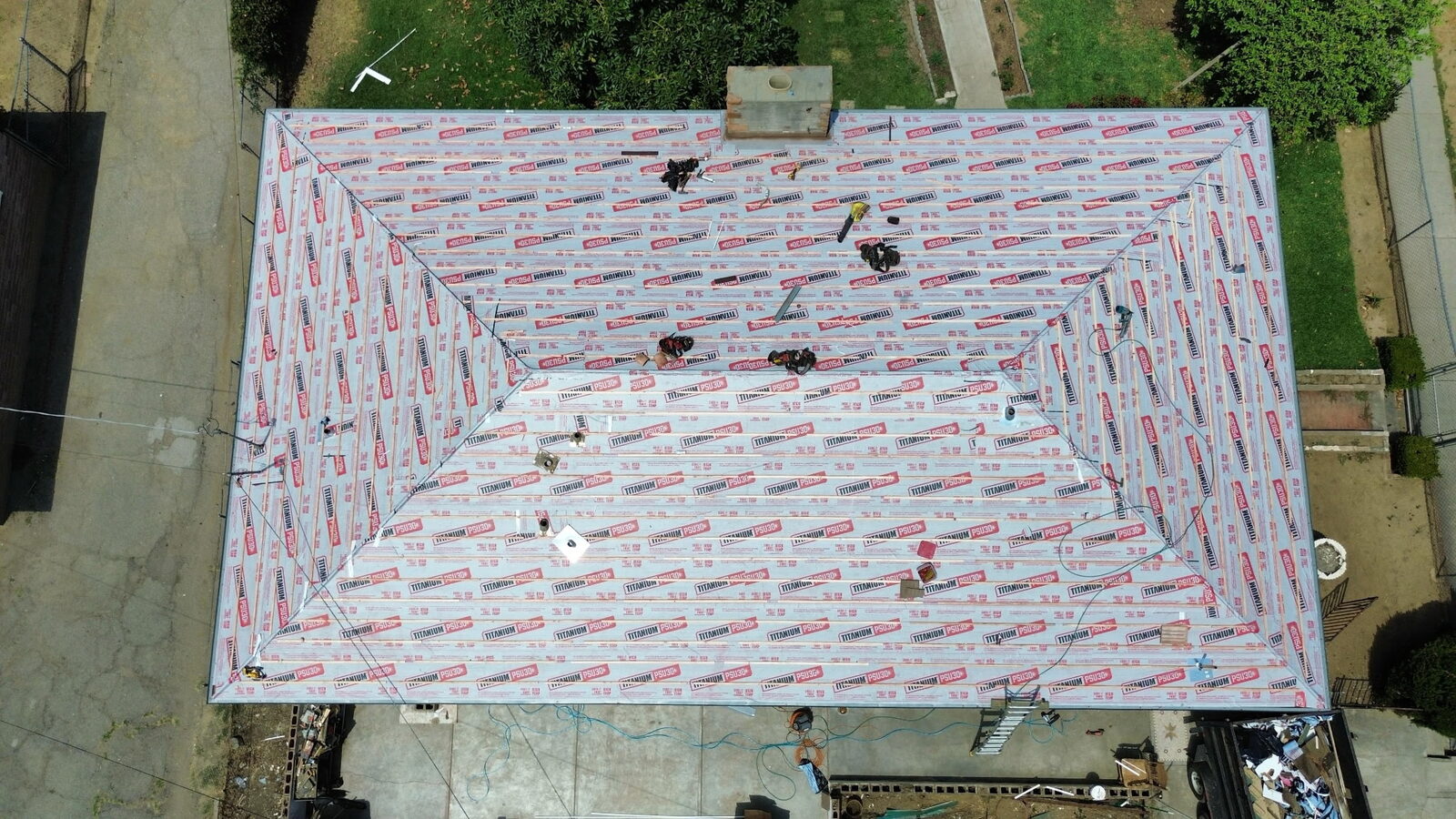
On a tile roof, I use Titanium UDL50 (a synthetic) or Titanium PSU30 (a peel-and-stick). The peel-and-stick has a rubberized asphalt backing that seals itself around the nails as they go in, so every fastener gets sealed, a layer of protection felt simply can't give you. Both also have a textured top surface, which is there so the crew can walk it safely and the tile can be loaded on it without sliding around during the install. The tile itself is held by its fasteners and battens, not by the paper. (Those tile underlayments don't belong on a shingle roof, the right material goes on the right roof.)
A drone shot of peel-and-stick underlayment fully laid in, sealed around every nail and gridded to grip the tile, before a single piece goes back on.
The Part Everyone Forgets: Ventilation
Here's one almost nobody asks about: ventilation. Most homeowners just accept that they're going to spend a fortune running the AC. They don't connect it to the roof.
But think about it, hot air rises. If that hot air gets up into your attic and has nowhere to escape, it bounces right back down into the house. So your AC works harder, runs longer, and your bill climbs. Adding more O'Hagin vents, or stepping up to a system like VentSure, lets the attic actually breathe. And these are passive, O'Hagins and ridge vents don't use any power. The heat just leaves on its own, the way it's supposed to.
What You're Really Paying For
At the end of the day, when you do a roof right, solid deck, the correct underlayment, proper ventilation, what you're really buying is peace of mind. Once it's done, it's done. You're not chasing leaks, you're not patching every winter. You've got a 10-year GAX labor warranty behind you, plus the manufacturer's material warranty, 30 or 50 years depending on the shingle you choose.
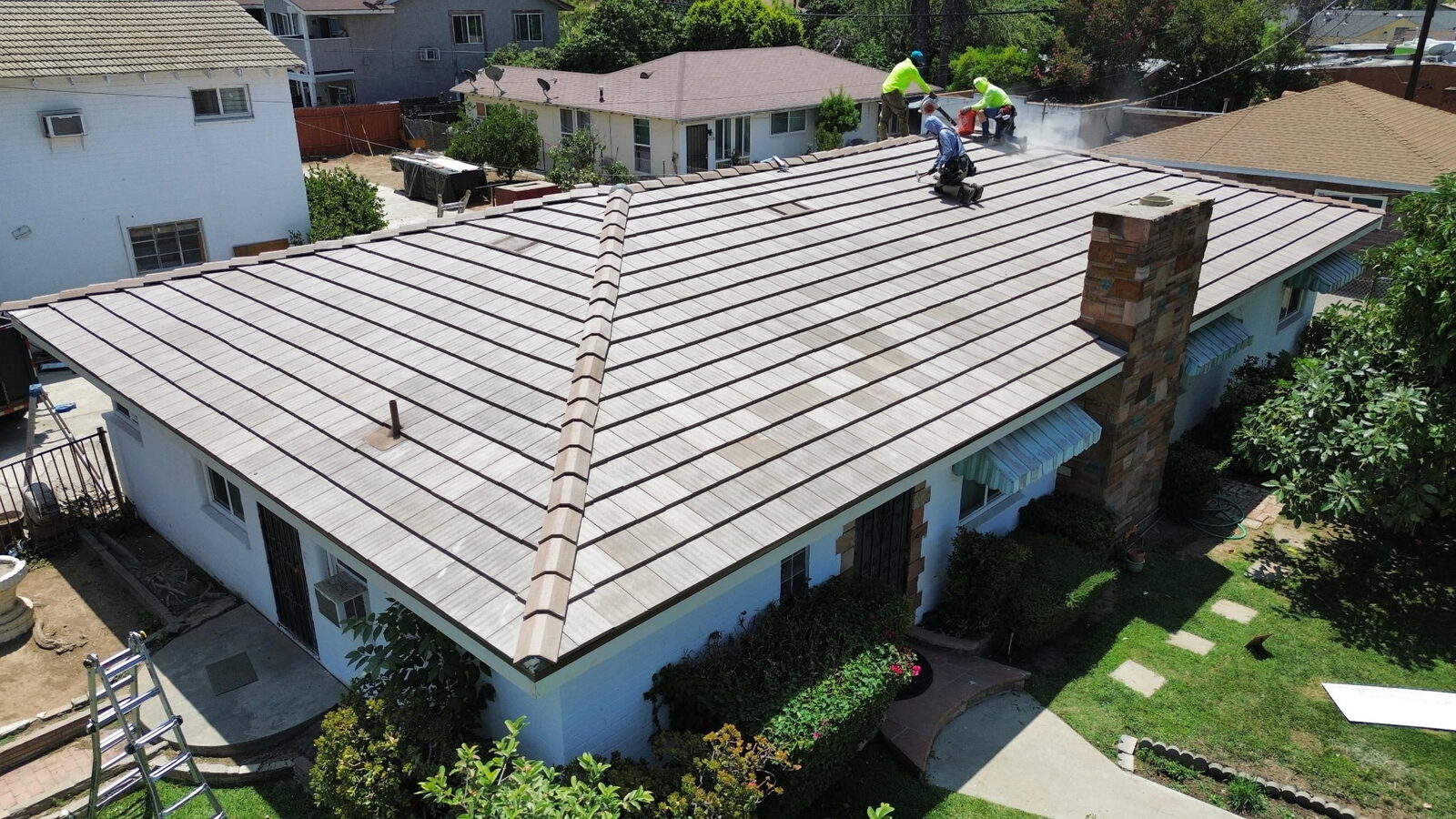
A finished replacement. Done right, the part you can see and the part you can't are both built to last.
If You're Comparing Bids
If you're getting a few quotes right now, this is the post I'd want you to read. Most bids look the same on the surface, they all say "new roof." The difference is in the stuff you can't see once the shingles go on.
So ask your bidders the real questions: What underlayment are you putting down? Are you including an allowance for damaged wood? What are you doing for ventilation? If they can't give you a straight answer, that tells you something.
We know how to install the right system for your specific roof. This isn't an upsell, it's what your house actually needs when you replace a roof. The real question is: are you comfortable not having it?
If you want a straight answer about what your roof needs, we'll come out, get up there, and show you exactly what you're working with, same as I'd do for my own family.
Want to See What's Under Your Roof?
We come to you, get on the roof, and show you exactly what you're working with, deck, underlayment, ventilation, all of it. No pressure, no obligation.