Caulk Is Not Flashing
A chimney wearing several contractors worth of mastic, two days of real rain, and a leak that was never a mystery. This is about the metal that actually keeps water out.

A chimney wearing several contractors worth of mastic, two days of real rain, and a leak that was never a mystery. This is about the metal that actually keeps water out.
I did an inspection recently, right after the Marie rain, for a homeowner with water coming in near his chimney. Up on the roof, the story was easy to read. Every contractor this guy had hired before us had done the same thing: smeared mastic on the chimney and called it a repair. Layer on layer of it. And it held, sort of, right up until we got two real days of rain. Then it did what mastic always does.
I'll say it the way I said it to him: mastic is as good as donating your money to Home Depot. It looks like a repair, it costs like a repair, and it buys you a dry season or two. It is not a repair. The chimney didn't need goo. It needed flashing.
"Mastic is as good as donating your money to Home Depot. It looks like a repair and costs like a repair. It is not a repair."
Shingles and tile are good at one job: shedding water downhill across an open field of roof. But your roof is not an open field. It has chimneys, walls, pipes, skylights, and valleys, and every one of those is a place where water gets confused. Flashing is the metal system that handles those transitions. It is bent and lapped so that gravity does the work: water hits metal, metal directs it back on top of the roofing, and it continues downhill like nothing happened.
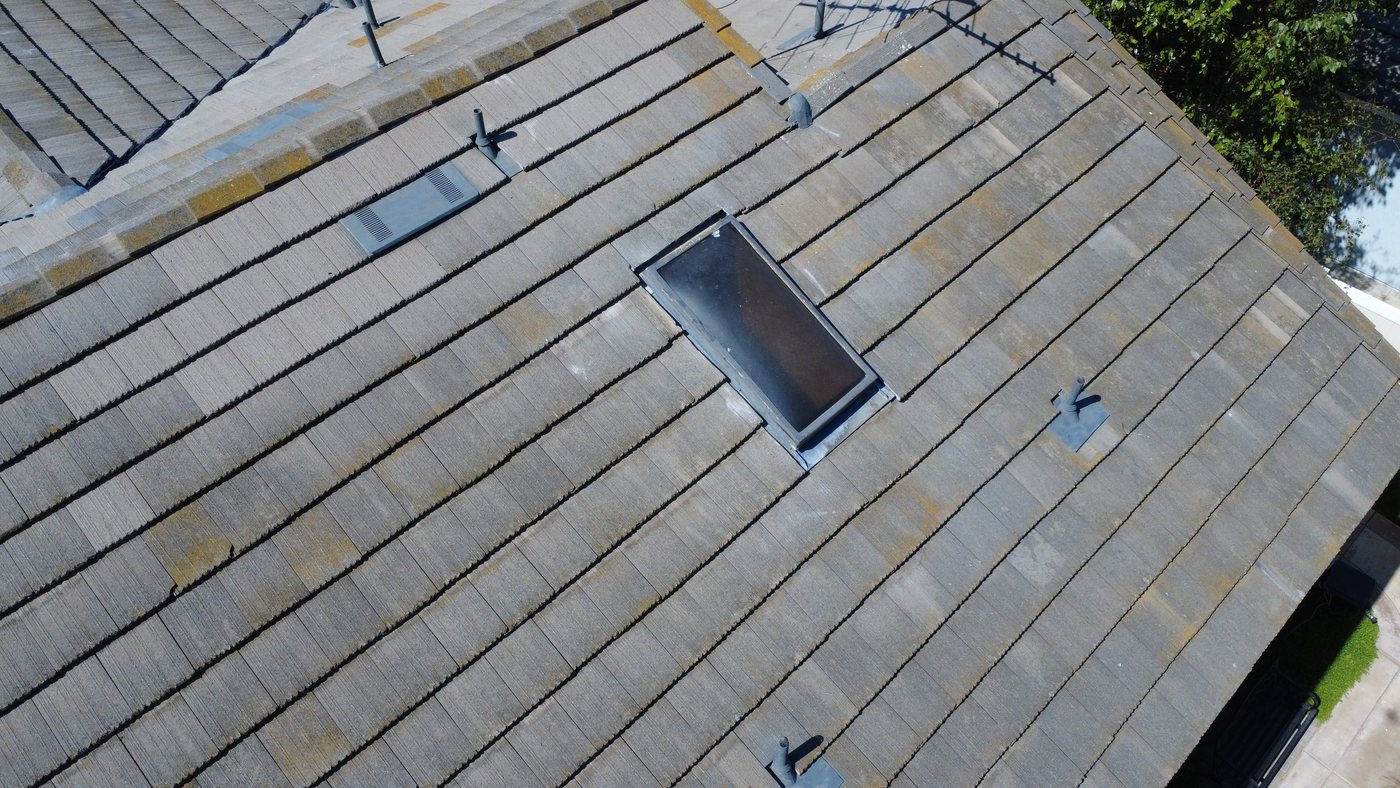
That is the key difference. Flashing is a system that works with gravity. Caulk is a substance that fights it. Only one of those two ages well.
Sealant has real jobs on a roof, as a secondary line behind properly lapped metal. As the primary defense, it is a bandage with an expiration date. Inland Empire sun cooks it. The roof expands and contracts every single day, and the caulk stretches until it cracks. Then water finds the crack, and the homeowner pays someone to smear on another layer. I have scraped through an inch of that archaeology to find the original problem underneath.
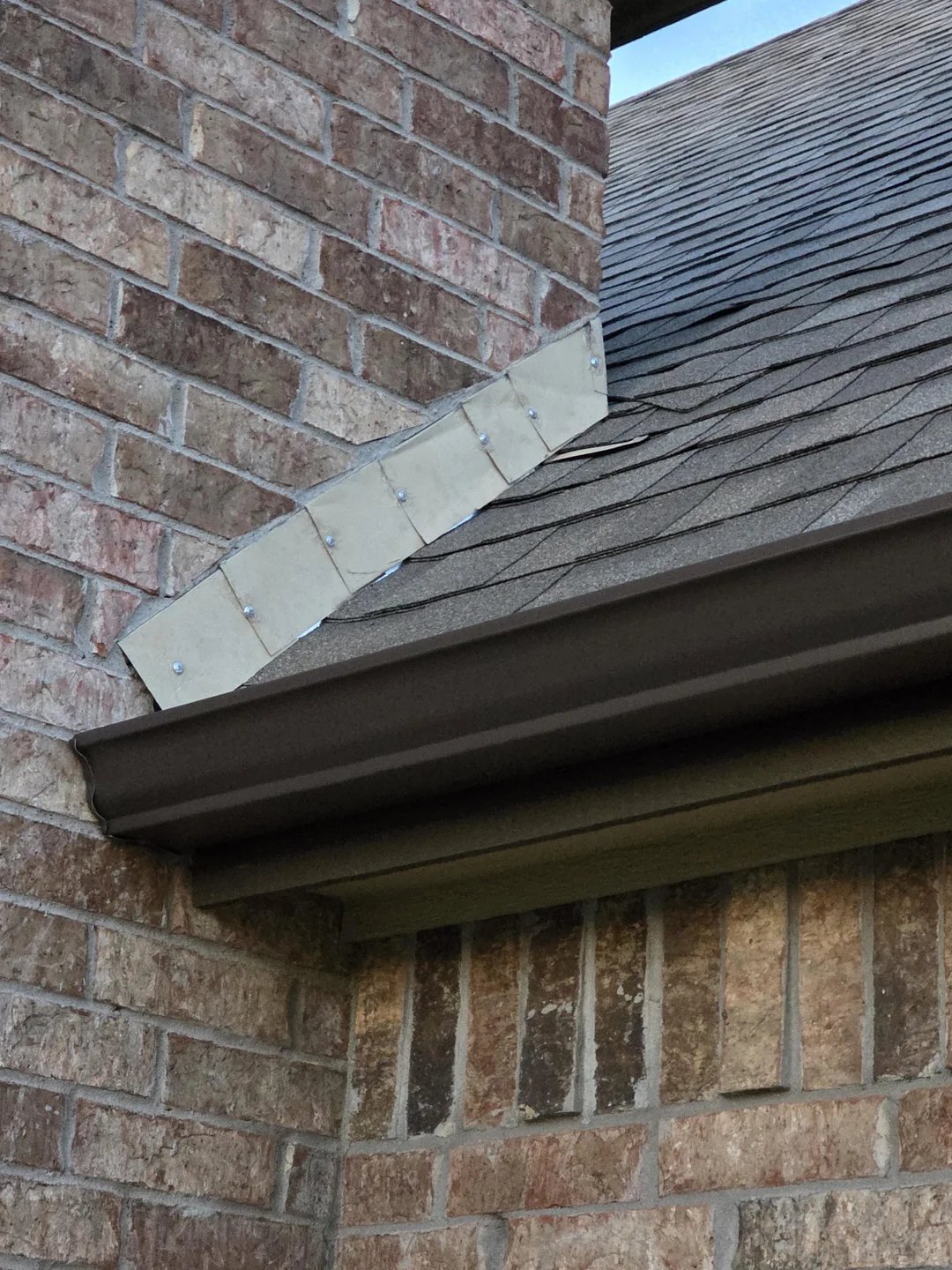
This one is from a recent inspection, and I had to take the picture. Somebody cut squares of metal, climbed a ladder, and nailed them flat against the face of the brick. A dozen exposed nail heads, and every one of them is a tiny appointment with a future leak. I want to be fair here: effort was made. Metal was purchased. A ladder was involved.
It is still not flashing, because flashing is a method, not a material. Counter flashing gets set into the masonry joint and lapped over the base flashing so water never gets a vote. Nailing squares to the front of a chimney is not flashing it. It is decorating it.
And none of this is secret knowledge. The shingle manufacturer's own installation handbook spells it out with diagrams, in three languages: one piece of step flashing per course, counter flashing extended over the base. The instructions exist. Some people just do not read them. We read them, and we keep the book in the truck.
When we replace a roof, every flashing gets replaced with it. No exceptions. Reused flashing on a new roof means the oldest, most fatigued part of your roof is guarding its most vulnerable spots. That makes no sense, and it is exactly the kind of line item that quietly disappears from a cheap bid.
So when you are comparing quotes, ask each roofer one question: are all flashings new, and is that in writing? If the answer wanders, you just learned something. I wrote about reading bids line by line for exactly this reason.
The homeowner had thought about getting up there himself during the rain to see where the water was coming in. I am glad he did not. A wet roof is dangerously slick, and no leak is worth a fall. If it is raining and water is coming in, put a bucket under it, take photos of the ceiling, and call someone whose job this is. The roof will still be there when it dries out. Make sure you are too.
We come out, find the real source, and tell you straight whether it is a flashing detail or something bigger. No pressure.
(909) 819-8394