Re-Roof First. Solar Second. In That Order.
I get calls from homeowners who went solar a couple years ago and are now calling me because their roof is leaking. Maybe the roof was already close to done when they signed the solar contract and nobody flagged it. Maybe the installation foot traffic cracked tiles. Whatever the reason, now they've got two problems instead of one.
And here's the part that really stings: before I can touch their roof, every single panel has to come off. Then go back on. That's a separate cost, $250 to $300 per panel, just for removal and reinstallation. Take a house with 16 panels covering one facet. That's $4,800 before I've touched a single tile, just to get access to the roof.
And here's what most homeowners don't realize: spot fixes don't work when there are panels over the problem area. Most contractors won't touch it, because you can't warranty work you can't fully see and access. I can't pull two tiles, fix a flashing, and call it done if there's a panel field sitting over it. If the issue is under panels, the fix has to be a full tile lift and relay, a tile replacement, or at minimum a facet-wide repair, which means every panel on that section comes off first. No shortcuts exist on that job.
My rule of thumb: if your roof has fewer than 10 good years left, re-roof before you go solar. A 25-year solar loan on a roof that needs replacing in 5 years is not a deal, it's a setup. Get the roof right, get it warranted, then put panels on it.
"A 25-year solar loan on a roof that needs replacing in 5 years is not a deal, it's a setup."
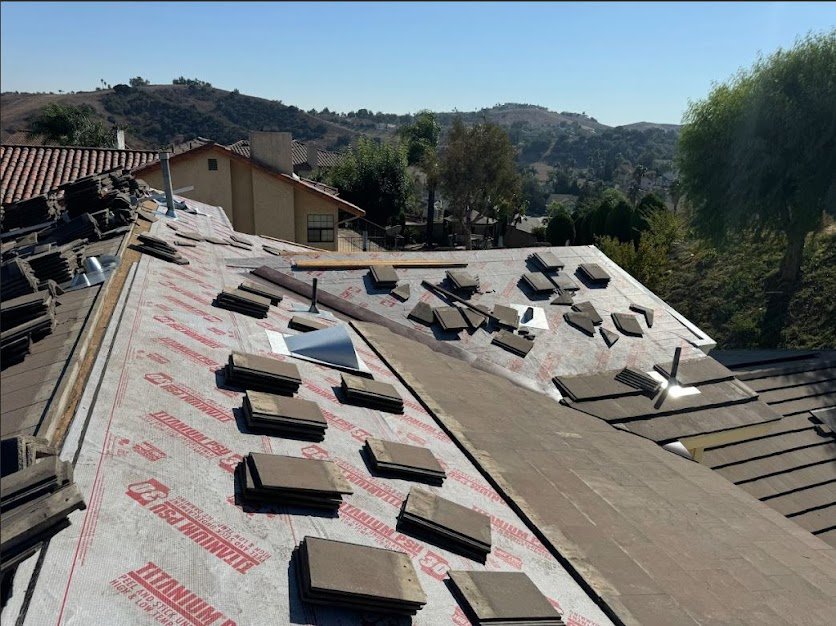
Solar on a sound roof is a great investment. Solar on a roof that's already aged out is a problem you're financing.
The Underlayment Nobody's Talking About
This is something most homeowners never hear about, but it's one of the most consequential choices on any solar-adjacent roof job, and most contractors are getting it wrong.
When solar brackets get bolted through your roof, they're creating penetrations, holes through the tile and into the deck. How those penetrations get sealed is everything. A lot of contractors still use traditional felt underlayment. Some use Titanium UDL50, which is a synthetic from the same manufacturer as PSU30, it's stronger than felt, but it still doesn't have a rubber backing. It doesn't seal around a fastener the way a self-adhered membrane does.
We use PSU30 peel-and-stick rubberized underlayment. PSU30 is a self-adhering modified bitumen membrane, it's not paper, it's rubber. I actually bring a material sample to consultations and show people the difference, because you have to feel it to understand it. PSU30's rubberized asphalt seals itself around fasteners. That is the property the material is rated for, and it is why a nail hole in it is not a leak. A solar lag bolt is a bigger hole than a nail, so around a mount the membrane is a second line of defense, and I want to be clear about that word. The first line is still the mount's own flashing, installed the way the mount manufacturer says, and on tile that means a flashing at the tile and a flashing at the deck. PSU30 is what saves you the day a flashing fails, not a reason to skip one.
Felt tears. UDL50 tears. Neither one seals around the hardware, they just sit there and let water find a path. And remember, when that path finds its way in, you're not just fixing a leak, you're paying $250 to $300 per panel to move every panel off the roof before you can even get to it.
PSU30 also handles the heat cycling better than felt or synthetic sheet goods. IE rooftops hit 160°F in July. Felt gets brittle, cracks, and loses flexibility over time under that kind of heat. Rubberized membrane stays pliable. If you're committing to 25 years of solar on this roof, the underlayment needs to be able to go the distance.
"I bring a material sample to every consultation and let people feel the difference. Felt tears. UDL50 tears. PSU30 seals itself around the fasteners. That's why it goes under every solar array we touch, under the flashing, not instead of it."
Who's Actually Licensed to Touch Your Roof?
This is where I get real with people because the solar industry is not going to tell you this themselves.
Most solar companies in California hold a B General Building license, and some hold a C46 Solar license. Let me be fair about what that means: it's legal. California lets a B contractor take on a solar project that involves multiple trades, and a C46 solar contractor is allowed to perform the construction work the installation needs, including the roof penetrations. Nobody is breaking the law by mounting panels under those licenses.
But legal and specialized are two different things. C39 Roofing is its own classification with its own exam and its own experience requirements, and a standalone roofing job, a reroof or a repair sold on its own contract, is generally C39 territory. When a solar crew drills through your roof deck, sets mounts, and seals penetrations, they are allowed to do that work. What the license can't tell you is whether roofing is their craft, how many roofs that crew has actually flashed and sealed, or who will stand behind those penetrations in year ten. That's the question I'd ask before anyone gets on your roof.
It gets messier when the company you hired has nobody of their own on the roof. A lot of solar companies don't have their own install crew at all. They sell the job and hand it off to whoever's available. You signed a contract with one company, and somebody you've never heard of showed up on your roof. When the company you hired has nobody of their own on the roof, you have no control over the quality of the work, and if something goes wrong, good luck figuring out who's responsible.
Before anyone does roofing-adjacent work on your home, whether it's a solar company or anyone else, look them up on the CSLB website at cslb.ca.gov. The license number should be visible before they touch anything.
Always verify before anyone gets on your roof. A California C39 Roofing Contractor license is a different classification than a B General Contractor license. Search any license for free at cslb.ca.gov, takes 30 seconds and tells you exactly what they're licensed to do.
Solar Companies Go Out of Business
You've seen the stories. Big names in residential solar filing for bankruptcy, leaving tens of thousands of homeowners with no warranty support, no one to call, and a bunch of penetrations in their roof that nobody's responsible for anymore.
This happens all the time. The solar business runs on thin margins, aggressive financing, and a lot of customer acquisition spend. When the market shifts or rates move, companies fold fast. And when they go, your "roof warranty" goes with them, if they even issued one to begin with.
Your roof warranty needs to come from a licensed roofing contractor who's going to be around when you need them, not from the company that sold you the solar system. Those are two different things and they should stay two different things. The solar company handles the panels and the electrical. A C39 roofer handles anything touching the roof deck. Keep those separate and you know who's accountable for what.
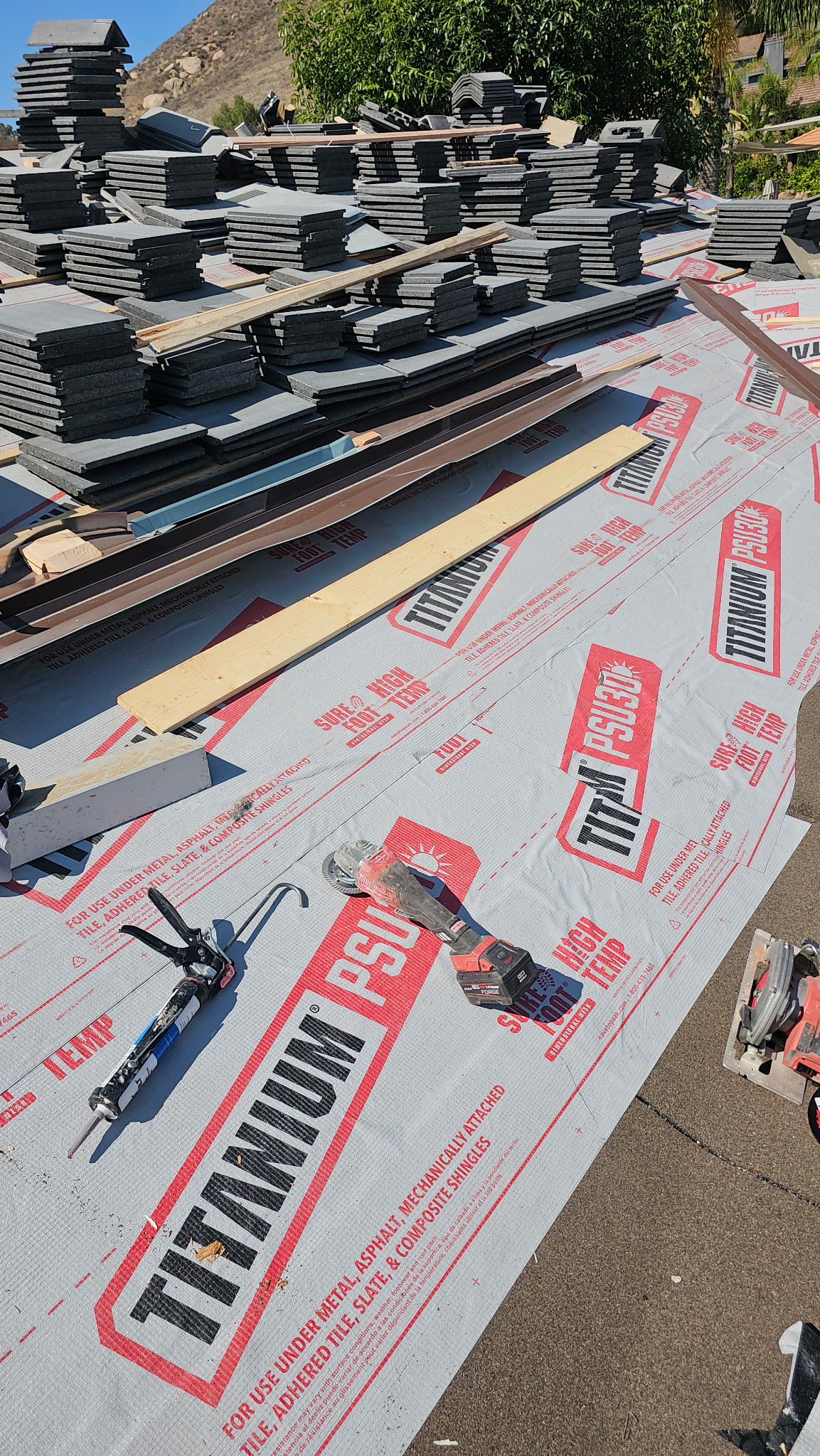
Every mount is a hole through your roof. That hole needs to be sealed by someone licensed to seal it, and someone who'll still be in business when it matters.
Already Have Solar? Check These Things
If panels are already on your roof and you want to know what's going on underneath them, here's what I look for when I walk one of these:
- Flashing condition around each mount, the first place we look for a solar-related leak
- Cracked or displaced tiles in the panel footprint, foot traffic during install is rough on tile if they weren't careful
- Sealant condition at the base of each bracket, if it's dried out, cracked, or pulling away from the tile, it's not doing anything
- Attic inspection below the panel area, staining, soft decking, or wet insulation tells you what's been happening up there
- Whether any felt underlayment is visible and torn around penetration points
If you're seeing any of those, don't start with the solar company, call a C39 roofer. The solar company's job is the panels and the power generation. Keeping water out of your home is a roofing problem.
The Short Version
If you're thinking about solar: get your roof inspected first by a licensed roofer. If it's got less than 10 years left, do the roof first and do it right, rubberized underlayment, proper warranty, the whole thing. Then go solar on a clean surface. A re-roof now is a fraction of the cost of a re-roof later plus $250-$300 per panel to move the system twice.
If you're already solar: find out who actually did the roofing work, check their C39 status, and have someone walk the roof if you haven't had it looked at since install. If there's a problem under a panel field, the sooner you catch it the better, because the fix doesn't get cheaper the longer you wait. The sun is free. A leak-damaged ceiling is not.
We'll Walk the Roof With You
Free inspection, straight answer on roof condition and lifespan, no pressure on the solar question. If it can wait, we'll tell you. If it can't, we'll explain why.
(909) 819-8394, Free Estimate