Done right
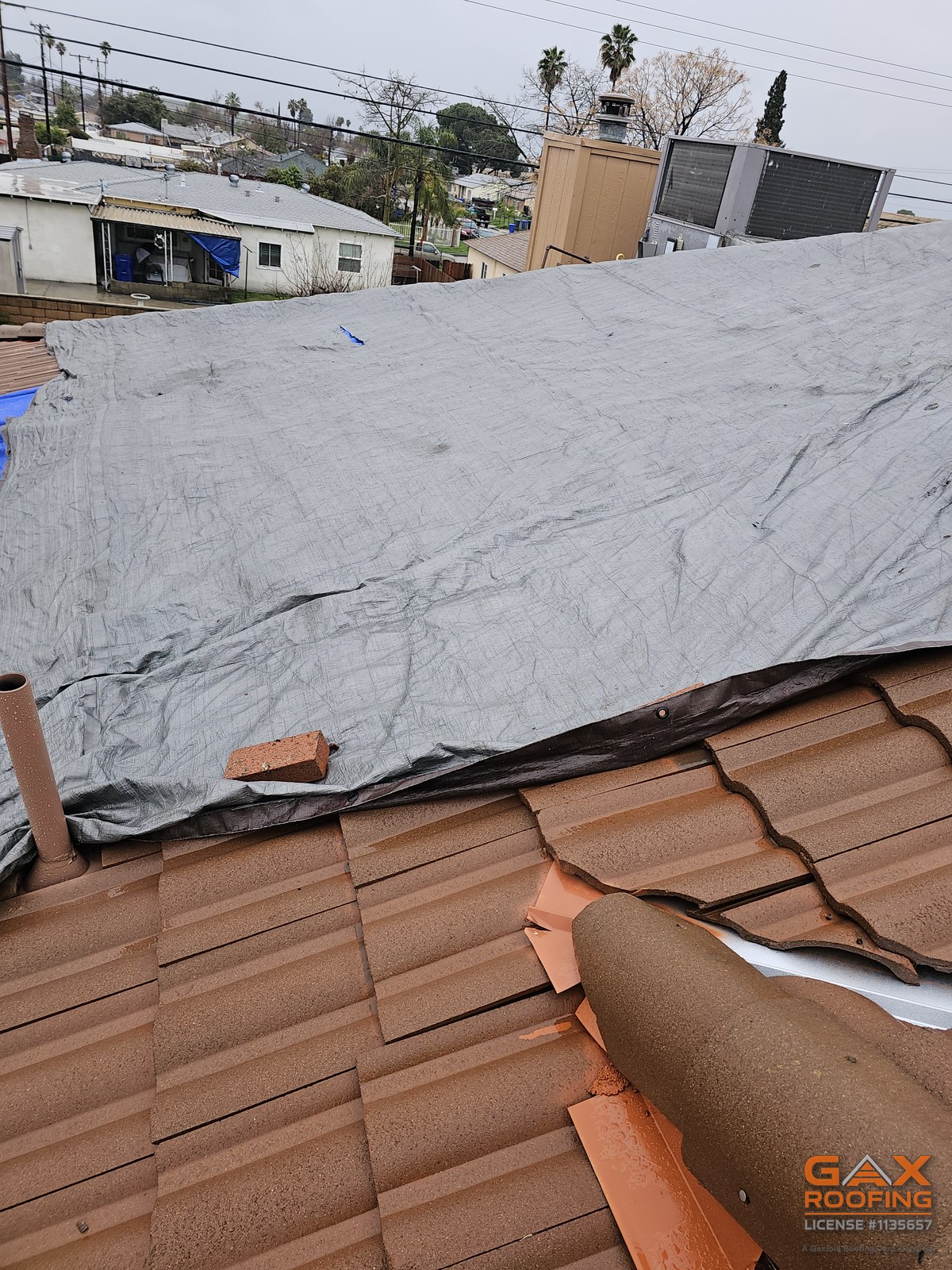
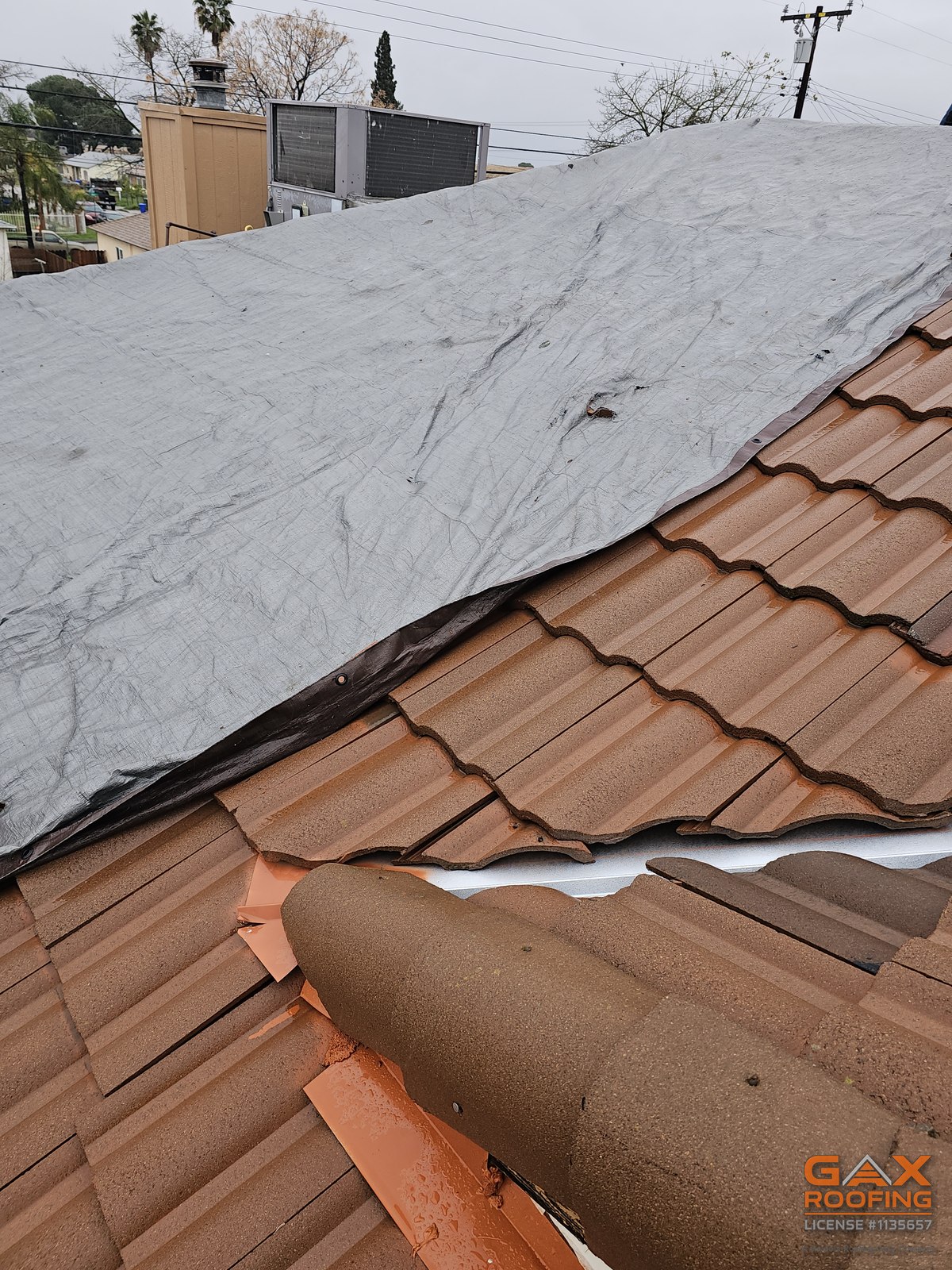
Pulled tight, run well past the open area in every direction, and fastened so the wind can't get under it.
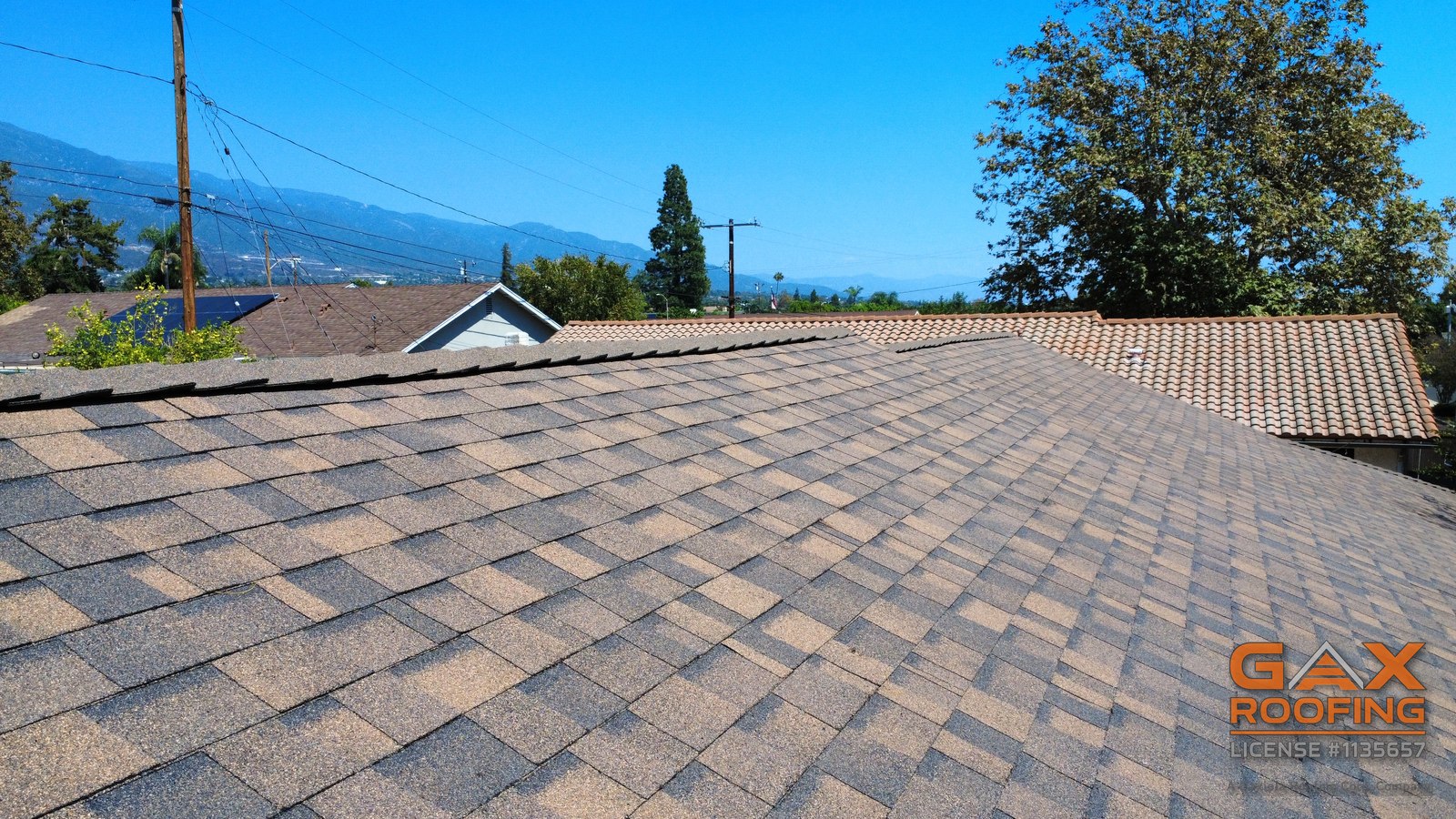
Water is coming in and the rain hasn't stopped. Here is what to do in the first hour, what to leave alone, and how to keep a bad night from turning into a bad month.
Call (909) 819-8394 →Safety first, then protect the inside, then take dated photos, then call a roofer. Stay off the roof, wet or dry. A tarp keeps the water out until the real repair, and the real repair happens in daylight on a dry roof. If water is coming into the house right now, that is an emergency: call, don't fill out a form.
Water and electricity don't mix. Don't touch electrical equipment that is wet or while you are standing in water, and turn off the power to the area only if you can do it safely. If a ceiling is sagging with water, keep everyone out from under it.
Buckets, pots and towels under every drip. Move furniture, electronics, rugs and anything you care about out of the way. A plastic sheet or a tarp over what can't be moved.
The ceiling, the walls, the drip, the bucket filling up, and anything that got wet. Video helps. From outside, only from the ground. Do this before anything gets moved, cleaned up or repaired.
When it started, which rooms, and what the weather was doing. Every rain, or only when the wind blows a certain way. That one detail helps whoever traces the leak.
If water is coming into the house, call. A form gets read in the morning; a phone call gets answered. If it can wait until the next business day, a good roofer will tell you that too.
Ask how they want it reported. Your policy and your insurance company decide what is covered. More below.
A wet roof is slick, wet tile breaks underfoot, and storms come with wind. CSLB's roofing guide says it plainly: the best way to preserve your roof is to stay off of it. No leak is worth a fall. The roof will still be there in the morning, and the water in your bucket is a lot cheaper than an emergency room.
That includes tarping it yourself in the middle of a storm. A tarp that isn't pulled tight and fastened well past the open area flaps, catches the wind and works itself off by morning, and getting up there to do it is the dangerous part.
A tarp is not a repair, and nobody should sell it to you as one. It is a way to keep water out of the house tonight so the actual repair can happen in daylight, on a dry roof, with the right material on the truck.
Pulled tight, run well past the open area in every direction, and fastened so the wind can't get under it.
Loose, short of the damage, or weighed down with whatever was in the yard. It flaps, catches wind, and ends up in the neighbor's yard.
Long enough to get through the weather and get the repair scheduled. It is a bridge, not a plan for the winter.
When the roof is dry, the damaged area gets opened, the cause gets found, and it gets repaired with the right material. That is the job a tarp is buying time for.
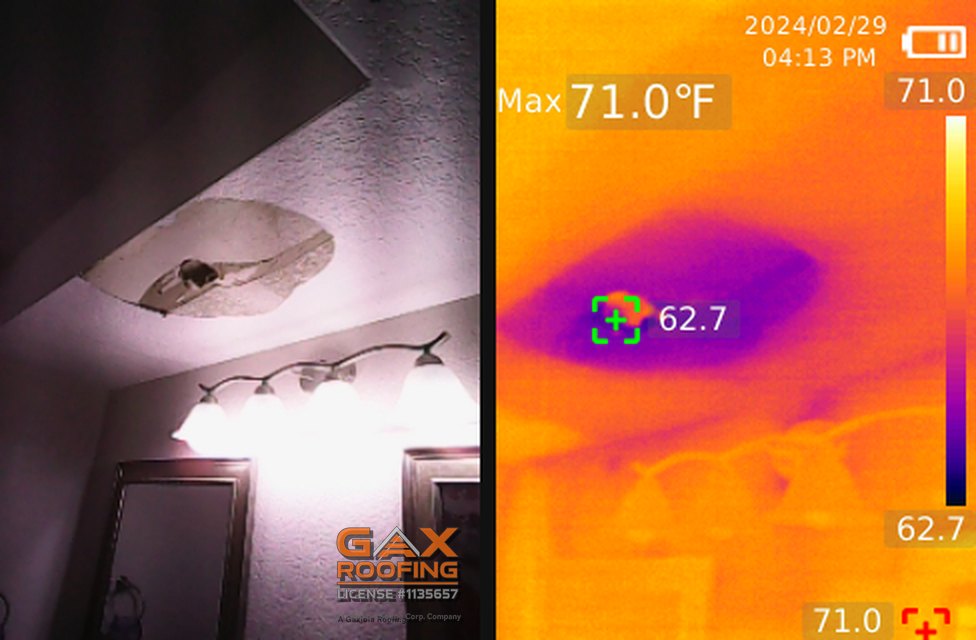
Water gets in at one spot, runs along the underlayment or the framing, and drips somewhere else. The ceiling stain is the last stop on the trip, not the first. That is why patching right above the stain so often misses.
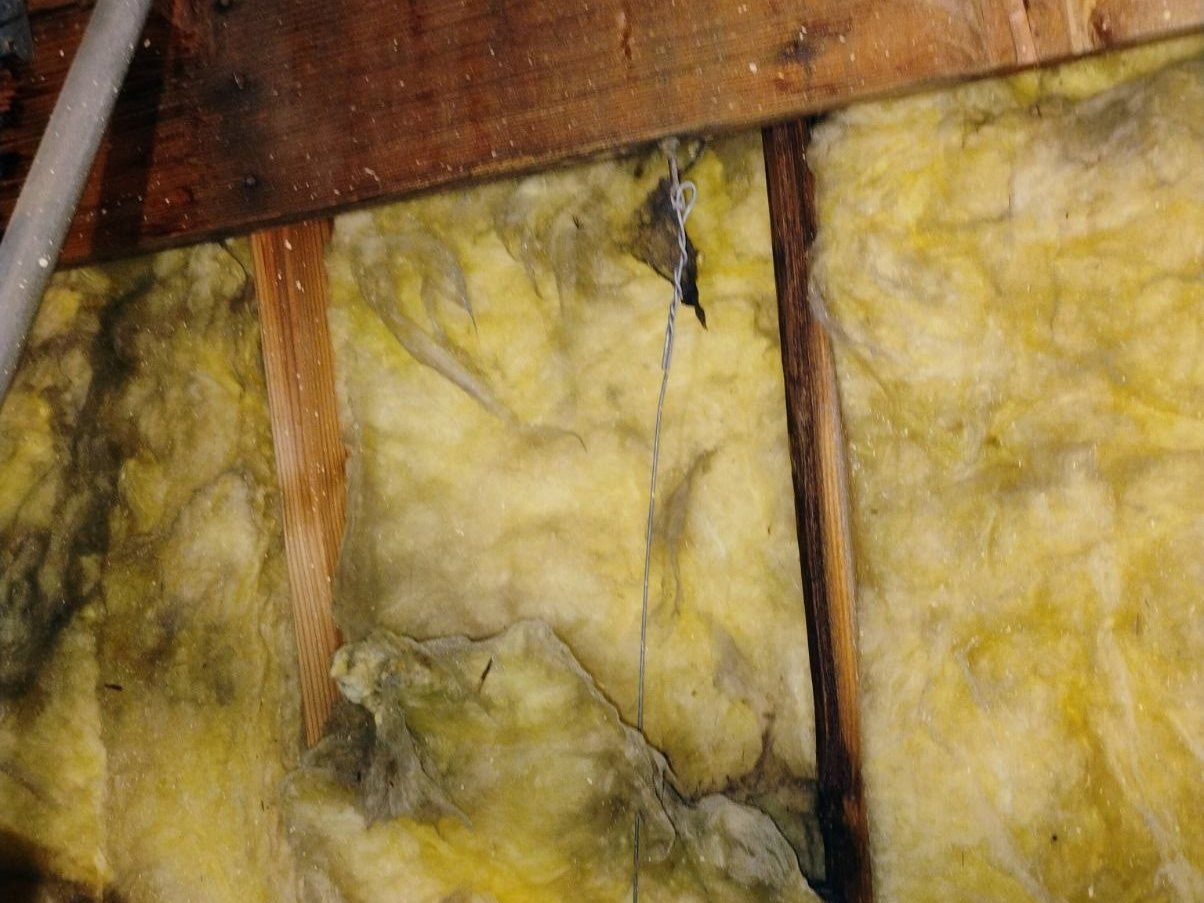
If you can get there safely with a flashlight, look from the hatch for wet wood, wet insulation or a drip. Don't walk the attic if you aren't sure where to step; a foot through the ceiling is a second repair.
A leak that shows up only when the wind blows a certain way often points to flashing, the roof edge, or a wall where the roof meets the house.
If it was patched before and it is back, the patch was likely in the wrong place or the layer underneath is done. More in why a roof repair doesn't hold.
| What you see | What it usually means | Next step |
|---|---|---|
| Water pouring in, a section of roof open, a tree or branch on the roof | An emergency | Call a roofer now. Buckets, protect your things, stay out of the room if the ceiling sags. |
| A steady drip in one spot | Urgent | Call. Catch it, document it, and get on the schedule. |
| A new stain, no drip | Water is getting in somewhere | Photograph it with the date and have it traced once the rain stops. Don't paint over it. |
| A leak only when the wind blows a certain way | Often flashing or the roof edge | An inspection after the storm. |
| A leak that came back after a repair | Often the underlayment is done | An inspection that looks under the roofing, not another patch. |
| Leaks in more than one room | Often the layer under the roofing | An inspection, and an honest conversation about repair or replacement. |
None of these on its own tells you what the roof needs. They tell you how fast someone should look at it.
A lot of policies cover wind. Most homeowners policies exclude wear and tear, and your policy and your insurance company decide what is covered after the deductible. What helps either way is a clear record: dated photos taken before anything was touched, and a written description of what happened and when.
Ask your insurance company how they want the damage reported, and keep a copy of everything you send.
You can have your roofer there to show the adjuster the damage and explain what the repair involves. The claim itself stays between you and your insurance company.
If the damage is small, a repair out of pocket can make more sense than a claim. A roofer should tell you which side of that line you are on.
Don't sign over your claim or your insurance check to a contractor. CSLB says the same about insurance checks.
Big storms bring people knocking on doors. Most of what protects you is in CSLB's own advice after a disaster.
Stains often look worse while they are wet. Keep taking dated photos as it dries, and note any smell or soft spots.
Paint hides the stain, not the leak. Have it traced to where the water gets in first.
Roofing in the rain is how you make new problems. A tarp holds it until the roof is dry enough to open and fix right.
If this is the third winter of patches, or a tile roof leaking in more than one spot, the honest question is repair or replace. Our tile roof decision guide walks through it.
No. A wet roof is slick, wet tile breaks underfoot, and wind makes it worse. A tarp that isn't pulled tight and fastened past the damage blows off anyway. Protect the inside, document it, and call a roofer.
It depends on your policy and on what caused it. A lot of policies cover wind, and most exclude wear and tear. Your insurance company decides what is covered after the deductible. Dated photos taken before anything was touched help either way.
A real repair waits for a dry roof. During the storm, the goal is to keep water out of the house, sometimes with a tarp, so the repair can be done right in daylight.
The leak is still there, and it will be back with the next rain. Photograph the stain with the date, don't paint over it, and have it traced to where the water gets in.
For genuine emergencies, like water coming into the house or a section of roof open, we offer next-day turnaround. Call (909) 819-8394 instead of sending a form.
Ask for the license number and look it up on the CSLB website, and ask to see the pocket license. In California, roof work of $500 or more needs a license. Ours is C-39 #1135657.
Water coming in, or a leak that came back after the last rain? Call us. We will tell you whether it needs someone tonight or can wait until the storm passes, and then we fix it right on a dry roof. We do four kinds of roofs: asphalt shingle roofs, tile replacement with new tile, tile lift and relay, and flat roofs, across the Inland Empire.
Next in the library: the Roof Maintenance Calendar and Tile Roof: Repair, Lift and Relay, or New Tile?.
Call (909) 819-8394 →Pages checked October 11, 2026. The GAX notes describe our own services. Field observations are what we see on Inland Empire roofs, not rules.