The Drip Is Never Where the Leak Is. Here Is How We Find It.
Nobody likes paying for a repair that does not work. With roof leaks, that happens more than any other kind of repair, and it is not always because the roofer was lazy. It is because the drip in your ceiling is almost never where the water gets in. This is how water actually moves through a roof, and how we use an infrared thermal imaging camera to put the repair where it belongs: on the source.
"I bought the thermal camera so I could stop guessing. Best tool in the truck."
Water lies about where it comes in
Rain does not drip straight down through a roof like a cartoon. It finds a small opening, a cracked flashing, a worn pipe seal, a slipped tile, and then it travels. It runs along the top of the underlayment, follows a rafter, pools on the back of your drywall, and finally shows up as a stain ten feet from the actual hole. By the time you see it in the hallway, the entry point can be over a different room entirely.
That is why patching where the stain is fails so often. The patch may be a perfectly good patch. It is just in the wrong place, and the real leak keeps working on your decking every time it rains.
What the thermal camera actually sees
Wet material holds a different temperature than dry material. A thermal imaging camera reads those temperature differences and paints them as a picture, so moisture the eye cannot see lights up on screen.
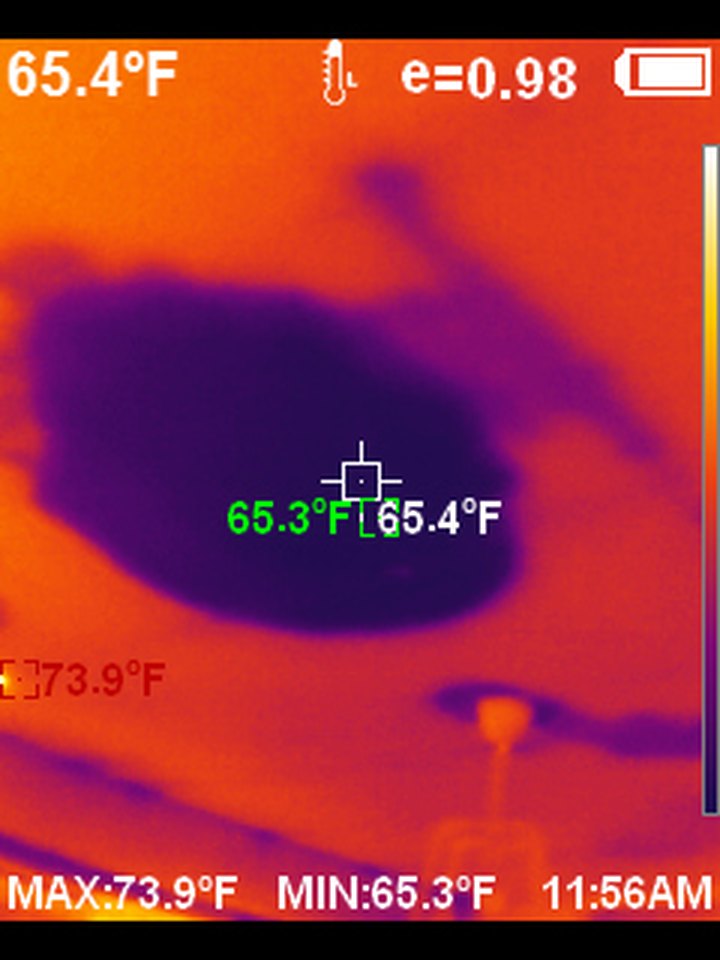
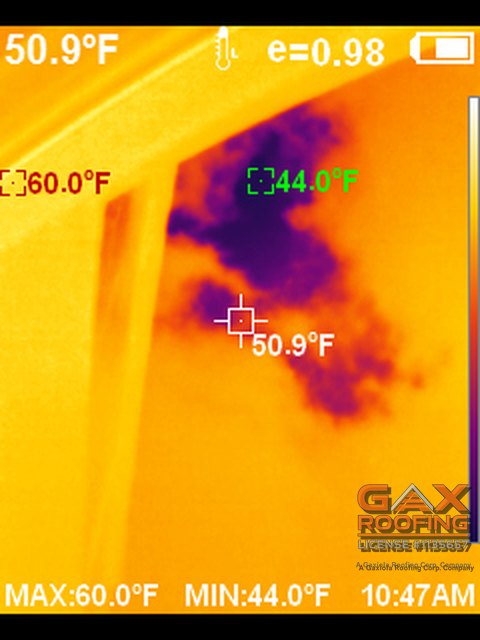
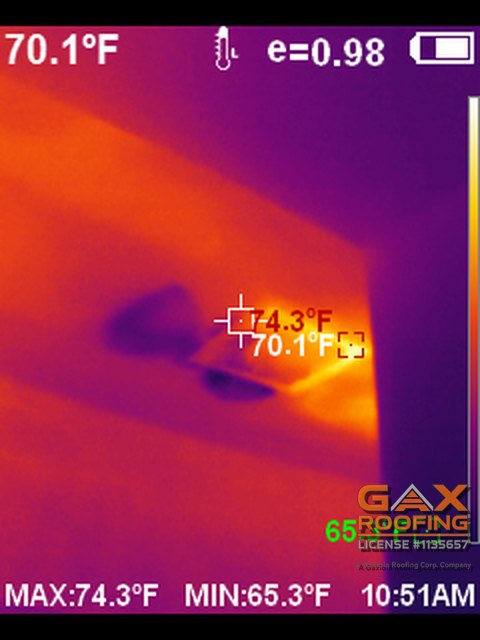
The ceiling looked fine. The camera read 65 degrees inside that dark blob against 74 degree dry material around it. That pattern is what trapped water looks like. The attic confirmed it: wet marks on the wood in the same spot.
The frame above is from a real repair call in Fontana. To the eye, that ceiling looked normal. On the camera, there is a cold mass sitting in it, roughly eight degrees cooler than the material around it. That is the signature of wet material, and its shape and position tell us which direction it came from. One honest caveat: the camera does not see water, it sees temperature. A cold spot can also be a draft, missing insulation, or a duct. So the camera tells us where to look, and then we go look. We get into the attic, find that same spot from below, and check the wood. Wet marks on the rafters and the underside of the deck, in the same place and the same shape the camera showed, is the confirmation. On this house that is exactly what we found, and the marks led us straight to the source.
Same ceiling, two cameras
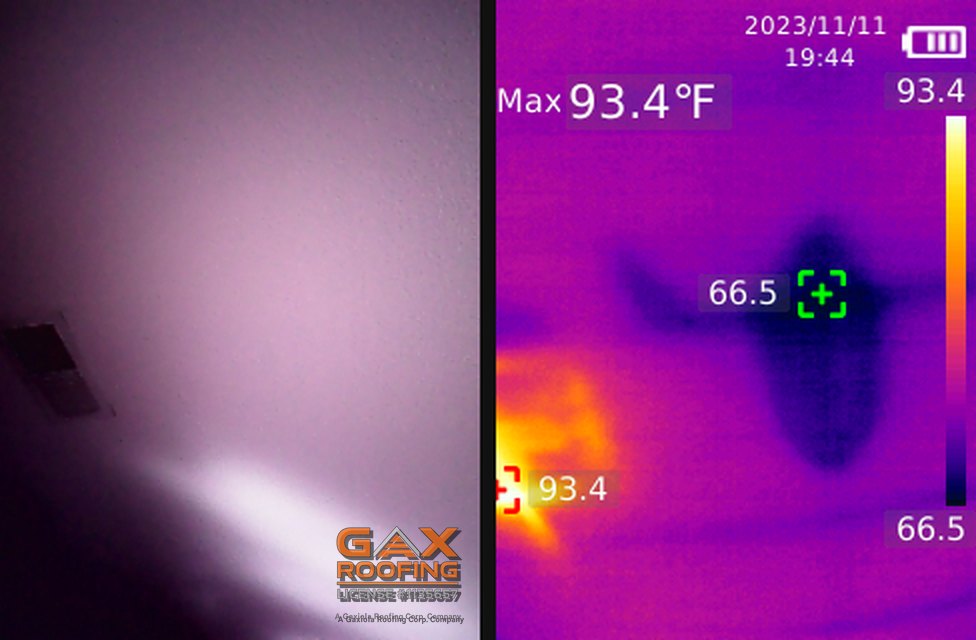
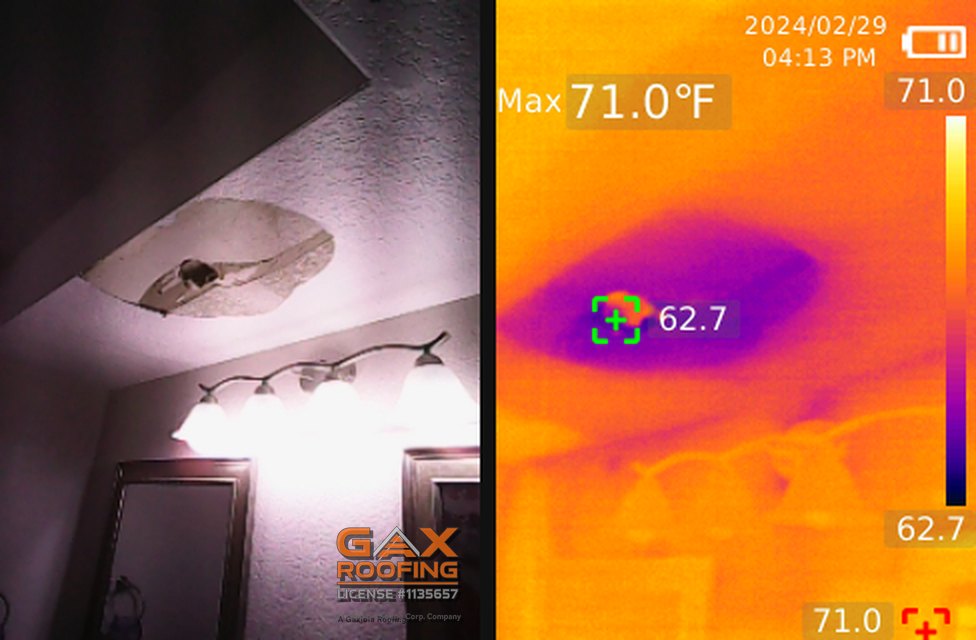
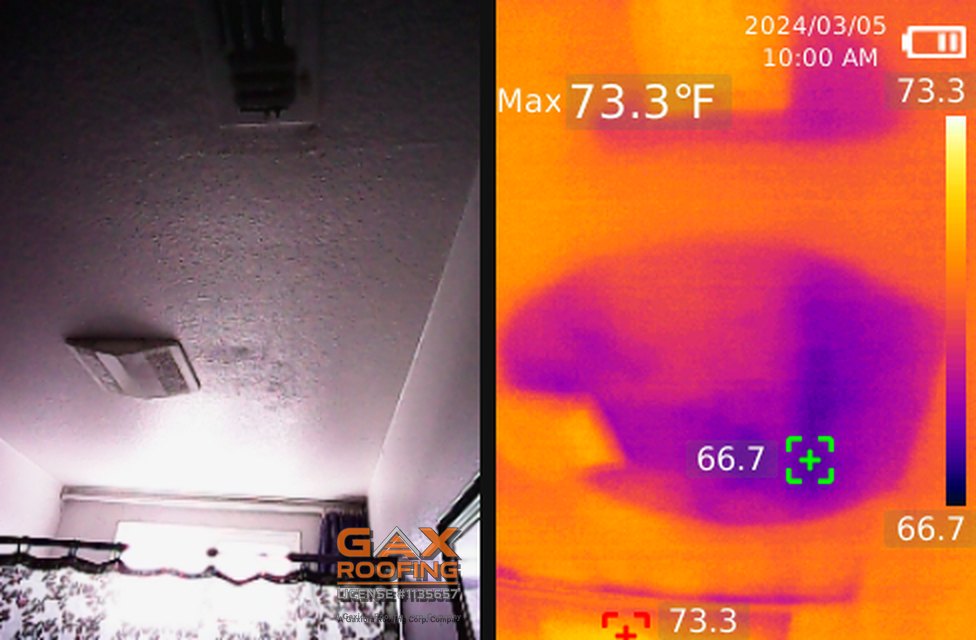
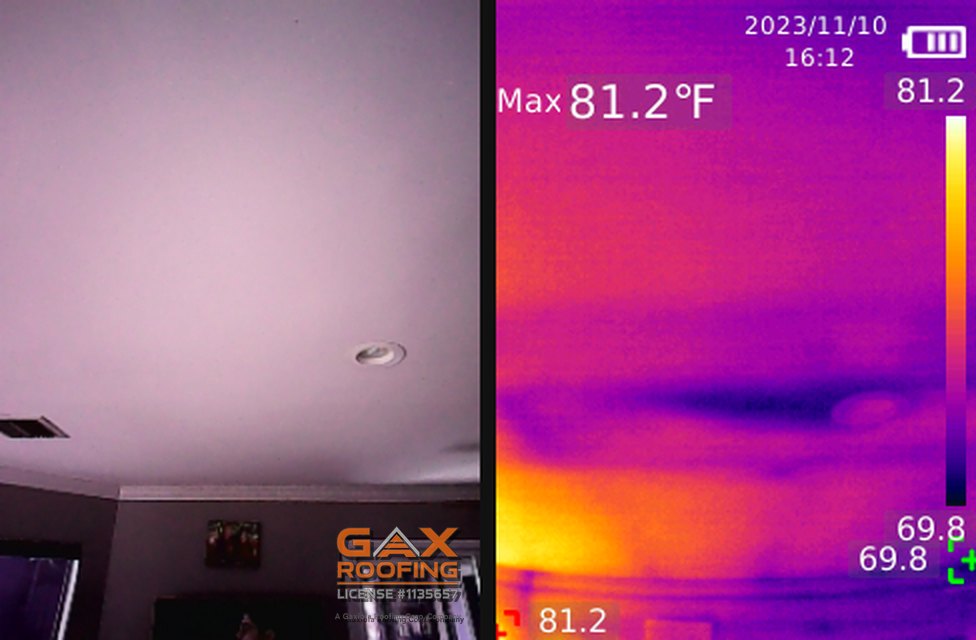
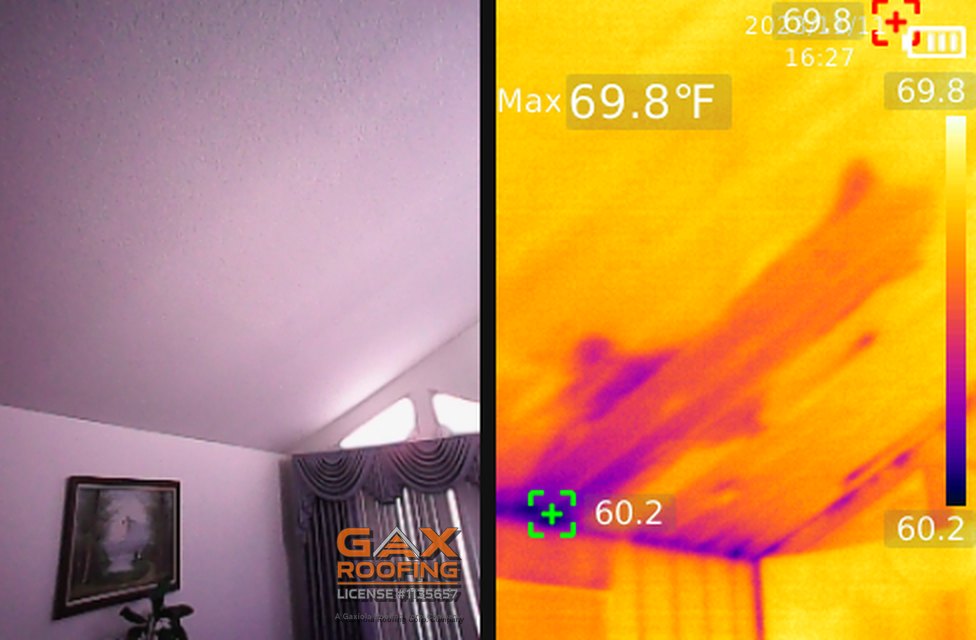
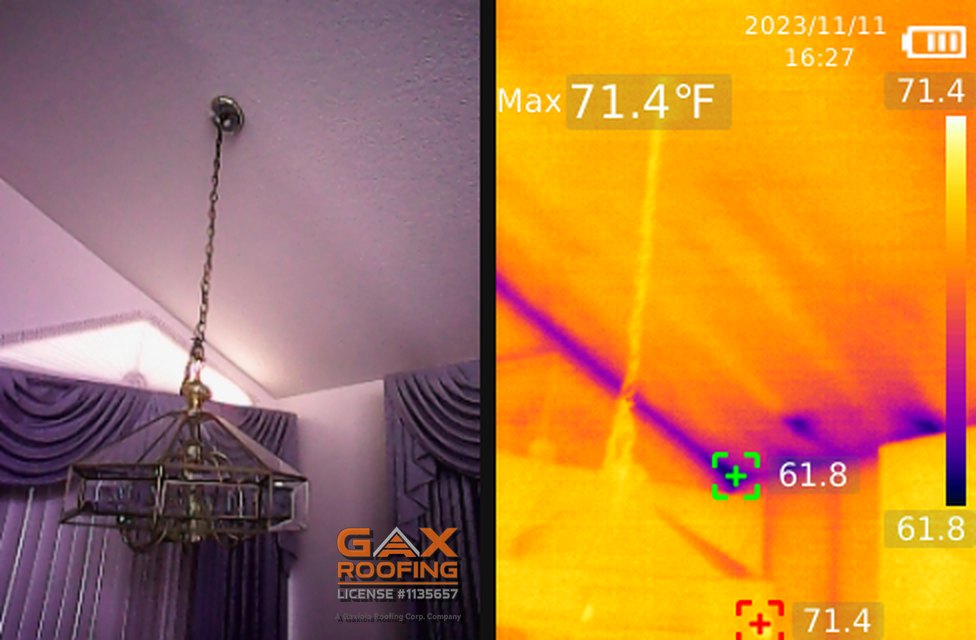
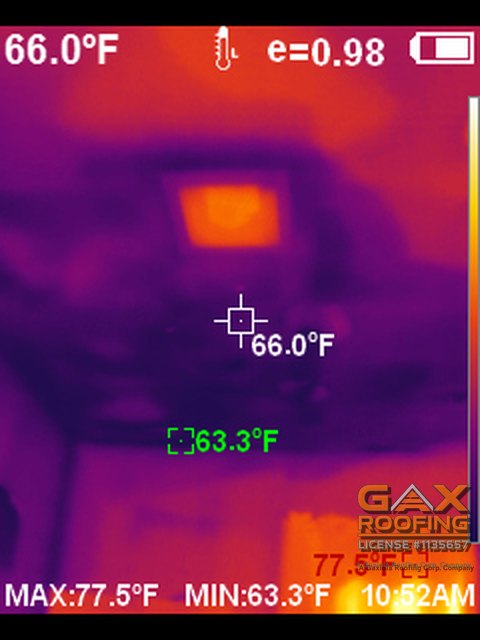
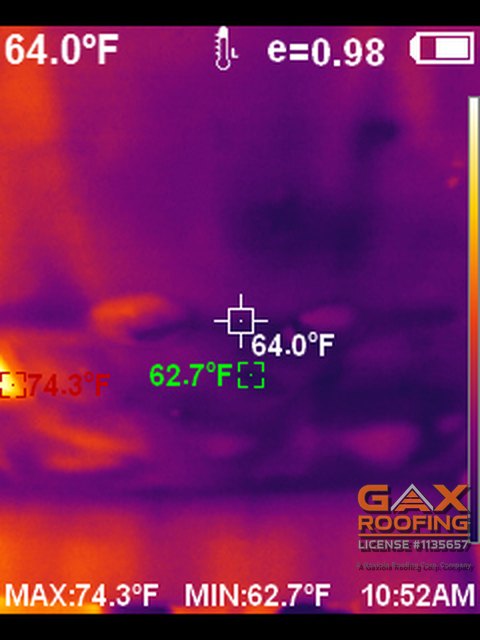
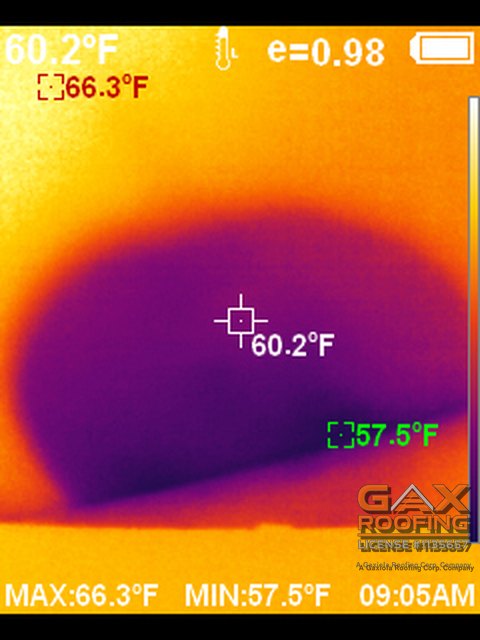
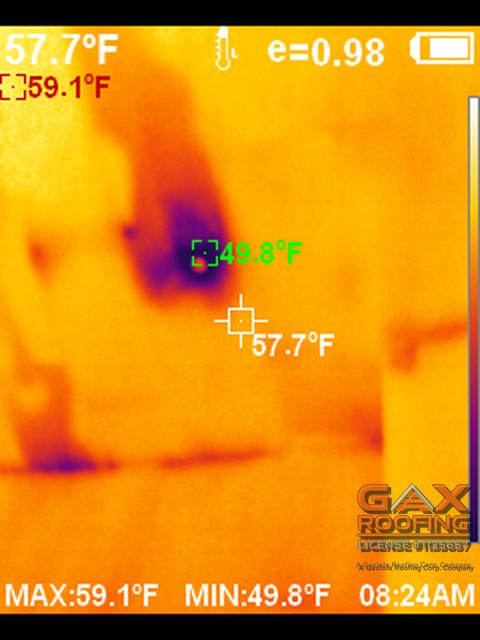
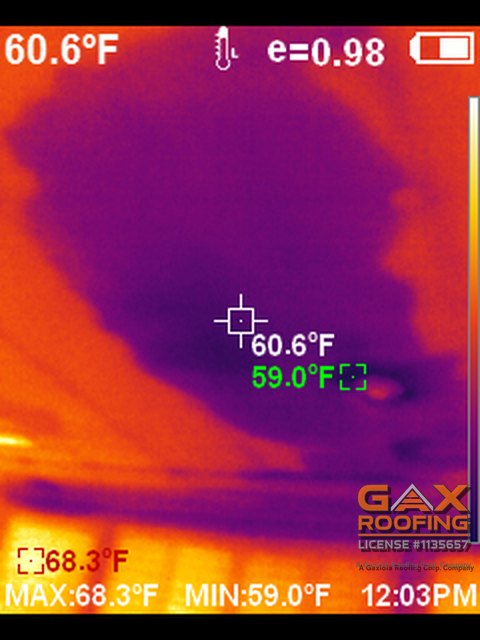
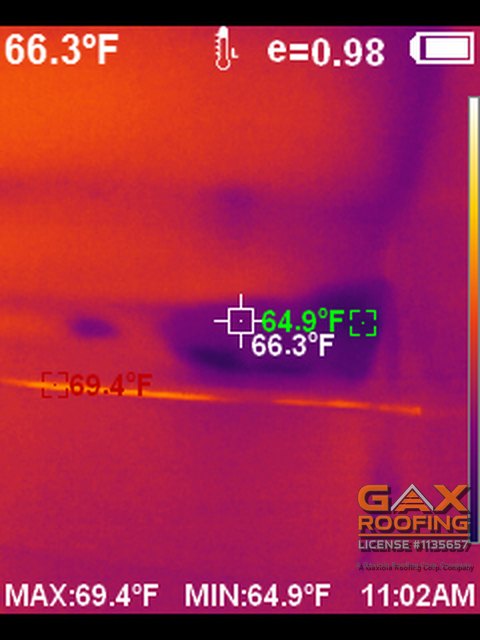
These are from repair calls around the Inland Empire, 2023 to 2024, and every one of them was a serious leak. Left is what the homeowner saw standing in the room. Right is what the camera saw at the same moment. Each pair is two frames from one camera, taken together, so there is no trick to it.
What you seeWhat the camera sees
Six ceilings, six leaks. The second one is the only room where the homeowner could already see a stain, and even there the wet area on the camera is bigger than the stain. On the other five, nothing was visible yet.
When a house shows this much, it is rarely a patch. It is usually a facet of the roof, or the whole roof. Some houses have too many leaks to chase one at a time, and we say so: the roof is done. But walking the homeowner through their own rooms with the camera does two things a quote cannot. It catches leaks before there is a stain, while the fix is still small. And it makes the timeline real. I have taken homeowners into their attic and shown them water dripping and dark spots on the wood in five places at once. At that point, nobody argues about whether they can wait.
One house, one morning. Four rooms in five minutes, and every one of them wet. This is what "it just needs a full replacement" looks like from the inside, before a single stain has shown up on the paint.
Three more houses, different years, same story. None of these homeowners could see any of this from the floor.
From wet path to entry point
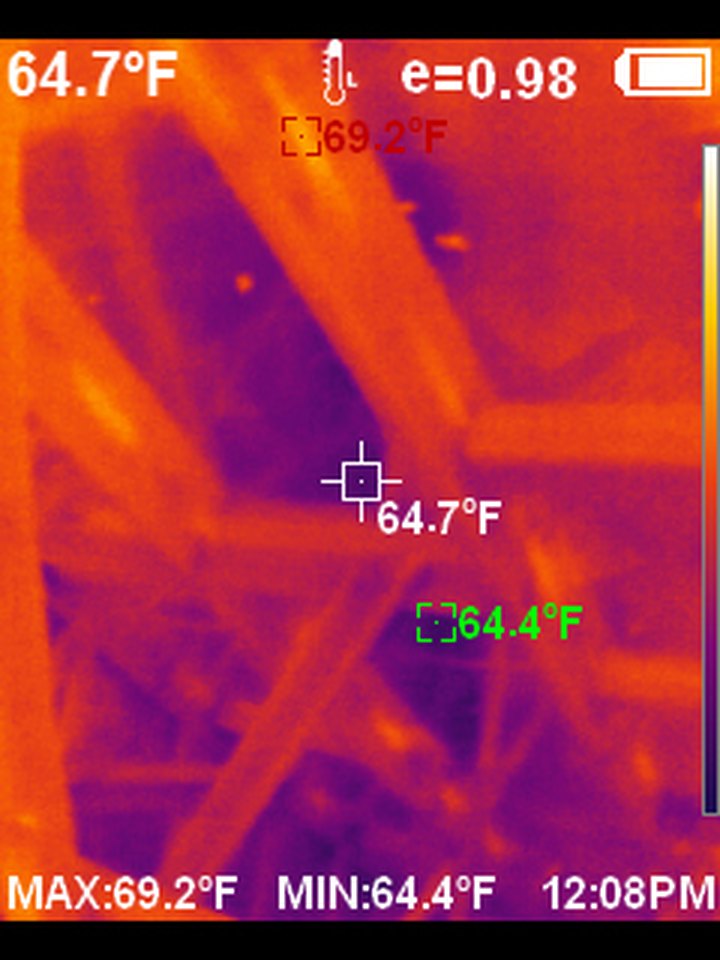
The camera does not fix anything. What it does is turn a guess into a map. We follow the wet trail across the ceiling and up into the framing, find where the moisture starts, and that is where the roof gets opened, at the source, not at the symptom.
Tracing the wet path through the framing. The trail ends where the water gets in, and that is where the repair goes.
On the Fontana job, the trail led to the hip. We opened that section, replaced the underlayment where the water was getting past it, and closed it up. One repair, aimed by instruments instead of aimed by the stain. And like every GAX job, you get the photos, so you can see exactly what was wrong and exactly what was done about it.
What this means for your repair bill
A leak found with instruments usually needs a smaller repair than people fear, because we are fixing an entry point, not chasing water damage around the roof. And a stain on your ceiling does not automatically mean you need a new roof. Sometimes it is one flashing. The honest answer depends on what the trail shows, and you will see the same photos we see.
If your roof is due for more than a patch, you will hear that straight too, with the evidence in your hands. That is the same answer we would give a family member, which is the only answer we give.
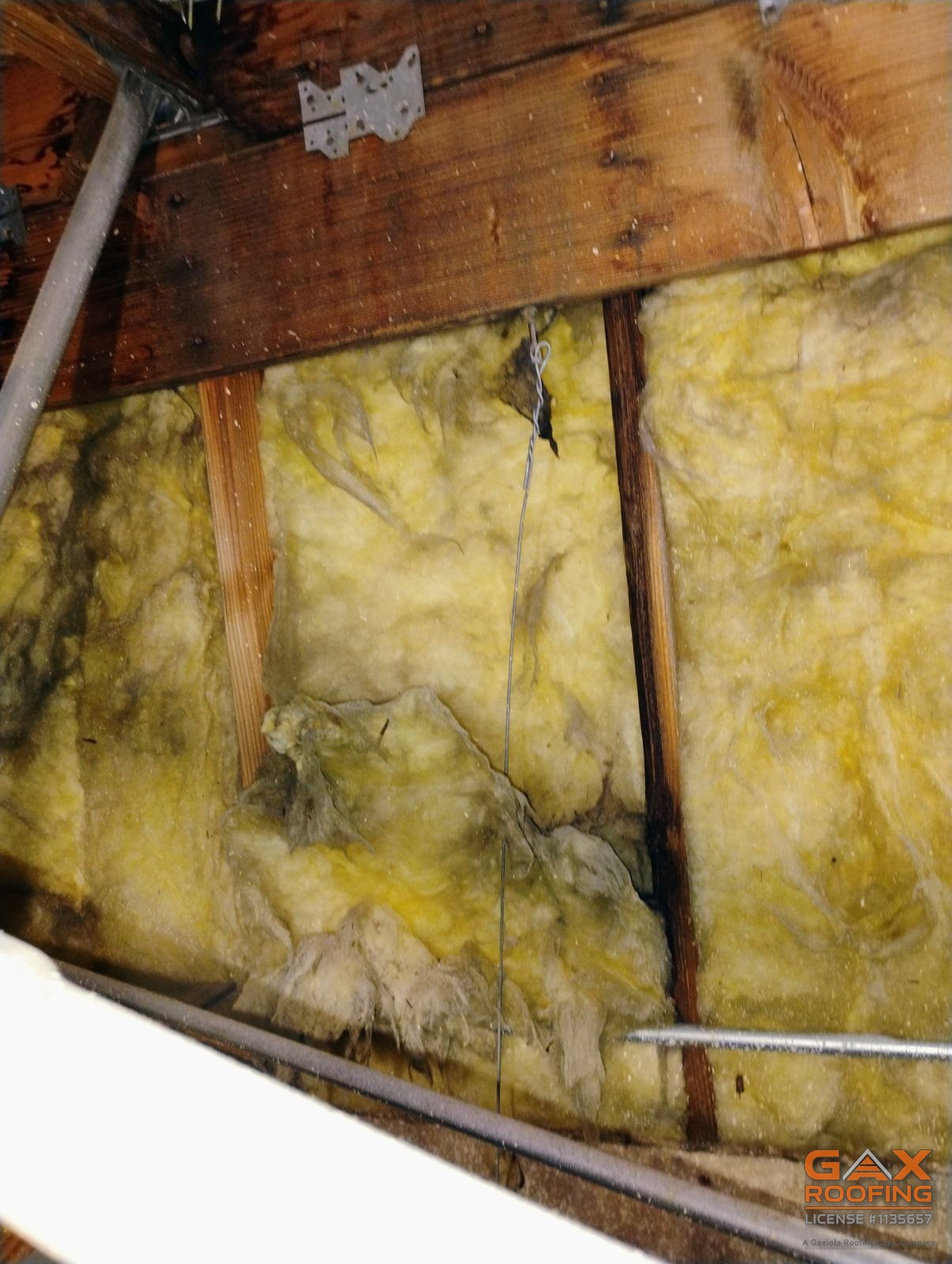
The scans above are the camera's version. This is what the same step looks like with nothing but a flashlight, on an inspection in Azusa. Thermal flagged an area from outside, we went into the attic, and the wood told us the rest.
Staining on the framing, seen from underneath. A camera cannot tell you this. It can only tell you where to look.
I will say it as plainly as I can. A thermal camera shows a temperature difference, not a leak. Cold spots happen for reasons that have nothing to do with water. If somebody shows you a thermal image and writes you a quote off it without going into the attic, they skipped the part that proves anything.
Thinking About New Tile?
Free estimate, straight answers, and if you are near a showroom, we might just take a field trip together.