The tile
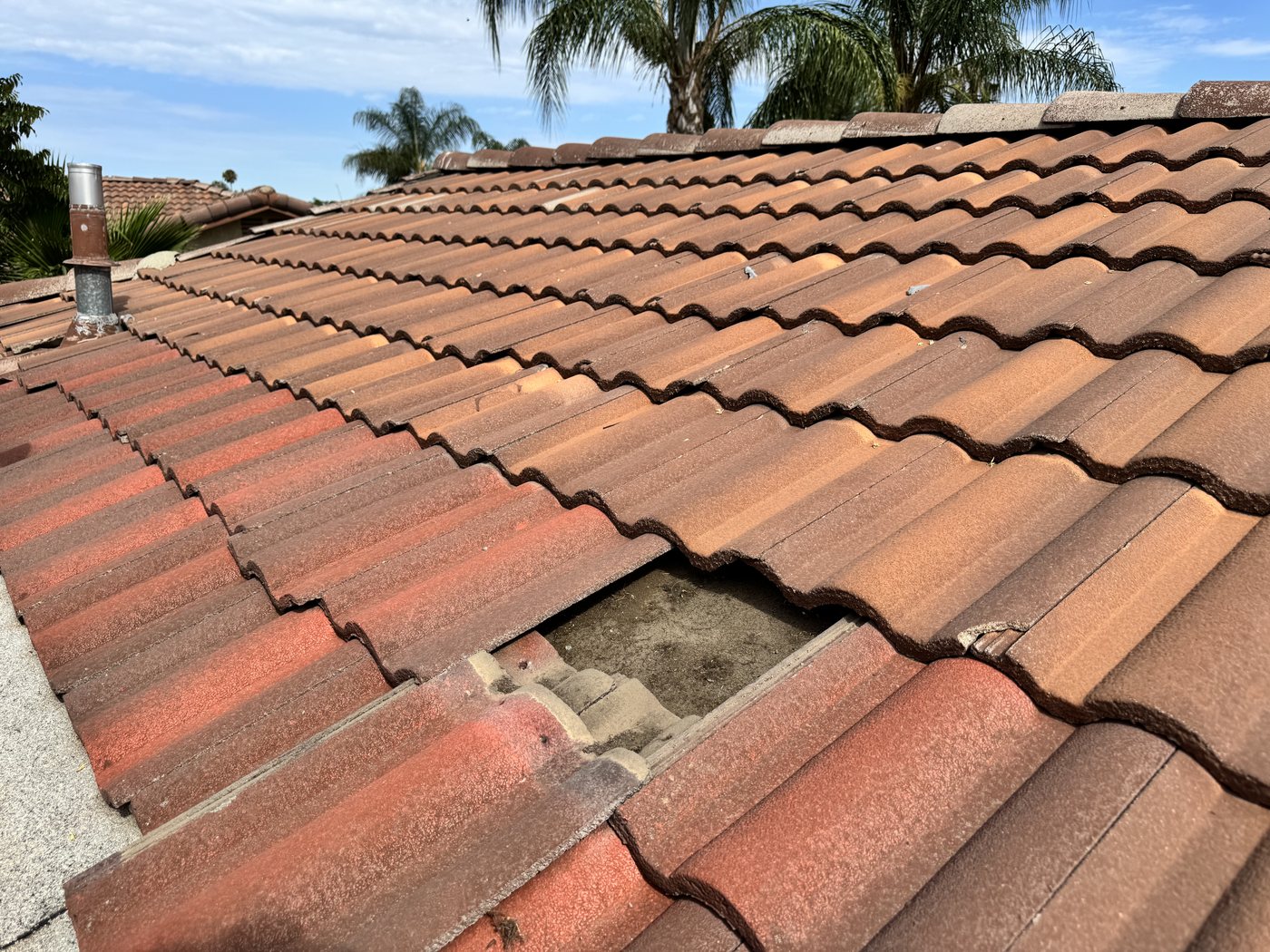
Cracked, chipped or broken pieces let water reach the underlayment faster. A few can be swapped. A cracked tile is not fixed with sealant: it comes out, and the underlayment under it gets looked at.
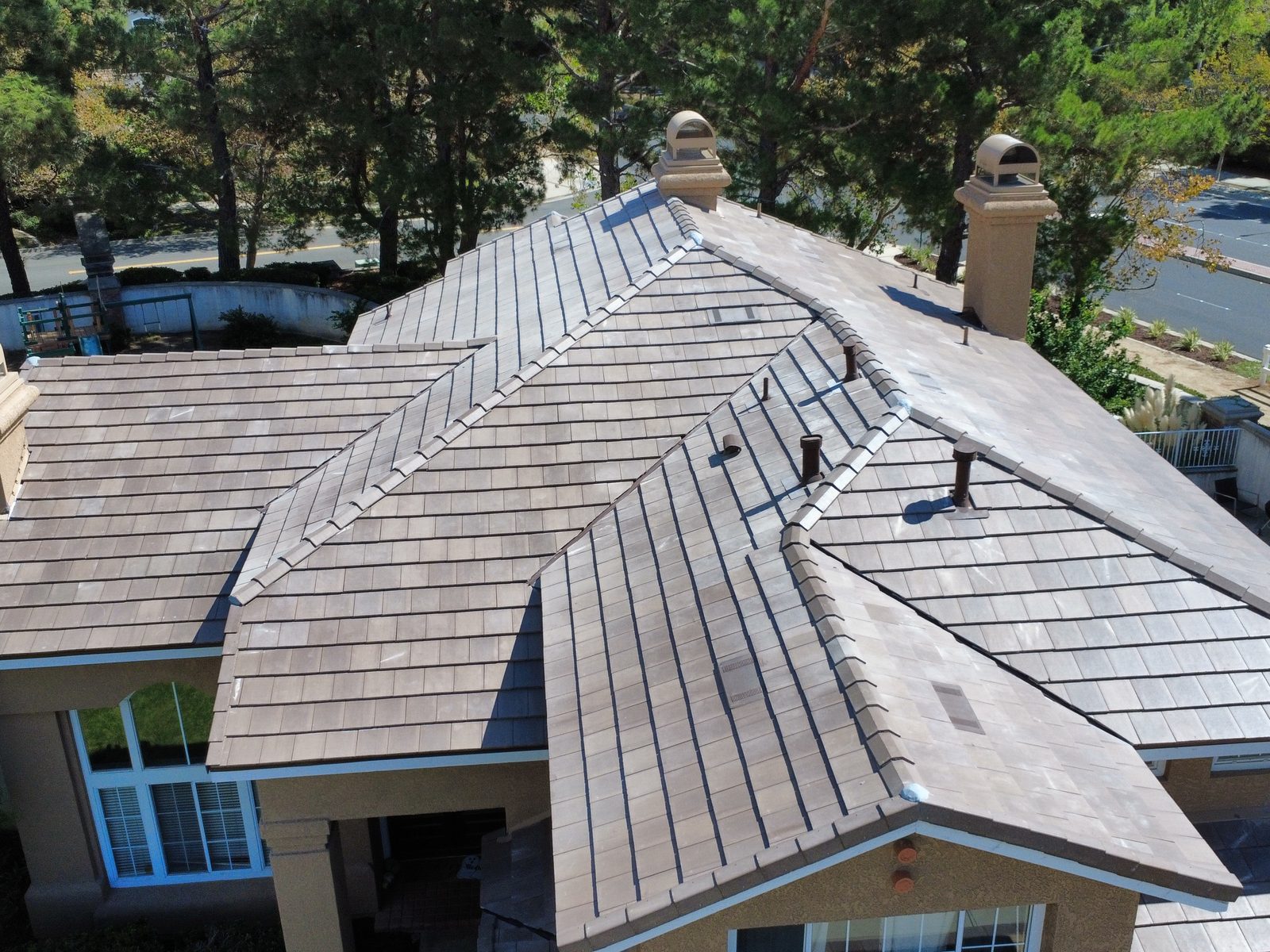
A leaking tile roof can need four very different jobs. The trick is finding which layer actually failed, because on most older tile roofs it isn't the tile.
Get a Free Estimate →The tile is the armor, the underlayment under it is what keeps the water out, and the battens and fasteners hold the tile in place. One leak from a broken tile or a bad flashing is usually a repair. Leaks in more than one spot, or tile that has never been lifted since the house was built, usually means the underlayment is done: if the tile is sound, that is a lift and relay. If the tile itself is cracked across the roof, discontinued, or you want a new look, that is new tile. And if you are done with tile, converting to shingle is a legitimate option.
On most older tile roofs we open in the Inland Empire, the tile is still good and the underlayment under it is what wore out. That changes the whole conversation, because the fix for a failed underlayment is not new tile. It is new underlayment.
Cracked, chipped or broken pieces let water reach the underlayment faster. A few can be swapped. A cracked tile is not fixed with sealant: it comes out, and the underlayment under it gets looked at.
The waterproofing layer on the deck. When it is done, leaks show up in more than one place and keep moving, no matter how many tiles get swapped.
Metal at walls, chimneys, pipes and valleys. A leak only in wind-driven rain often points here.
Tiles sliding out of their rows usually means the roof was spot nailed when it was built, and the underlayment has been carrying the load alone. More in our spot nailing post.
| Job | When it fits | What changes | Watch for |
|---|---|---|---|
| Repair | One leak, a few broken tiles, one failed flashing, on a roof whose underlayment is otherwise sound | The broken pieces and the flashing at that spot | Older profiles can be hard to match. A repair doesn't fix a layer that's done. |
| Tile lift and relay | The tile is sound but the underlayment is done: leaks in more than one spot, old tile never lifted, tiles sliding | Underlayment, flashings and valley metal; battens where the manufacturer calls for them; every tile fastened. Your own tile goes back on. | Aged tile can break in careful handling, so some replacement pieces are expected. |
| New tile | The tile is cracked or chipped across the roof, the profile is discontinued, or you want the house to look different | Everything, including the tile | It costs more than a relay. It is the job when the tile itself is done or the look is changing. |
| Tile to shingle | You are done with tile: the weight, cracked pieces every time someone walks the roof, or the look | The tile roof comes off to the deck and a complete shingle system goes on | Some cities and HOAs need approval to change roof material first. It only runs one way. |
A lift and relay, also called a tile reset, replaces the part that actually keeps the water out and puts your own tile back where it was. Same look from the street, a completely different roof underneath, and no new tile to buy.
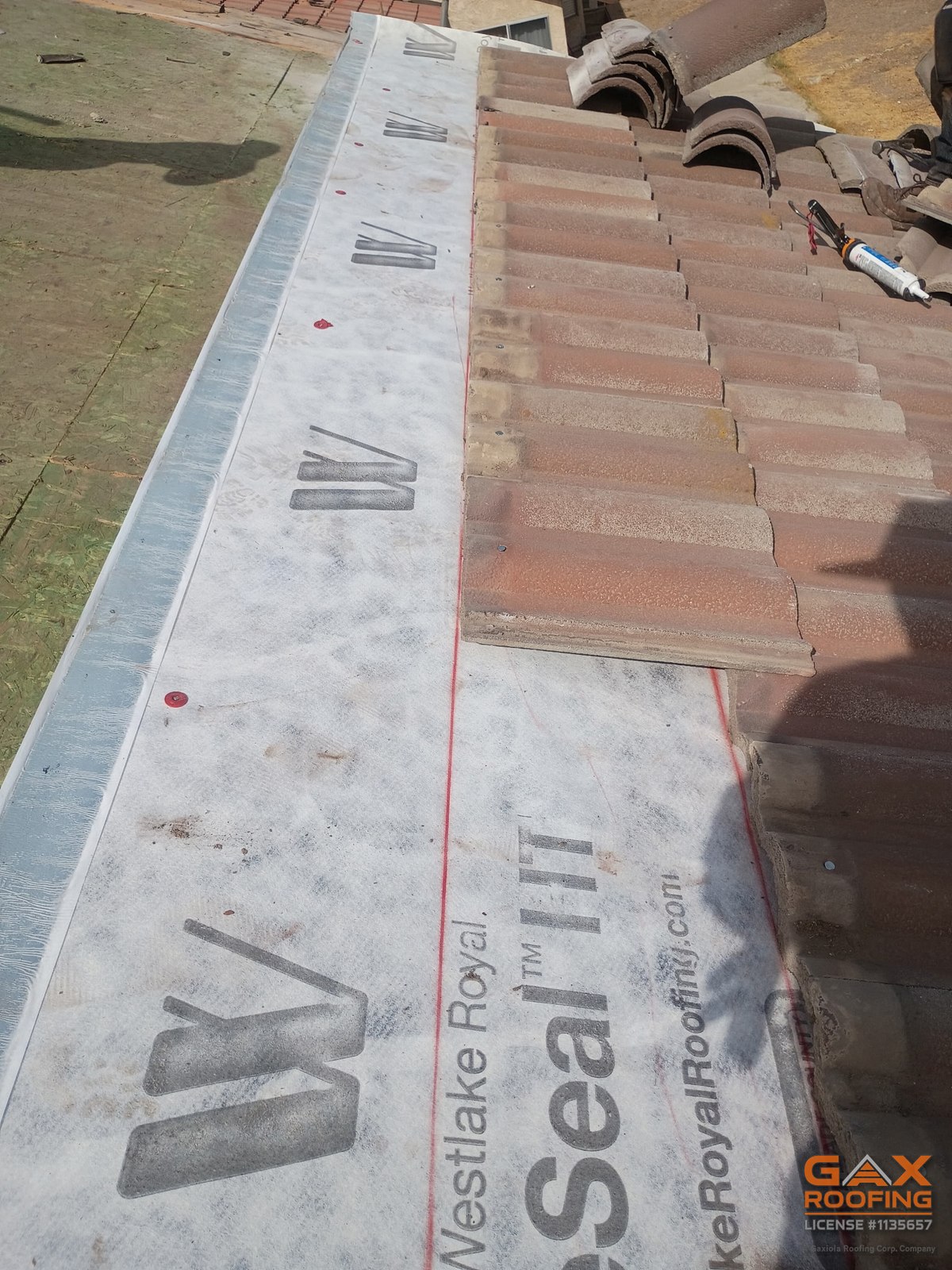
The new underlayment is a self-adhered peel and stick membrane, named in the contract: Westlake Royal TileSeal HT, Owens Corning Titanium PSU30 or Spyder PSU. Each carries a different manufacturer warranty, and our underlayment warranty post goes through what the papers actually say. Step by step, the job is in how a lift and relay works.
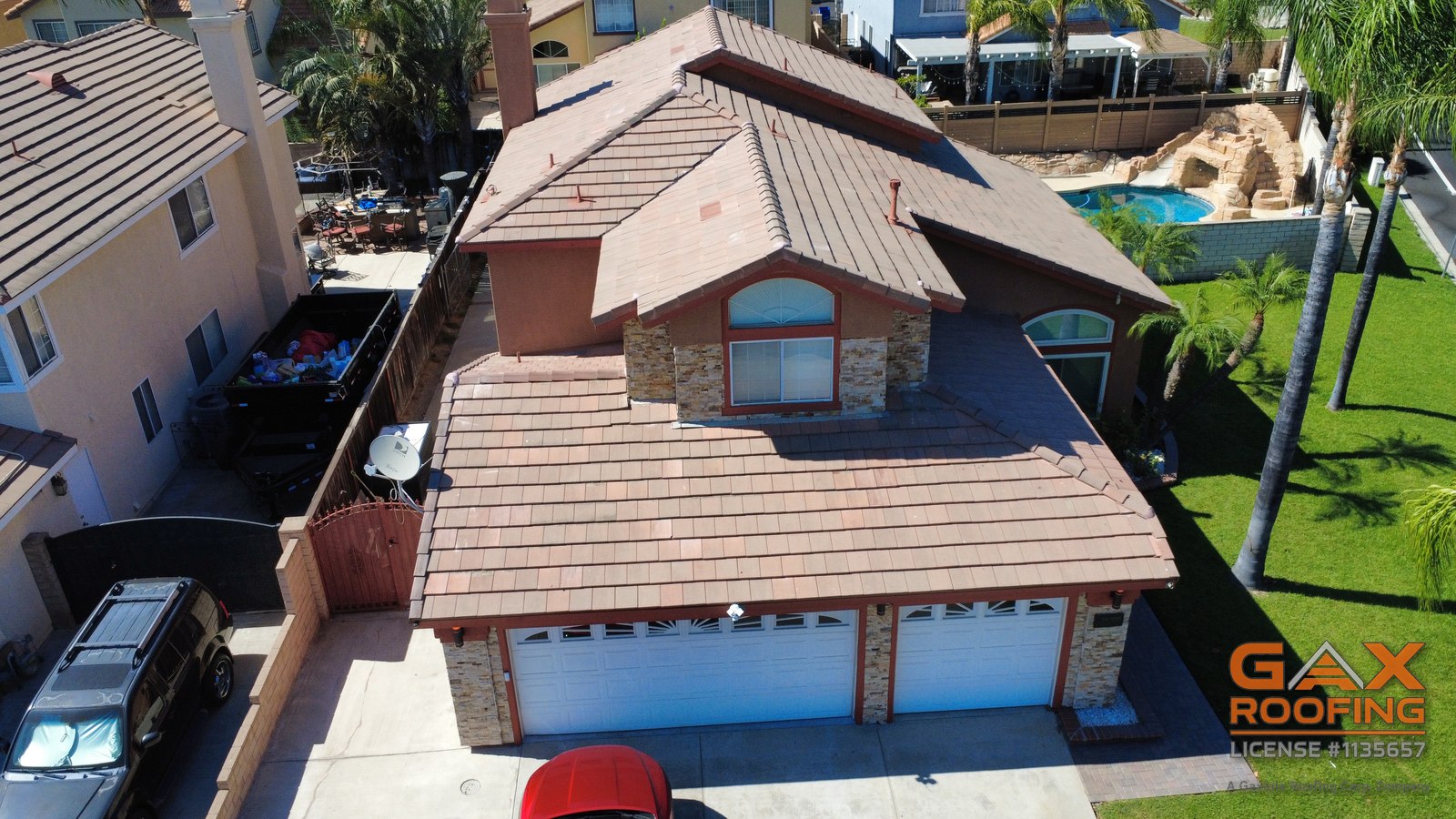
There are good reasons to replace the tile itself.
The waterproofing is the same either way: on a relay or a replacement, the old underlayment comes off to the deck and new underlayment goes down before any tile does. The difference is what goes back on top. The Etiwanda job in New Tile or a Relay? went from a discontinued Monier profile to new Westlake Royal tile.
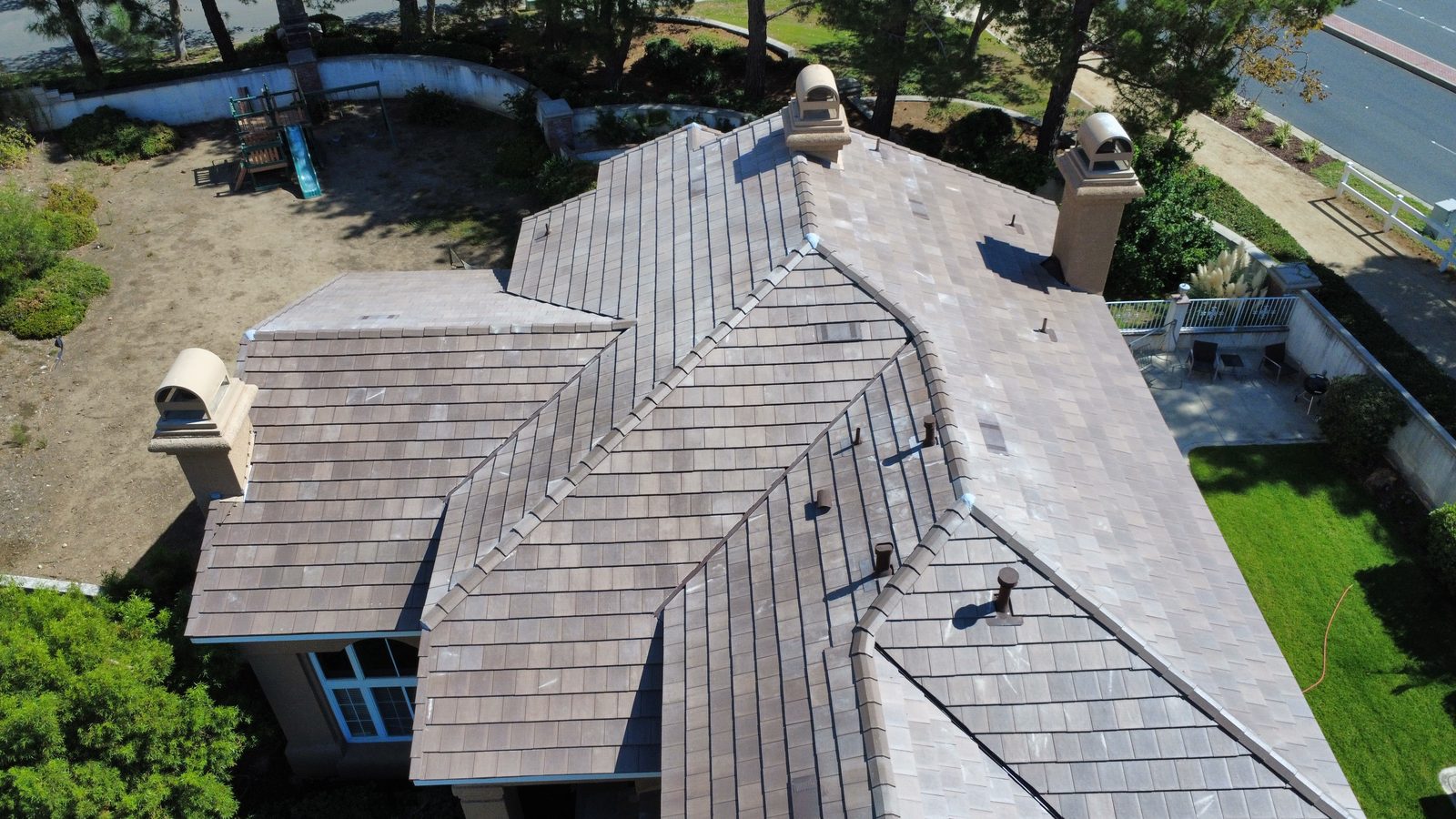
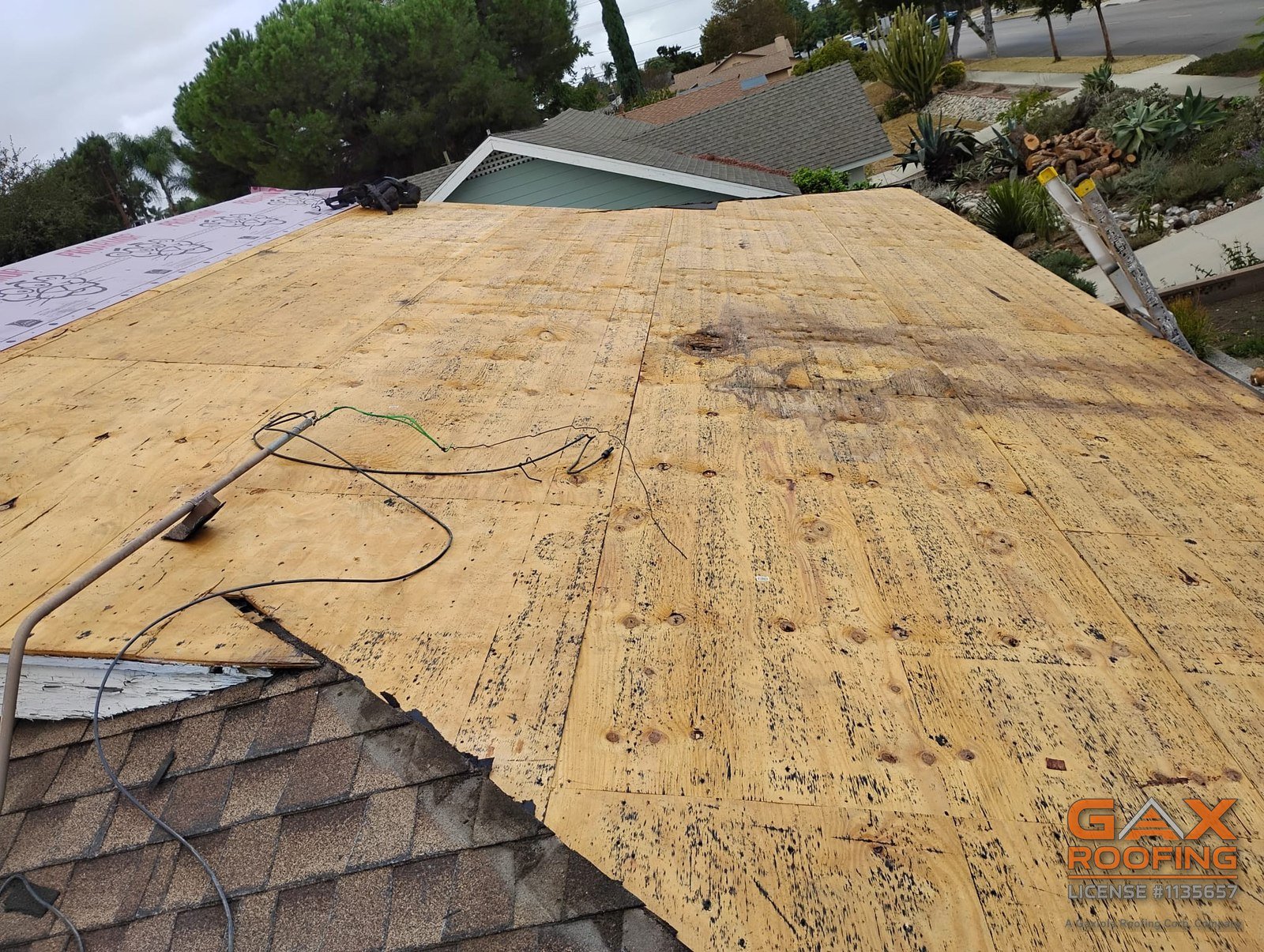
Some homeowners are simply done with tile. Converting to a shingle roof is a legitimate move, done properly: the whole tile roof comes off down to the wood, and a complete shingle system is built on the deck from scratch.
The weight comes off the structure, foot traffic stops cracking tile every time solar installers or anyone else walks the roof, and the look modernizes. When a tile roof needs a full replacement anyway, converting to shingle usually costs less than new tile.
If your tile is healthy and only the underlayment has aged out, you may not need a conversion at all. A lift and relay keeps your tile and rebuilds the waterproofing for less.
Changing roof material can need approval before work starts. Rancho Cucamonga, for one, requires Planning approval to change roof material type, and many HOAs have their own rules.
A house framed for shingles was not built to carry tile. We convert tile to shingle; we don't put tile on a shingle-framed house. More in can your house carry a tile roof.
We work on clay tile roofs too: repairs, lift and relays and replacements. Clay is beautiful, and if you love the look, a clay roof is worth keeping. It just takes a bigger standard of care than concrete.
Permits depend on the city and the size of the job. In Rancho Cucamonga, the city's reroof handout says a reroof or a lift and relay over 400 square feet needs a reroof permit, and a smaller repair needs a roof repair permit. Other cities have their own rules, so check with the building department for the address.
If you are in an association, the architectural committee usually wants the manufacturer, the profile and the color before any work starts, and changing material or color is exactly what they review. Our HOA roof approval page covers what committees ask for.
| What you see | What it usually means | Next step |
|---|---|---|
| One leak after a storm, a few broken tiles | A repair | Have the broken tile replaced and the underlayment under it checked |
| Leaks in two or three rooms | The underlayment is done | An inspection that looks under the tile. If the tile is sound, a lift and relay. |
| Tiles sliding out of their rows | Spot nailing, and the underlayment carrying the load | An inspection; often a lift and relay with every tile fastened |
| A leak that came back after a repair | The patch missed, or the layer underneath is done | An inspection, not another patch |
| Tile cracked all over, or a profile nobody makes | The tile itself is done | New tile, or a conversion to shingle |
| You love the look but it leaks | Usually the underlayment, not the tile | Ask about a lift and relay before anyone quotes all-new tile |
If someone quotes you all-new tile without checking whether yours can be reused, get a second look.
Often, yes, if the leak is in one spot and the underlayment under it is still sound. If leaks are showing up in more than one place, swapping tiles doesn't fix the layer that keeps the water out.
If the tile is sound, yes. That is a tile lift and relay: the tile comes up and gets stacked, the old underlayment comes off, new underlayment and flashings go down, and your own tile goes back on.
Yes. You keep the tile you already paid for and replace the part that wore out. New tile is the job when the tile itself is done, discontinued, or you want a new look, and it costs more.
Often, but not always. Older profiles and colors may not be made anymore, so matching takes looking, and the closest match goes where it shows the least. If a profile can't be matched and more repairs are coming, new tile may be the better long-term answer.
Yes. The whole tile roof comes off and a complete shingle system goes on. Some cities and HOAs require approval to change roof material first; Rancho Cucamonga requires Planning approval.
Not without the structure being checked. A house framed for shingles was not built for tile weight. We convert tile to shingle, not the other way.
Yes: repairs, lift and relays and replacements. Clay takes more care than concrete, so clay projects run a little pricier, and many older clay roofs convert to concrete tile instead.
Free in-home estimate, in writing, with every layer named, and an honest answer about whether your tile can be reused. We do four kinds of roofs: asphalt shingle roofs, tile replacement with new tile, tile lift and relay, and flat roofs, across the Inland Empire.
Next in the library: Understand Your Roof and How to Compare Roofing Bids.
Get a Free Estimate →Pages checked October 11, 2026. The GAX notes describe our own services. Field observations are what we see on Inland Empire roofs, not rules.