Front drone view of a Fontana home after a tile lift and relay by GAX Roofing
Homeowner Guide

Roof Maintenance
Calendar

Here a roof gets months of sun and dry wind, and then the first real rain finds everything summer broke. This is what to look at through the year, all of it from the ground, a window or the attic hatch.

Get a Free Estimate →
✓ C39 Licensed & Insured
◈ Free In-Home Estimates
⌂ Owner Runs Every Job
◐ Se Habla Espanol
Start here

The Short Answer

Look before the rainy season, after a big wind, and during the first real rain, and look from the ground, not the roof. CSLB's roofing guide puts it plainly: "the best way to preserve your roof is to stay off of it." Your job is to notice and take dated photos. Clearing valleys, lifting tile, resealing and anything on the roof itself is roofer work.

Safe for you to check

  • Tile lines and the ridge line, from across the street
  • The roof edge and the fascia, from the driveway
  • Granules in the gutters, the downspout splash zones or the yard
  • Valleys you can see from a window
  • Ceilings after a rain, and the attic from the hatch if it's safe
  • Photos of all of it, with the date

Leave to a roofer

  • Walking the roof, wet or dry
  • Lifting tile or shingles to look underneath
  • Clearing valleys or anything else on the roof
  • Resealing or replacing flashing
  • Tarping in a storm
  • Anything near a solar array or power lines
The year

The Calendar at a Glance

Before the rains

Late summer and fall

Tile lines, pipe seals, valleys, gutters and the debris a dry summer piles up. October is the time to schedule a tune-up or inspection.

After a big wind

Whenever one comes through

The ridge line, slipped or broken tile, lifted shingles and whatever blew into the yard. Wind damage often doesn't show until it rains.

When it rains

The first storm and after

Ceilings, the attic from the hatch, and where the water shows up. Dated photos. Stay off a wet roof.

Spring and summer

After the rains are done

Gutters, downspouts and fascia, a hot upstairs that points to ventilation, and anything on the roof that changed, like new solar.

Before the rains

Late Summer and Early Fall

Months of dry weather, then the first real rain. Whatever the summer broke, the first storm finds.

Tile that sits out of line

From across the street, look along the courses for tiles that sit different from their neighbors: dropped below the line, gaps of shadow, pieces sitting crooked. A few cracked tiles can be swapped. A lot of them, or tile sliding out of line, is a reason to look at what's underneath.
Pipe seals and sealant

The seals around plumbing vents dry out and split in our heat, and caulk stretches until it cracks. A failed pipe seal is one of the most common first-rain leaks we see. And caulk is not flashing: if caulk is the only thing between the rain and a gap, that's a repair, not maintenance.

Valleys

A valley catches everything: leaves, needles, dirt and grit. Look from a window. A crowded valley isn't an emergency today, but it's worth having someone look before the rainy season instead of after.

Gutters, and what's in them

Look at the gutters from the ground and at the splash zones under the downspouts. If they're full of what looks like coarse sand, that's granules coming off the shingles.

Trees and debris

Branches over the roof drop leaves and needles into the valleys and gutters. CAL FIRE's advice for the area right around the house is to keep dead plants and debris off the roof and out of the gutters, and to keep branches at least 10 feet from a chimney.

At GAXOur roof tune-up reseals pipe boots and vent collars, checks and reseals flashing, clears the gutters, blows out the valleys, replaces up to five broken tiles and ends with a written summary. It doesn't replace underlayment, and it doesn't turn a failed flashing into a good one; anything past the tune-up is quoted separately.
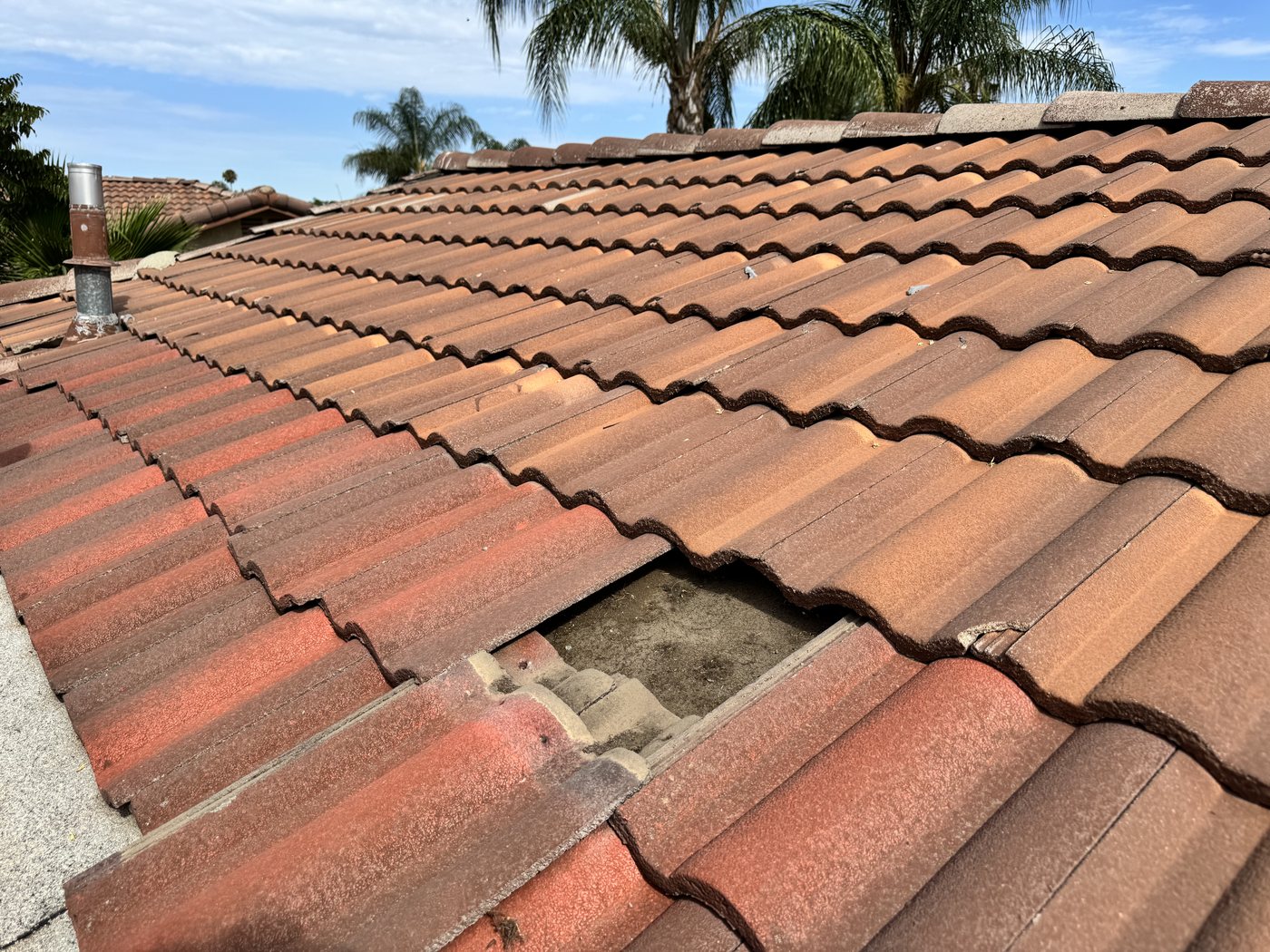
Missing and slipped tiles with exposed underlayment on a Riverside tile roof inspection
Riverside: missing and slipped tile. From the street, it shows up as a broken line.
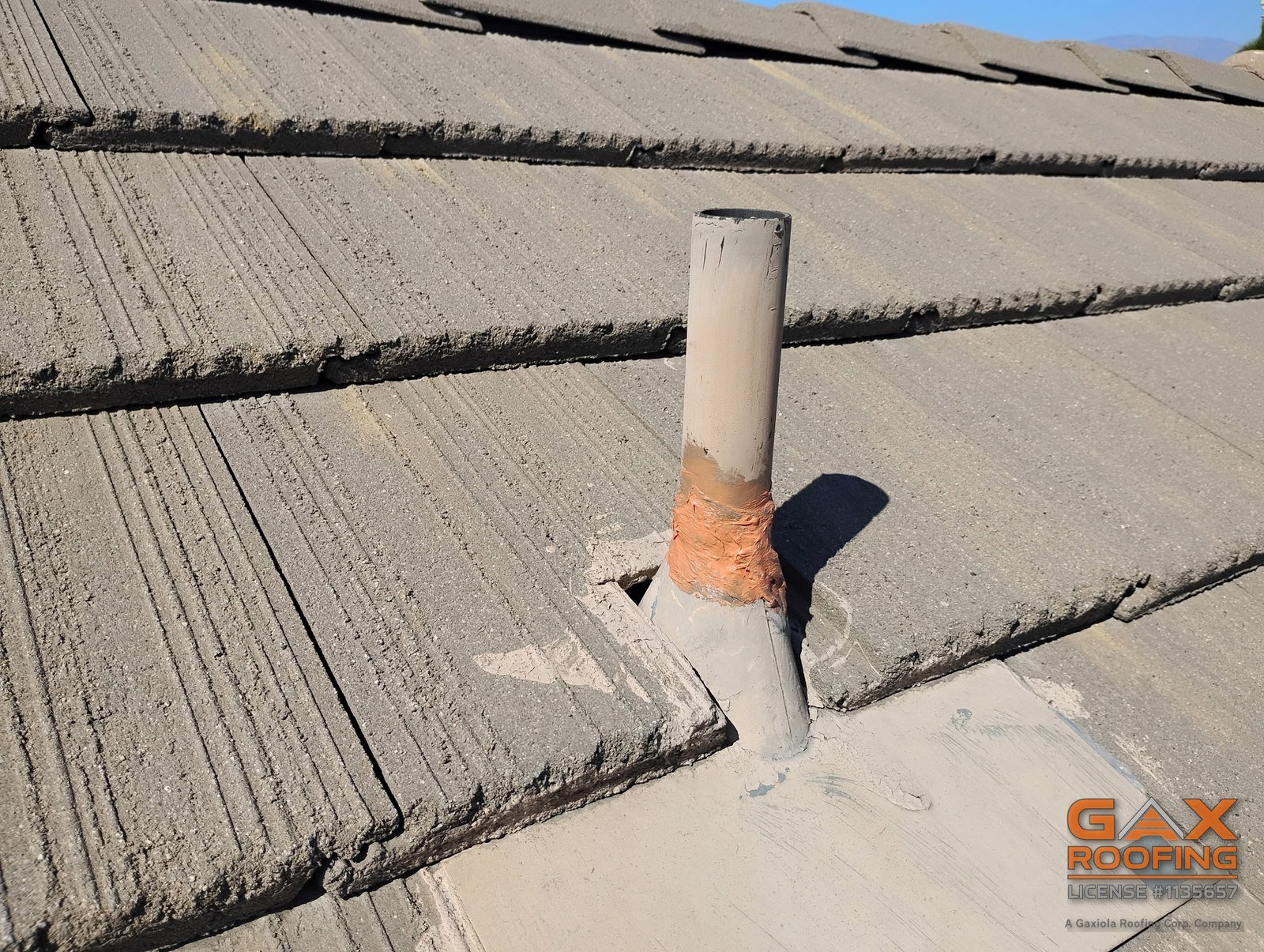
Pipe penetration on an Arcadia tile roof before a GAX Roofing tune-up, showing an old patched seal at the base
Arcadia: an old patch at the base of a pipe, found before a tune-up.
After a big wind

After Santa Ana Winds

The National Weather Service describes Santa Ana winds as strong, hot, dusty winds that come down toward the coast from the inland deserts. In our experience wind lifts shingles and loosens tile starting at the edges, hips and ridges, and the damage isn't always obvious from the ground. A lot of it shows up the next time it rains.

The ridge line against the sky

Caps that are lifting, curling or showing daylight through cracks are visible from the ground. Please don't get on the roof to check.

Tile lines and shingle edges

Look for broken or slipped tile, missing or lifted shingles, and flashing that moved, especially along the edges.

The yard

Pieces of tile, shingle tabs or a lot of granules in the yard tell you something came off the roof.

Photos before anyone touches it

Take photos from the ground and from inside, with the date, before any repair. They're the record of what the wind did.

Stay safe while it blows

During the wind, the National Weather Service says to get indoors, and to treat power lines on the ground as live.

At GAXOur storm inspection and the estimate are free. The written report is free when we do the repair, and a separate service if you only need the report.
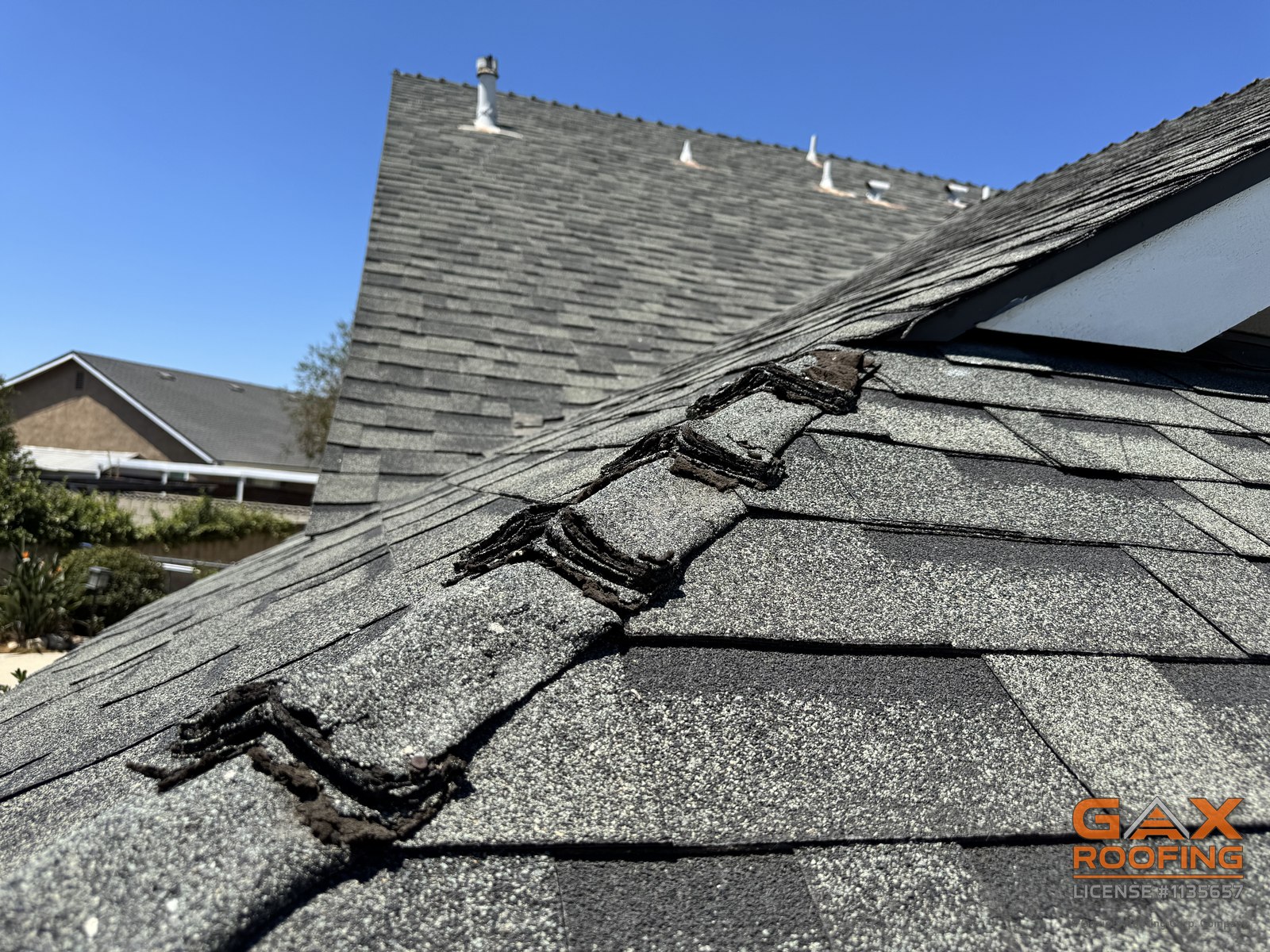
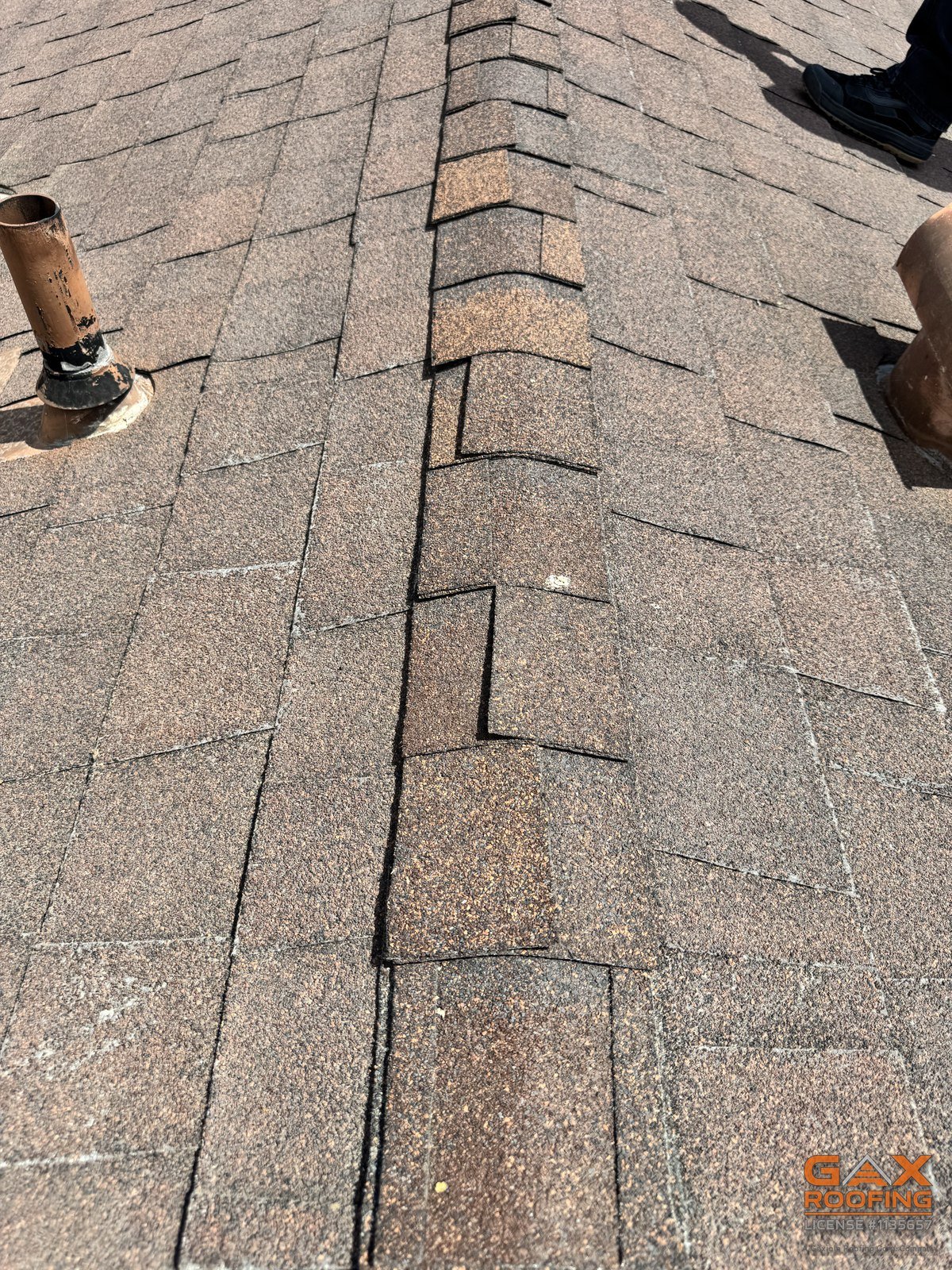
Aged ridge caps cracked down the middle on an Upland roof before replacement
Upland: ridge caps cracked down the middle. This was age, not wind, but it reads the same against the sky.
Cracked and lifted shingles found during a GAX roof inspection in Jurupa Valley, CA
Jurupa Valley: cracked and lifted caps found on an inspection.
When it rains

The First Real Rain

The ceiling stain is the last stop on the trip, not the first. Water gets in at one spot, runs along the underlayment or the framing, and shows up somewhere else.

Ceilings and walls

Walk the house during or right after the rain. Look for new stains, bubbling paint and drips, and write down which rooms and which kind of rain: every rain, or only the windy ones.

The attic, from the hatch

If you can get there safely, look from the hatch with a flashlight: no daylight, no stains, no soft or sagging spots, no wet insulation. Don't walk the attic if you're not sure where to step.

Don't paint over it

Paint hides the symptom, not the leak. Photograph the stain with the date first, and have someone trace it to where the water gets in.

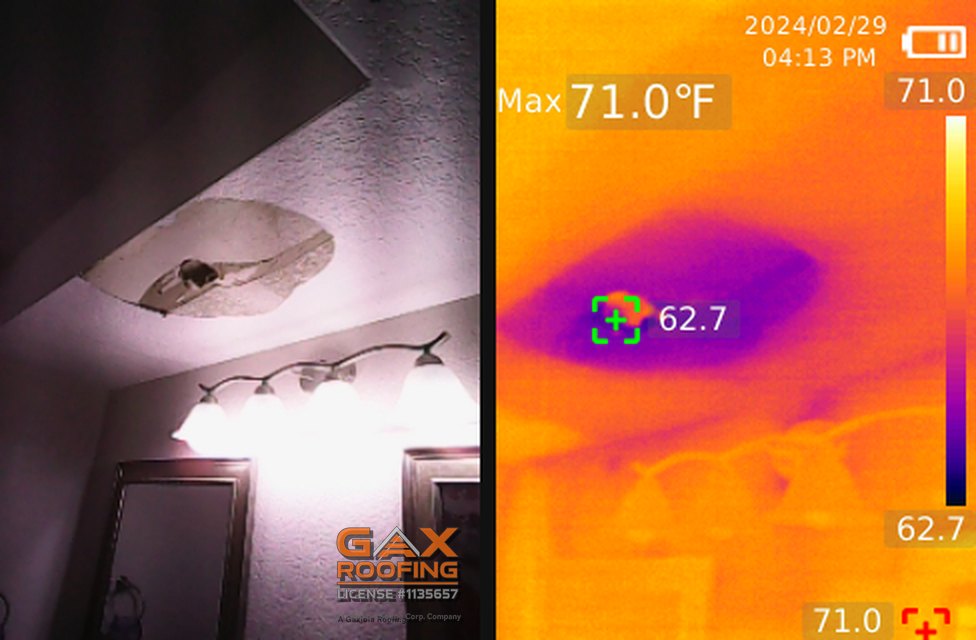
At GAXWhen we chase a leak, instruments point and people confirm: thermal shows a cold spot, and the attic confirms it. More in how we find a leak with thermal imaging.
Bathroom ceiling with a visible stain beside its thermal frame showing the cold wet area is larger than the stain
The stain you can see is smaller than the wet area the camera finds.
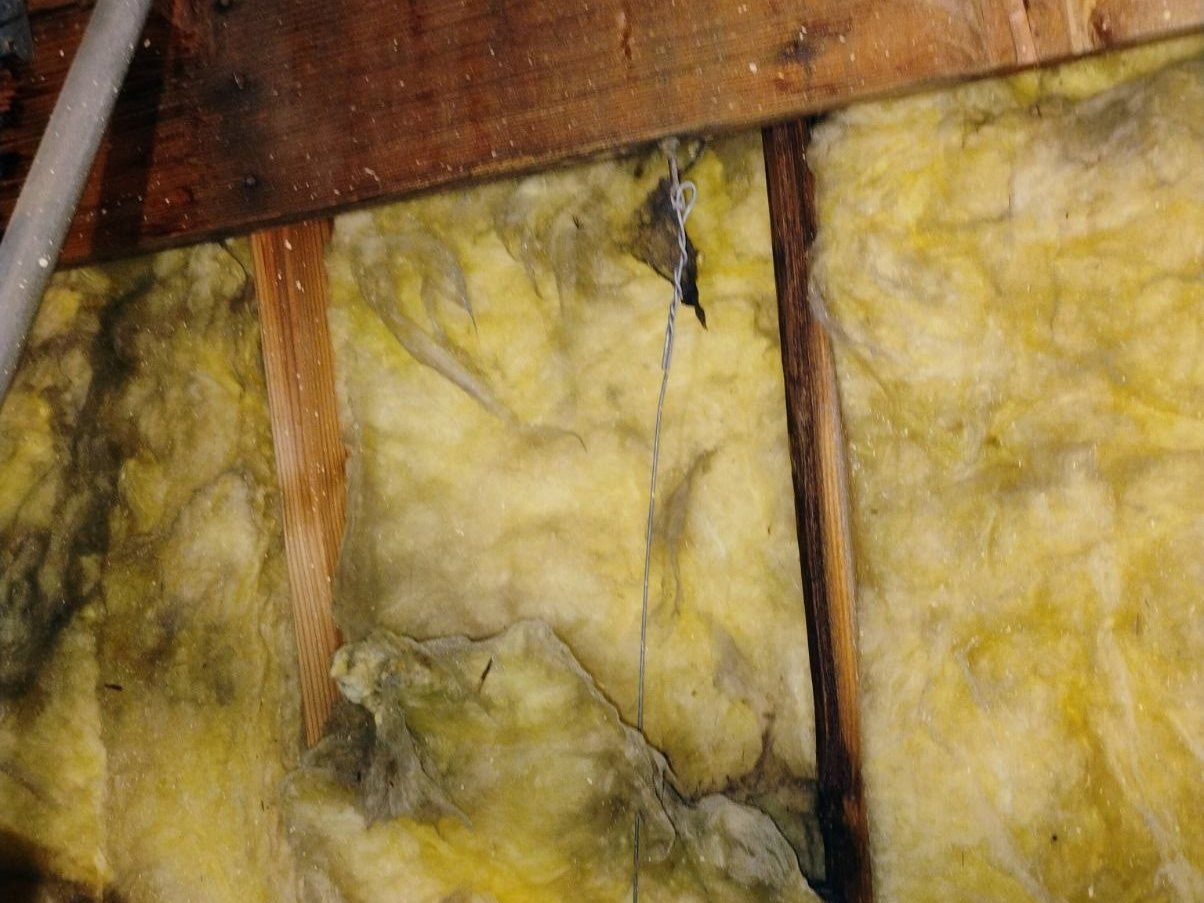
Dark water staining along a roof rafter and into the insulation, found during an attic inspection in Azusa
Azusa: water staining along a rafter, found from the attic.
Storm night

Winter Storms: What to Do, and What Not To

Inside first

Put buckets under the drips, move furniture and belongings out of the way, and protect what you can.

Water and electricity

Don't touch electrical equipment if it's wet or if you're standing in water. Turn off the power to the area only if it's safe to do so.

Stay off the roof

A wet roof is dangerously slick, and no leak is worth a fall. The roof will still be there when it dries out.

Call, don't send a form

Water coming into the house, a large section of roof open, or a tree on the roof is an emergency. Call a roofer. A tarp keeps the water out until a real repair. It isn't the repair.

At GAXFor an emergency, call us at (909) 819-8394 instead of sending a form. If it can wait until the next business day, we'll tell you that too. More on our emergency roof repair page.
Spring

Spring: Gutters, Fascia and Repairs

Gutters and downspouts

Once the rains are done, check from the ground that the gutters are attached and the downspouts send the water somewhere useful, away from the house.

Fascia and the roof edge

From the driveway, look along the edge. Shingles hanging over bare wood, or fascia that's peeling and dark along the top, means the roof edge isn't protected.

Penetrations

Every pipe, vent, skylight and solar mount is a hole in the roof with its own flashing. Note any that look different from last year.

Close out the winter's repairs

If something was repaired, get the photos of the entry point, before and after, and keep them with what was done and when.

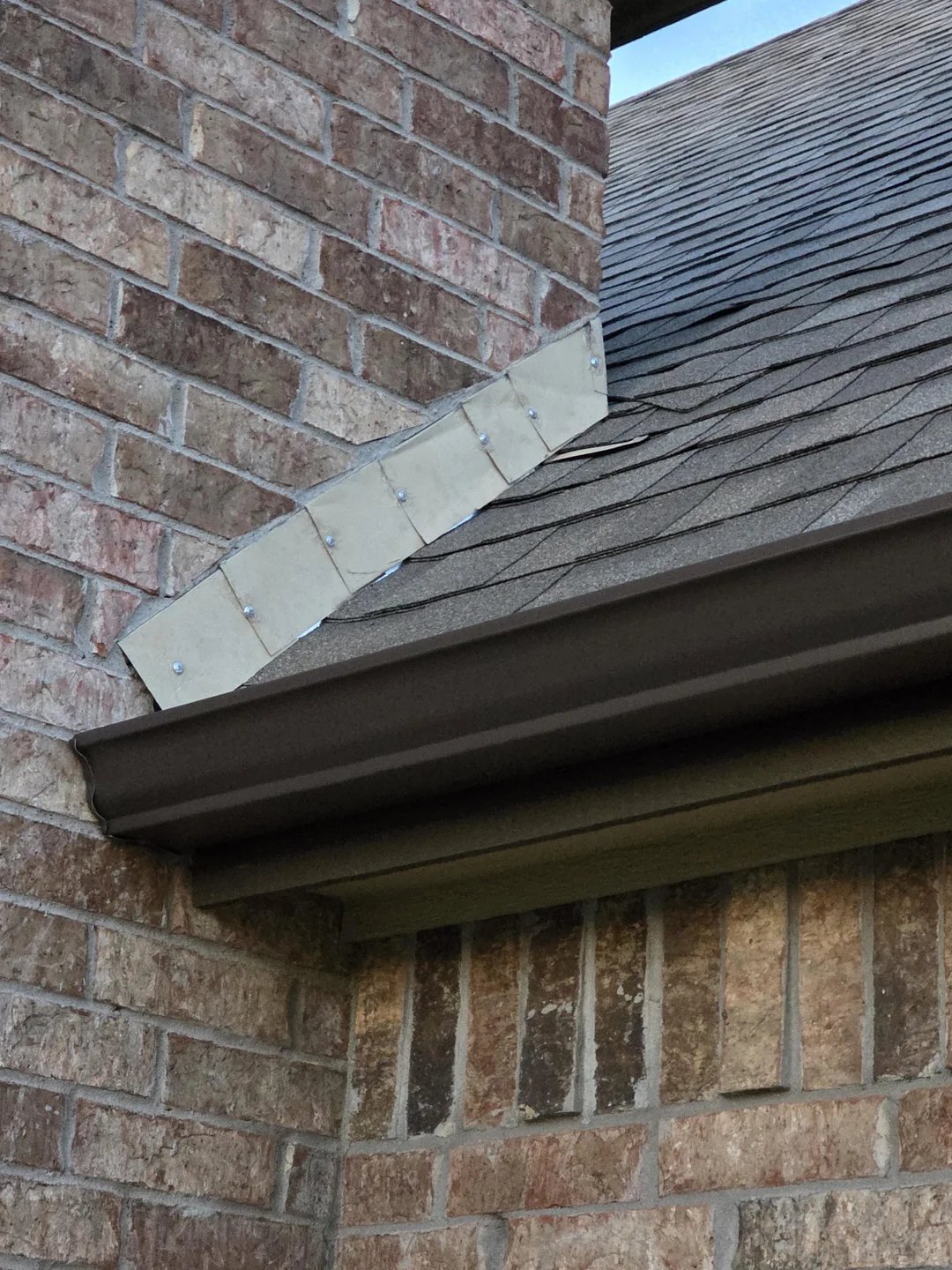
Counter flashing face-nailed flat against a brick chimney with exposed fastener heads, found on an inspection
Nail heads through the face of the flashing: a shortcut that leaks later.
Summer

Summer: Heat, Ventilation and Solar

A hot upstairs

If the upstairs is an oven by late afternoon, the attic may not be breathing. Air needs a way in low, at the eaves, and a way out high. More in our attic ventilation post.

Vents you can see

Whirlybirds that don't spin, rusted vents, or no high vents at all are worth having someone look at.

Solar on the roof

If panels went on and nobody has looked at the roof since, have a licensed roofer check the mounts, the tile around them and the attic below the array. More in our roof and solar planning guide.

The easy season for roof work

Dry weather is when a roof can be opened without racing the rain, so summer is the time to do the work the fall check turned up.

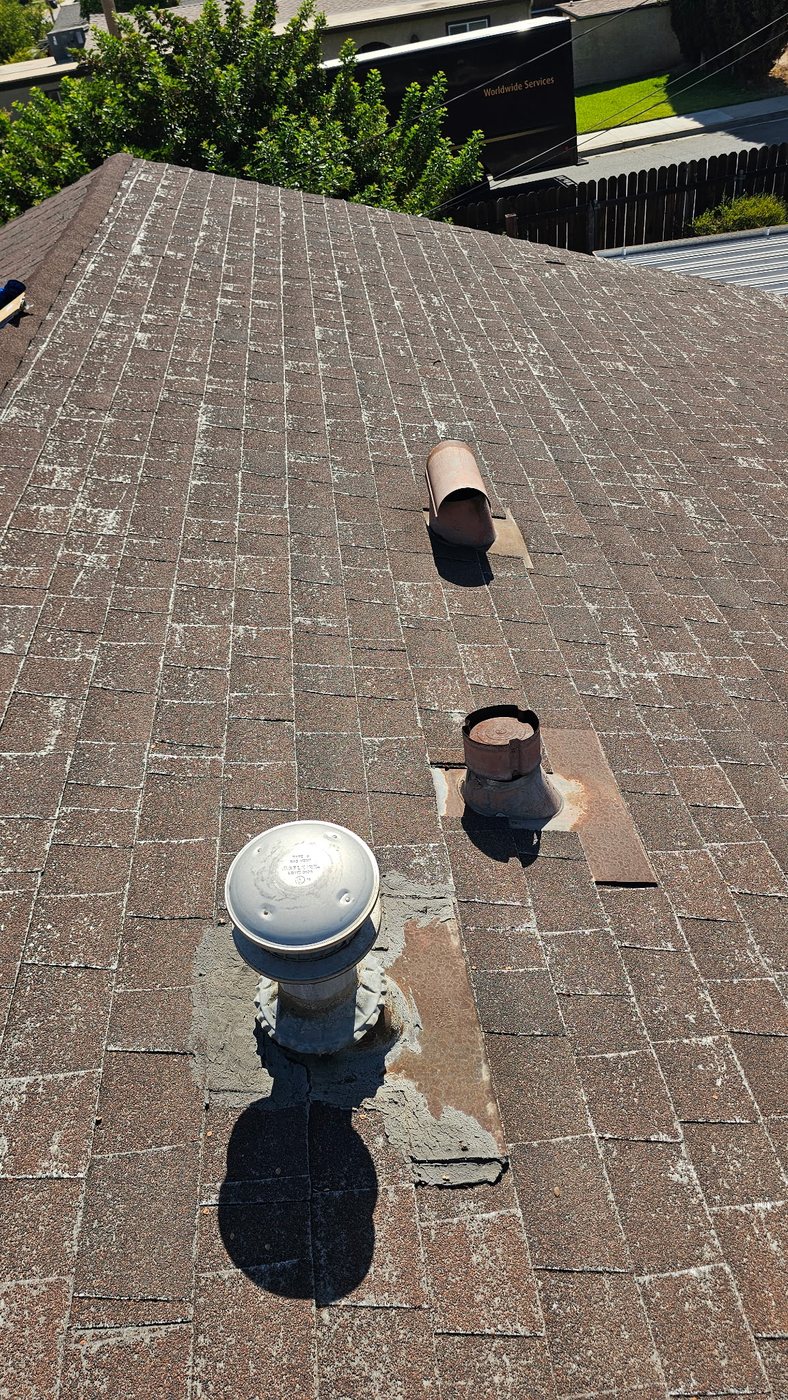
Worn shingles and aged roof vents with fiberglass showing through on a Riverside roof
Riverside: aged vents patched with mastic, and worn shingles around them.
What to do

Repair Now, Plan For It, or Get It Looked At

What you seeWhat it usually meansNext step
Water coming into the house, a large section open, a tree on the roofAn emergencyCall a roofer now. Buckets, and protect your things.
A few shingles off after wind, one failed pipe boot, flashing pulled away from a chimney, on a roof that's otherwise soundA repairSchedule it before the next rain
A few cracked tilesUsually a tile swapHave them replaced, and ask what's under them
A lot of cracked tile, or tile sliding out of lineSomething underneath may be failingAn inspection that looks under the tile
A leak that moves after every patchOften the underlayment is doneInspection with instruments, confirmed from the attic
Granules in the guttersThe shingles are wearingNot an emergency the first time. Plan an inspection.
A crowded valleyA leak waiting for a big stormHave it cleared and looked at before the rains
Solar went on and the roof was never checkedNobody knows yetHave the mounts and the tile around them checked

None of these alone tells you what a roof needs. They tell you it's time for someone to get up there and look.

Questions

Frequently Asked

How often should I have my roof checked?

Every two to three years is a reasonable rhythm for most Inland Empire homes, and every year before the rainy season for older roofs or homes that get more wind. Also after a big wind or rain, before you list a home, and if solar went on and nobody has looked since.

Is it safe to get on my roof to check it?

We don't recommend it. CSLB's roofing guide says the best way to preserve your roof is to stay off of it, and no leak is worth a fall. Check from the ground, a window or the attic hatch, and leave the roof itself to a roofer.

When is the best time to schedule a roof inspection in Southern California?

Before the rainy season, while the roof is dry and the calendar is open. October is a good month to schedule. After a big wind, don't wait for the rain to show you.

Should I clean my own gutters and valleys?

CSLB lists clearing leaves and debris from valleys and gutters as part of roof maintenance, and the same guide says the best way to preserve a roof is to stay off it. Our take: valleys and anything on the roof are a job for someone with the right equipment, and clearing them is part of a GAX tune-up.

What should I do about a water stain on the ceiling?

Photograph it with the date, write down when it shows up and in which kind of rain, put a bucket under any drip, and don't paint over it. The stain is rarely right under the leak, so have someone trace it to where the water gets in.

Do Santa Ana winds damage roofs?

They can. In our experience wind lifts shingles and loosens tile starting at the edges, hips and ridges, and the damage often isn't obvious until it rains. After a big wind, look at the ridge line and the tile lines from the ground and check the yard for pieces.

Want a second set of eyes before the rains? We look at it while it's dry, tell you what can wait and what can't, and put it in writing. We do four kinds of roofs: asphalt shingle roofs, tile replacement with new tile, tile lift and relay, and flat roofs, across the Inland Empire.

Next in the library: the Roof and Solar Planning Guide and How to Read a Roof Inspection.

Get a Free Estimate →

Sources

Pages checked October 6, 2026. The GAX notes describe our own services. Field observations are what we see on Inland Empire roofs, not rules.

Want a second set of eyes before the rains?
We'll look at it while it's dry.

(909) 819-8394