What a Satellite Cannot See
You can get a roof quote in two minutes now from an aerial image, without anybody coming out. The measurement is usually accurate. The price is a guess, and on a tile roof it is a guess about the only part that matters.

You can get a roof quote in two minutes now from an aerial image, without anybody coming out. The measurement is usually accurate. The price is a guess, and on a tile roof it is a guess about the only part that matters.
I want to be fair about this, because aerial measurement is genuinely good technology and we use imagery ourselves. From a satellite or a drone you can get square footage, pitch, the number of roof planes, the number of penetrations, the length of the ridges and the valleys. On a simple roof that data is close enough to work from.
Here is the part that gets skipped. Every one of those numbers describes the surface. Not one of them tells you anything about what is under it. And on a roof replacement, what is under it is the job.
When we price a tile roof, the square footage is the easy part and it is settled in about four minutes. The number moves on things nobody can see from above:
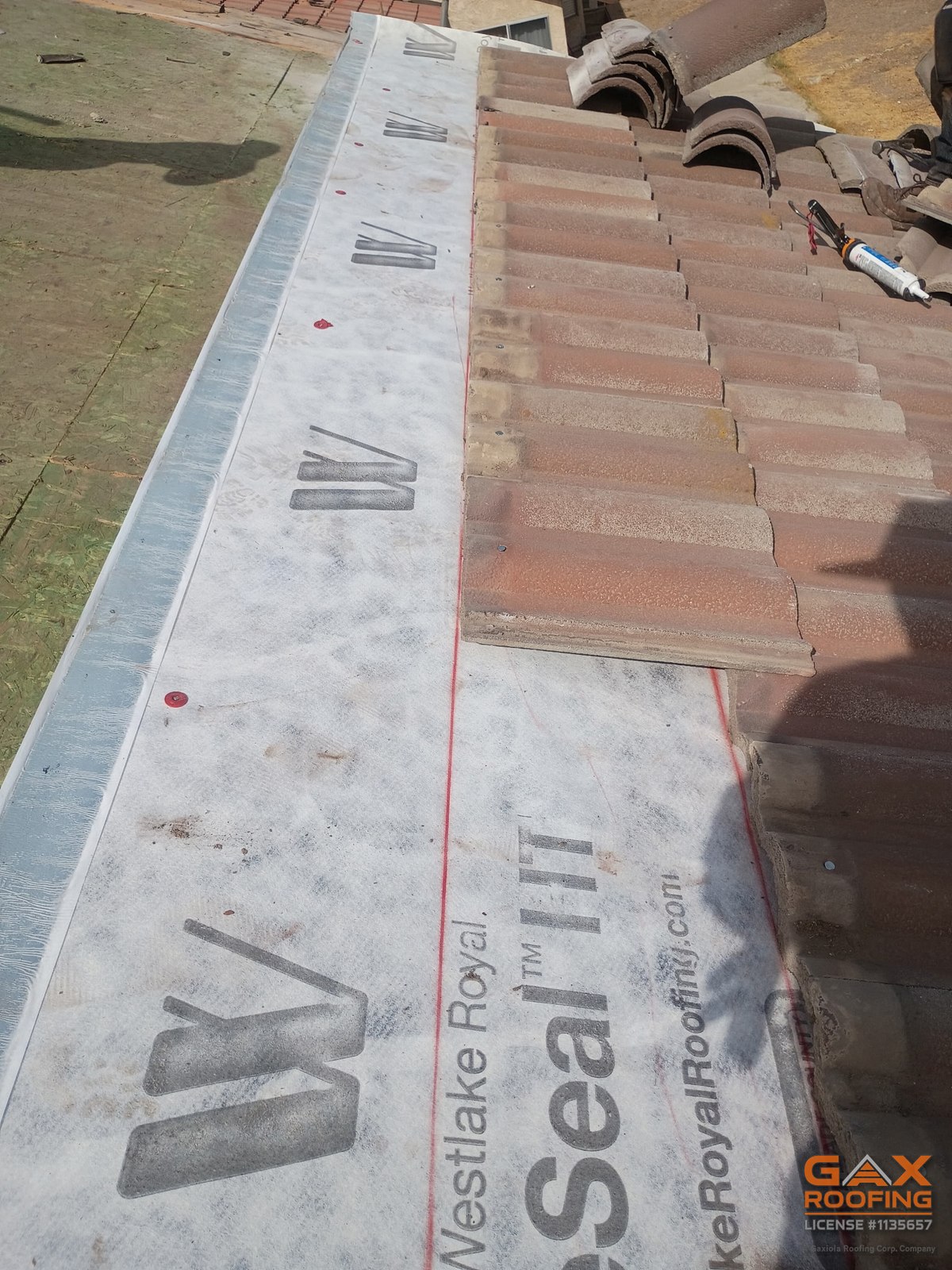
That photo is the whole argument. From the street and from the air, that roof looked like a tile roof. Everything that set the price on that job is in the part you can only see once the tile comes off.
This is the one I care about most, because it is the one that turns into a change order.
There is no way to know how many layers of roofing are on your house without somebody looking at the edge of it. Not from a satellite, not from a drone, not from the street. You get on the roof and look at the rake, or you lift something, or you get in the attic. That is the whole method.
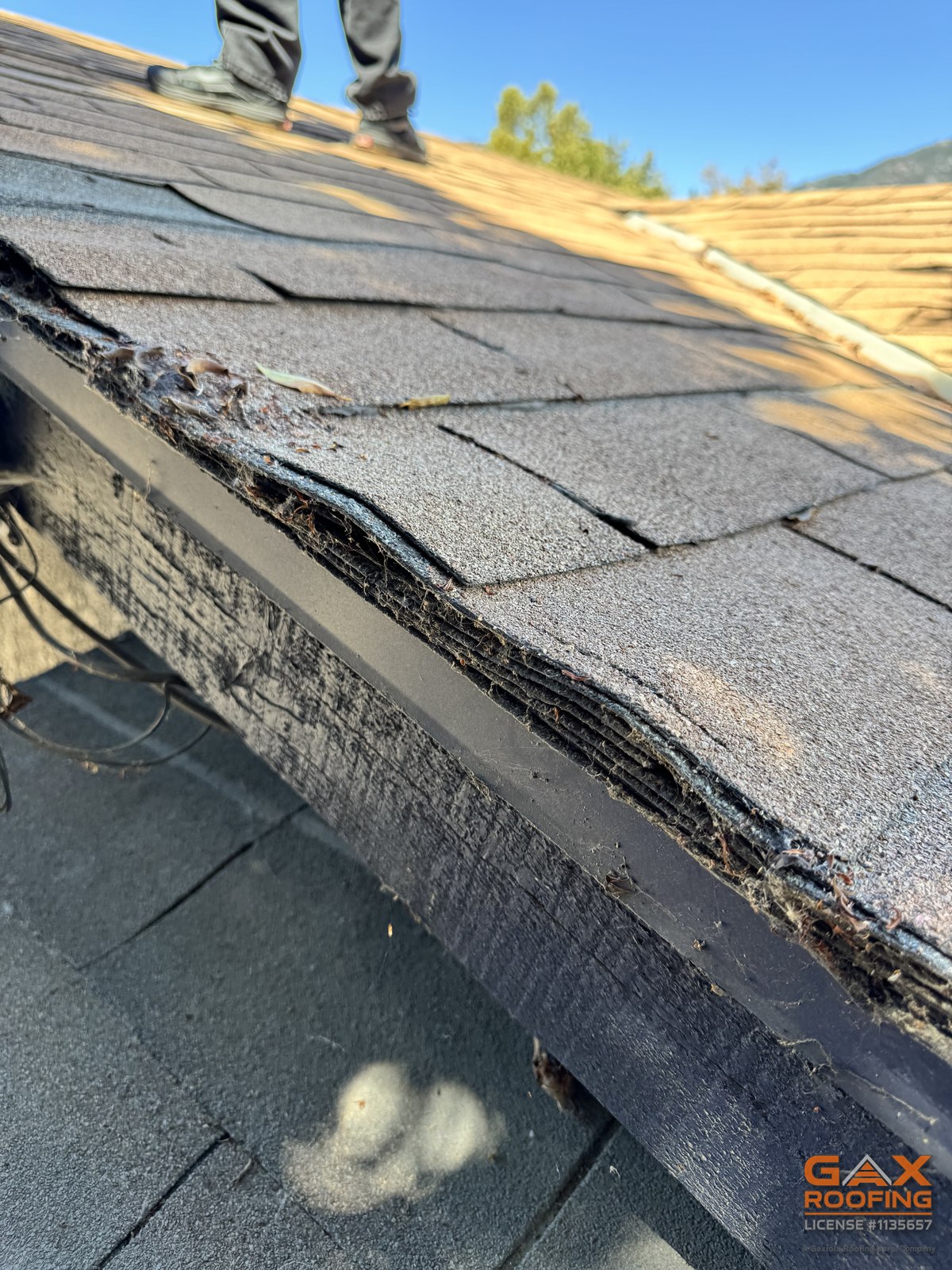
That is what counting layers actually looks like. A person on the roof with their eyes on the rake. From directly overhead every one of those layers is invisible, because you are looking at the top of the stack.
Wood shake is the same problem and a bigger bill. We opened a roof in Colton that read as a normal shingle roof from every angle, and under the shingles was the original wood shake from a layover somebody did decades ago. Shake sits on spaced boards with gaps, which means that job was never a tear-off and a re-cover. It was a full resheet, new deck across the entire roof, before a single new shingle could go down.
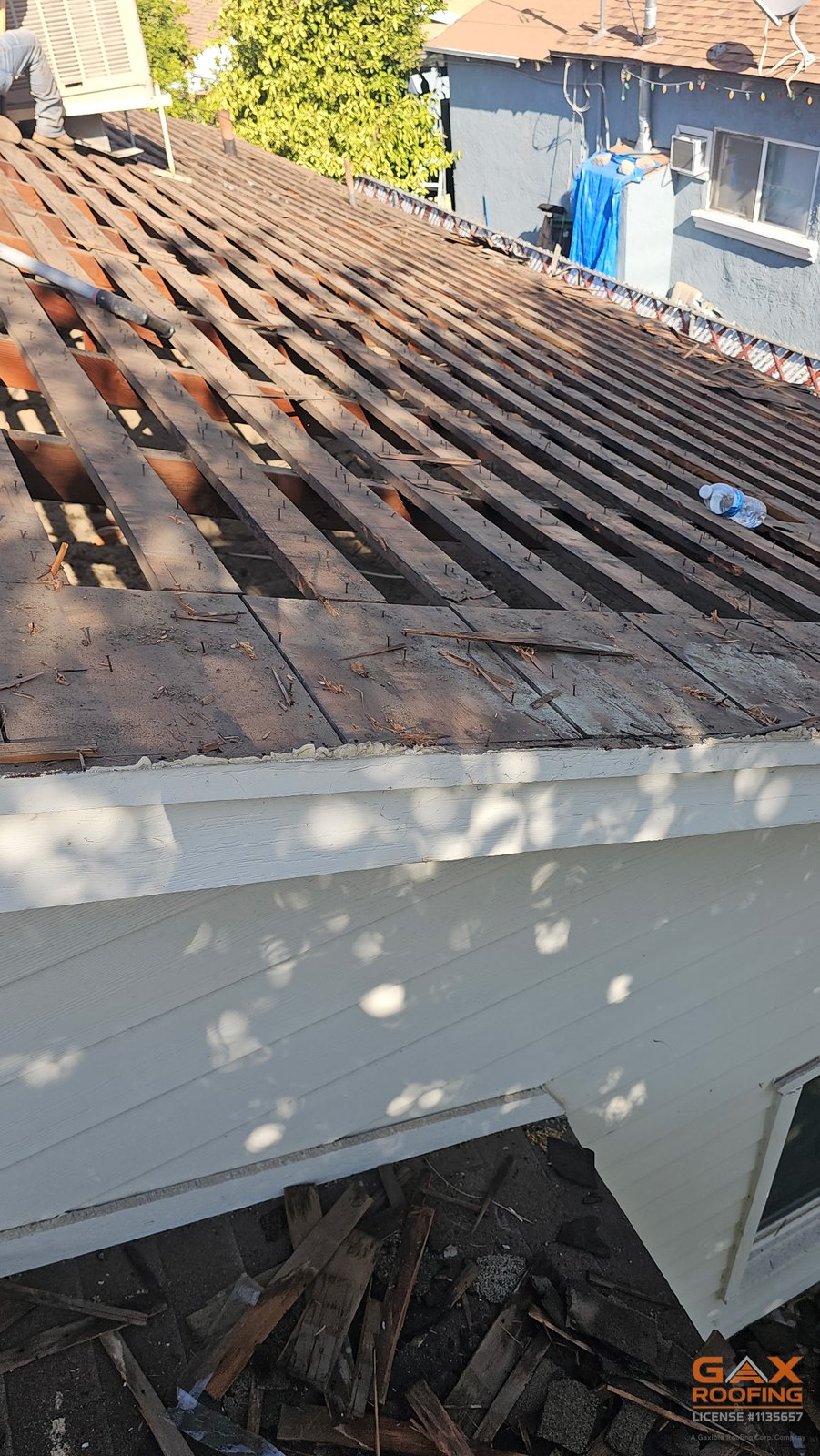
No aerial image on earth was going to show that. The whole Colton job is written up here if you want to see how it went.
Nobody wants a surprise change order, and we do not want to be the ones delivering one. A change order that exists because we never physically looked at the roof is not a surprise. It is a thing we chose not to find out. So we check. Every time, before the number, not after.
The tell on an instant quote is not the number. It is when the inspection happens. Read carefully and you will usually find that somebody still comes out to "confirm measurements," and that visit happens after you have the quote, sometimes after you have signed.
That is the moment the scope can change. And the language that lets it change is usually right there in the fine print, written broadly: additional layers, damaged decking, code compliance, steep pitch, limited access, material price changes. Those are all real things that really do come up on roofs, and our own proposals account for them too. I am not saying anybody is being dishonest by listing them. Every roofer has to.
I am saying that a price with all of those exceptions attached is not really a price yet. It is an opening number. If the walk-through comes after the quote, the quote was never the quote.
Any bid can be the lowest if it controls what is in it. That is true of any bid from anybody, ours included. It is not a trick, it is arithmetic. The way to compare two numbers is not to compare the numbers. It is to make both of them name the same things.
Ask both bids to put in writing what underlayment, by product name. What flashings, and whether all of them are being replaced or only some. How much wood replacement is included, as an actual quantity or an actual rate, not the word "partial." Who pulls the permit, who pays for it, and whether there is a separate fee for handling it. What the labor warranty covers and for how long.
When both bids answer those five, the comparison gets easy and it usually stops being about price. We wrote a longer version of this as a checklist for comparing roof bids, and the five questions a homeowner asked us before signing a $42,000 tile quote is the same idea from the customer's side.
Permits are a good test because the cost is public and the city sets it, not the roofer. So there is no reason for it to be vague.
On our proposals the permit is either included or it is reimbursed at cost, and the paper says which one. What you want to watch for anywhere is a handling or processing fee charged on top of the actual permit cost, and whether that charge shows up before you sign or after. A fee that lands after signature is not part of the price you compared.
Somebody gets on your roof. We walk it, we get in the attic where there is access, and on a leak call we run an infrared survey first because the ceiling stain is usually nowhere near where the water is getting in. You get the photos, including the drone shots, and they are yours to keep whether you hire us or not.
Then the number comes with the parts list attached, and the things nobody can know until the roof is open come with a named rate instead of a shrug. Our contract names a per sheet rate for decking before we start, so a surprise on day two is a known number and not a negotiation while your house is open. That is covered on the roof replacement page.
It takes longer than two minutes. That is the trade.
Free in-home estimate, the full parts list in writing, and the photos are yours either way.
(909) 819-8394