The Leak Was at the Front Door.
The Problem Was Above the Patio.
A Huntington Beach homeowner had water at the front door every time it rained. The tile roof over the patio looked fine from the street, and it was. The water was coming off the second story and bouncing backward under the flashing. Here is what we found and what a real fix looks like.

Where the Water Was Really Coming From
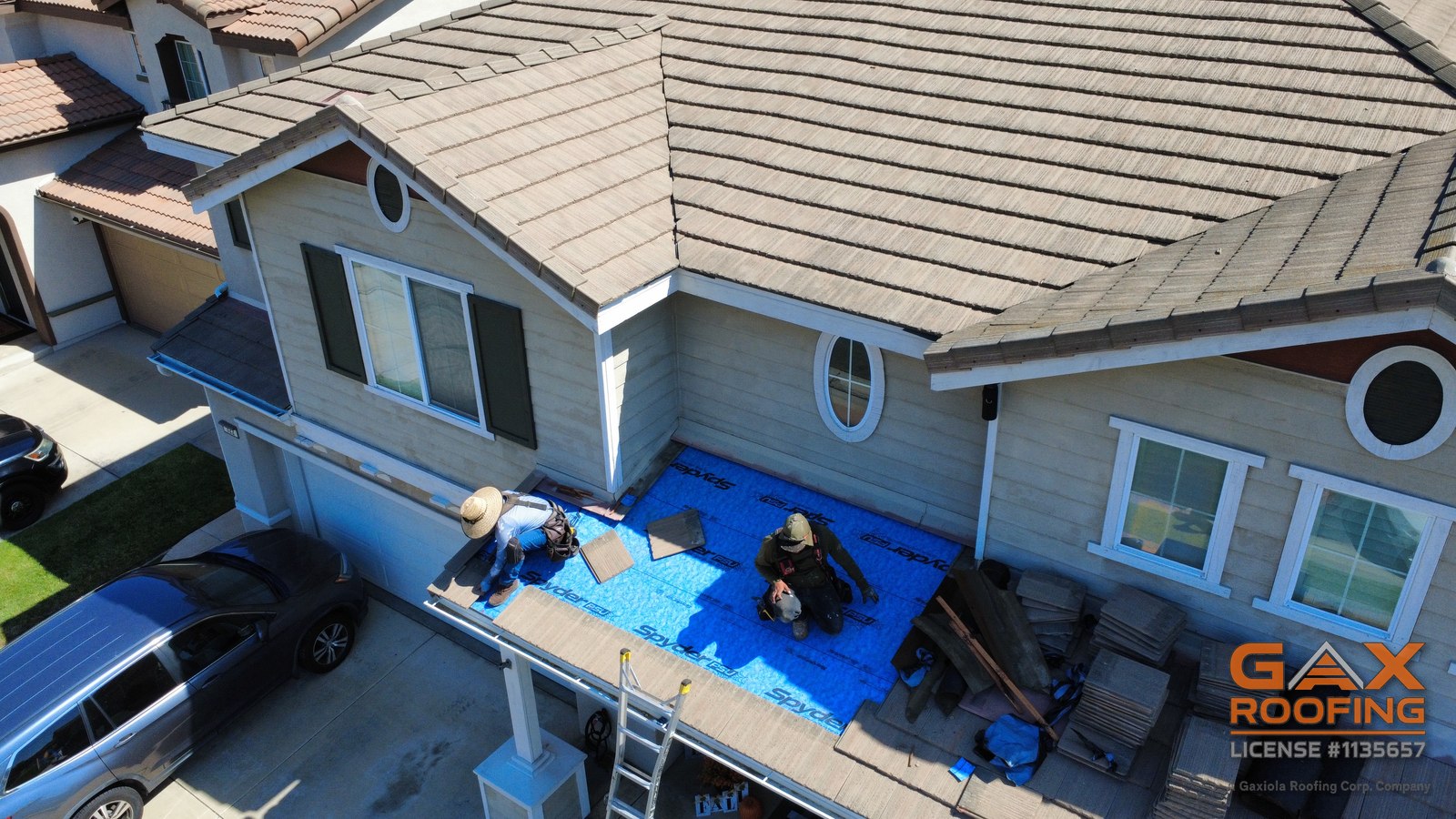
Two-story house, tile roof, a lower roof over the front patio. The homeowner had water showing up inside at the front door when it rained. They showed us the spot. Then we flew the drone over the roof, and the roof told us the rest.
The upper roof sheds onto the patio roof. Every time it rains, water comes off the second story, lands on the tile below, and splashes. Some of that splash goes forward toward the gutter, which is fine. Some of it goes backward, toward the wall of the house. Back there is the roof-to-wall flashing, and that is where it was getting in. Once water is behind that flashing it is inside the wall, and it comes out wherever it wants. On this house, that was the front door.
This is the part I want people to take from it. The tile was not broken. Nothing was missing. From the street the roof looked fine, and it usually does. The problem was a strip along the wall you cannot see from the ground, and the water was not coming down through the roof. It was bouncing up under it.
Why a Patch Would Not Have Held
The tile is the armor. The underlayment under it is the waterproofing. Water gets under tile all the time, that is normal, and the underlayment is what carries it out. Splash-back from a second story hits that whole strip along the wall, not one spot, and it has years to find the weakest inch. A tube of sealant on the flashing is a patch, and a patch on a joint like that is a countdown. Caulk is not flashing.
So we did not treat one spot. We treated the section.
What We Did
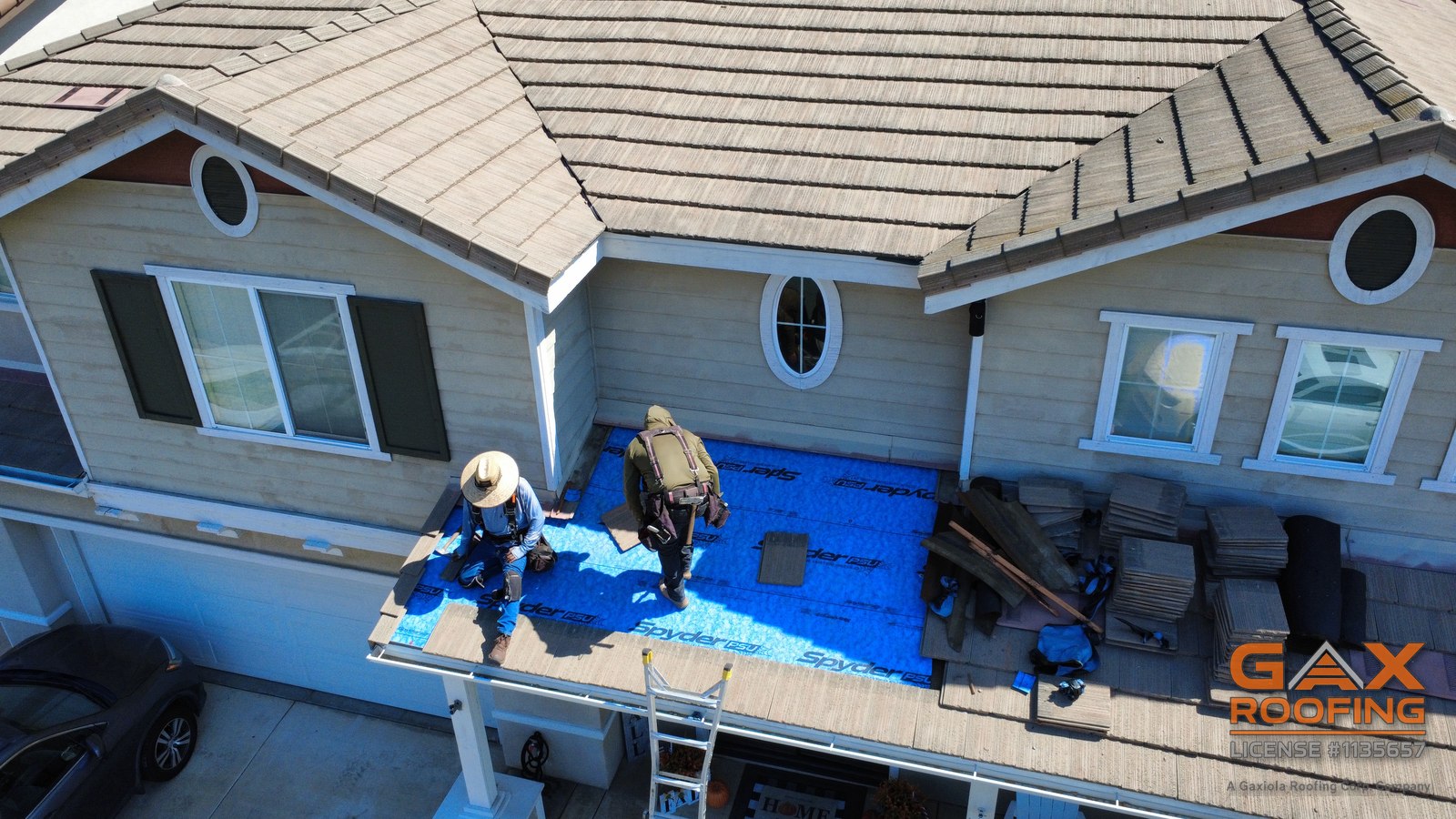
Our installers lifted the tile on the patio section and stacked it. With the deck clear, they laid a peel and stick underlayment across the entire section. On this one it was Spyder PSU, a self-adhered membrane we are trying out alongside the Titanium PSU30 we usually run. Same job either way: it seals to the deck and seals around its own fasteners as a backup. The flashing is still the seal at the wall. The membrane is what makes sure that if water ever gets behind it again, it has nowhere to go but out. Then the same tile went back on.
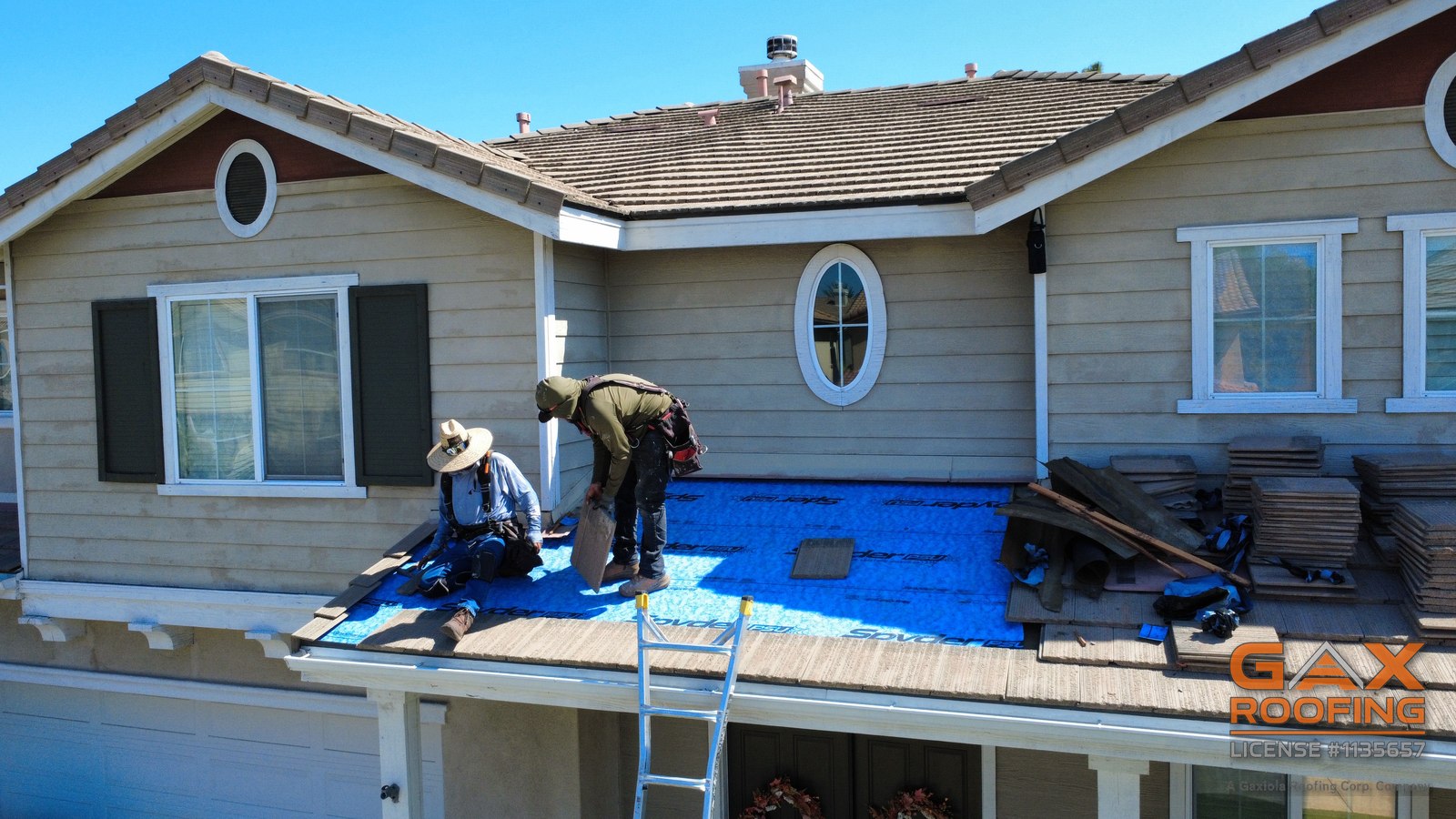
From the street you cannot tell anything happened. That is the point. The tile the homeowner already had was still good, so it stayed. What changed is the part that does the actual work.
Why the Whole Section
Because the water hits the whole section. If we had opened two feet of roof at the wet spot and closed it up, the splash would keep landing on the same strip and the next weak inch would take over. Doing the section means the new waterproofing runs wall to eave with nothing old left in the middle of it. In my experience that is the difference between a repair that behaves like a permanent fix and a repair that turns into a return visit.
If Your Two-Story House Leaks Near a Lower Roof
Look at where the upper roof drains. If it drops onto a lower roof that meets a wall, that wall is a suspect, and the leak inside can show up a long way from it. Front doors, entry ceilings, and the wall between a patio and the living room are the usual places. The fix is not a bucket of sealant and it is not a whole new roof either. It is opening the right section and putting real waterproofing under the tile you already own.
If that sounds like your house, have us look at it. We will fly it, get inside where the water shows, and tell you which section it is and what it takes. Same answer I would give a family member.
Leak Near a Lower Roof? Let Us Look Before You Patch It
Free inspection, drone photos of your own roof, and a straight answer about which section it is.
(909) 819-8394Book an Inspection