Why Tiles Slide Out of Old Roofs: The Spot-Nailing Shortcut
A Riverside homeowner called us about leaks in several rooms. The roof told us the cause before we ever got to the attic: half its tiles were never nailed at all.

A Riverside homeowner called us about leaks in several rooms. The roof told us the cause before we ever got to the attic: half its tiles were never nailed at all.
We inspected a tile roof in Riverside this week. The homeowner called us out because she had leaks, not one, a bunch of them, in different parts of the house. From the street the roof looked like a normal concrete tile roof. From on top of it, the whole story was right there: tiles sliding out of their courses, broken tiles all over the field, and open gaps with the underlayment staring at the sky.
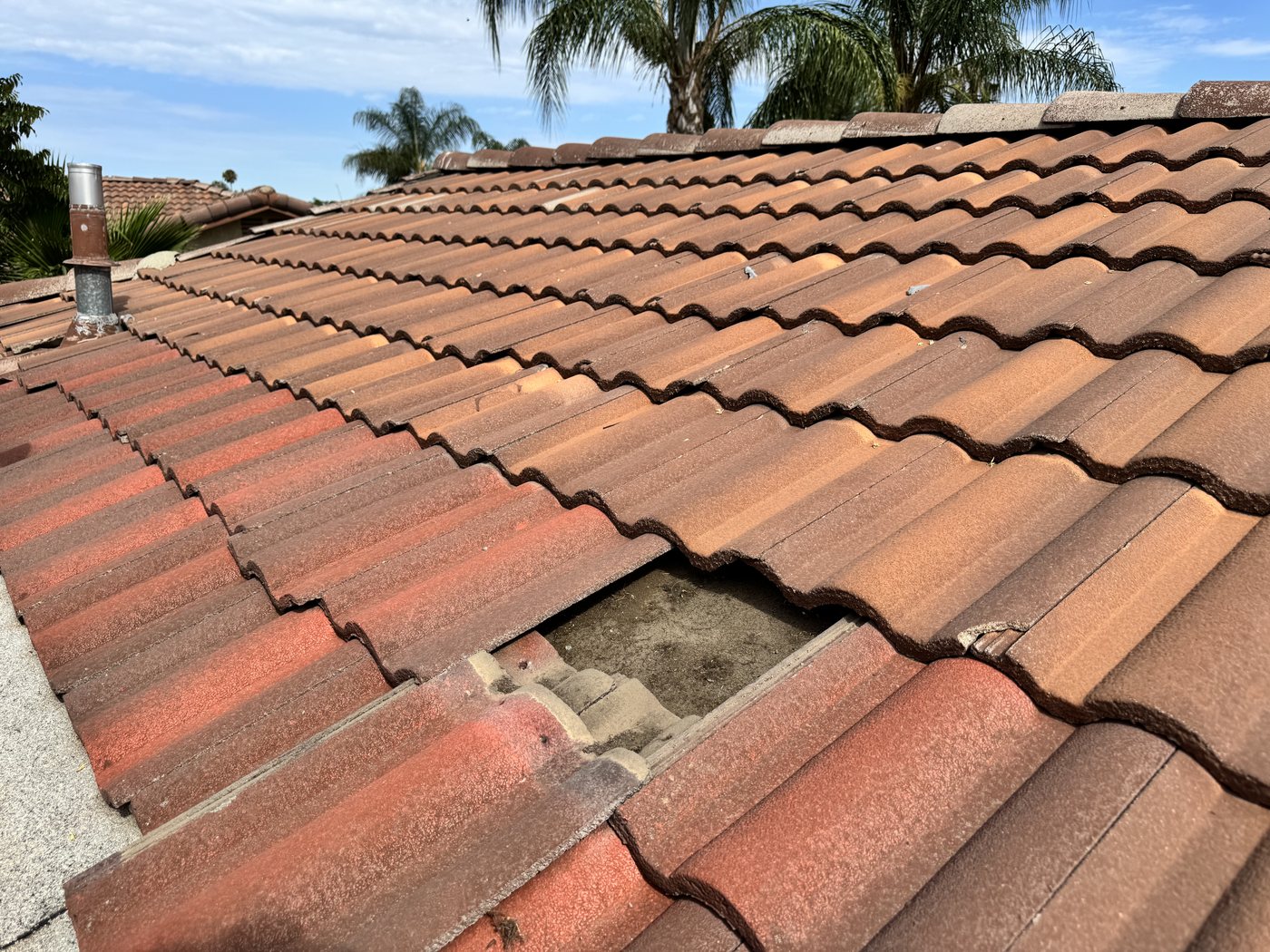
The cause is a practice called spot nailing. Back in the day, a lot of tile roofs were installed by nailing one row of tiles, skipping the next row entirely, nailing the row after that, and repeating that pattern across the whole roof. Half the tiles on the roof are just resting there, held by gravity and the tiles around them.
It worked well enough on day one. But a roof spends decades expanding and contracting through hundred-degree summers, getting walked on, and shaking through the occasional earthquake. The unnailed rows creep. A tile slides an inch, then two, then it is hanging out of its course or gone entirely. Every slipped tile is a hole in your roof's armor, and every gap sends water straight to the underlayment, which was never meant to be the only thing between your ceiling and the rain.
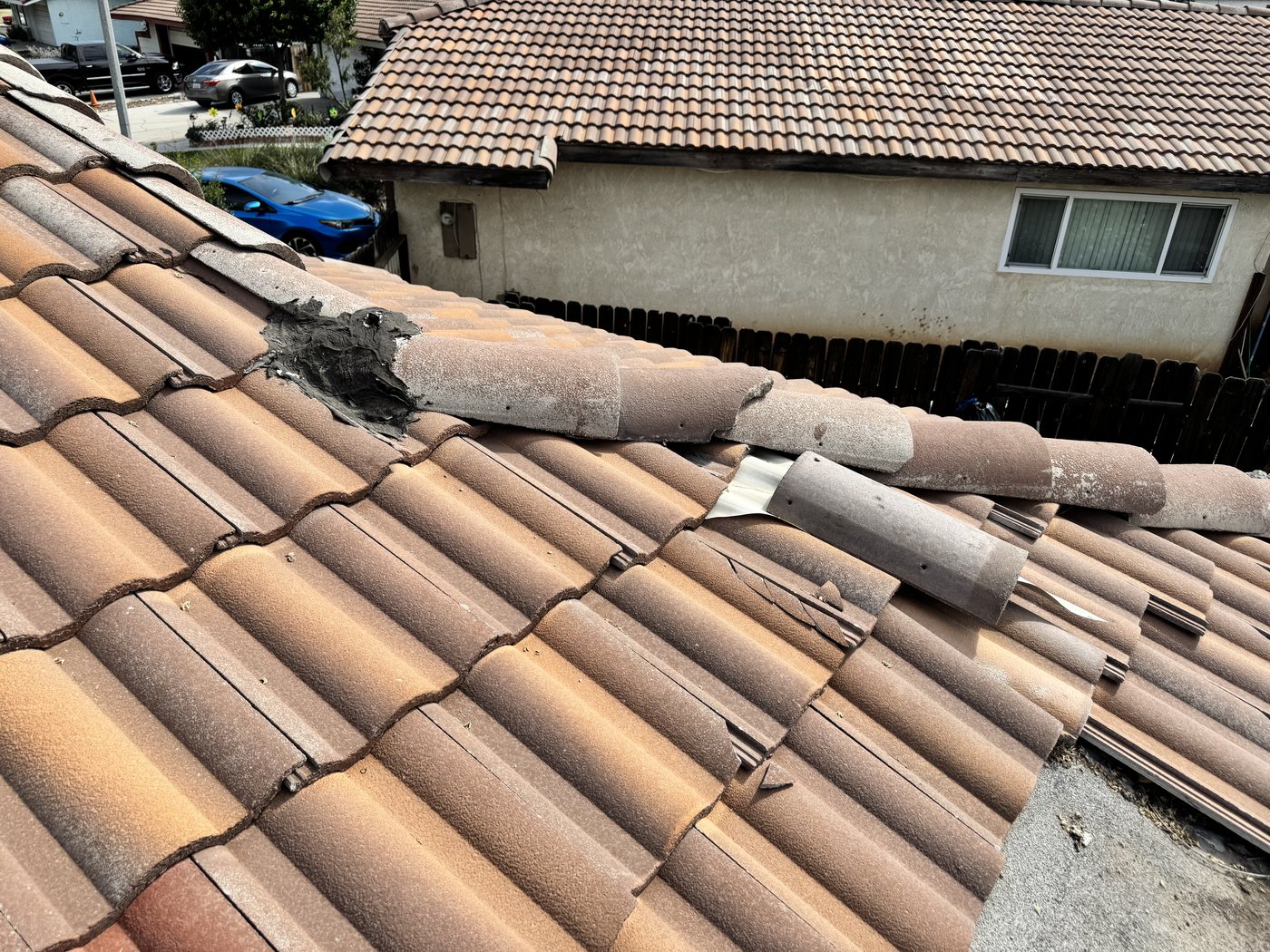
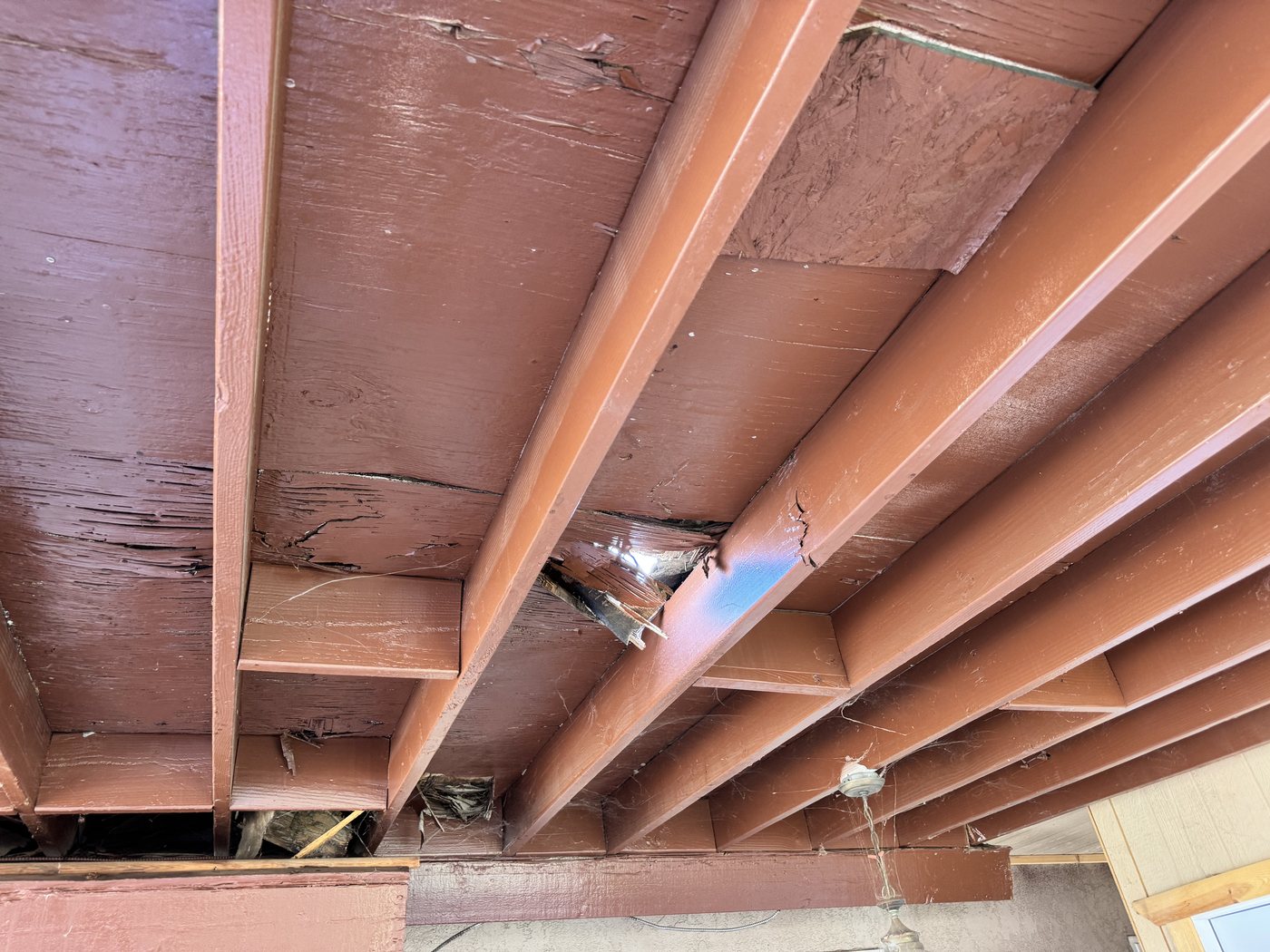
On this Riverside roof, the sliding had been going on for years. Broken tiles, displaced ridge pieces, and underlayment that had been carrying the load alone for so long that the leaks finally reached the living space. The water damage was already showing in the exposed wood at the eaves.
Stand across the street and look at the courses, the horizontal lines of tile. On a healthy roof they run straight. On a spot-nailed roof that has started creeping, you will see tiles dropped below their line, gaps of shadow, or pieces sitting crooked. If your tile roof is from the 80s or 90s and you can see wandering tiles, that is not cosmetic. That is the system letting go.
The answer is usually a lift and relay: lift the tile, replace the worn underlayment underneath, and set the tile back down with every tile properly secured, not every other row. Same look from the street, completely different roof underneath. Whether relay or replacement makes sense depends on how much life the tile itself has left, and that is exactly what an inspection tells you.
One more thing about how we work: the homeowner got her estimate the same day we walked the roof. We know our numbers, so you are not waiting a week to find out where you stand.
We walk the roof, check how it was fastened, and tell you straight whether it needs a relay, a repair, or nothing yet. Free estimate, same day we see it.
(909) 819-8394