Why the order matters
Panels, rails and conduit cover the part of the roof that's hardest to reach later. If the roof under them needs work, the panels have to come off first, and that means another crew, another schedule and another bill.
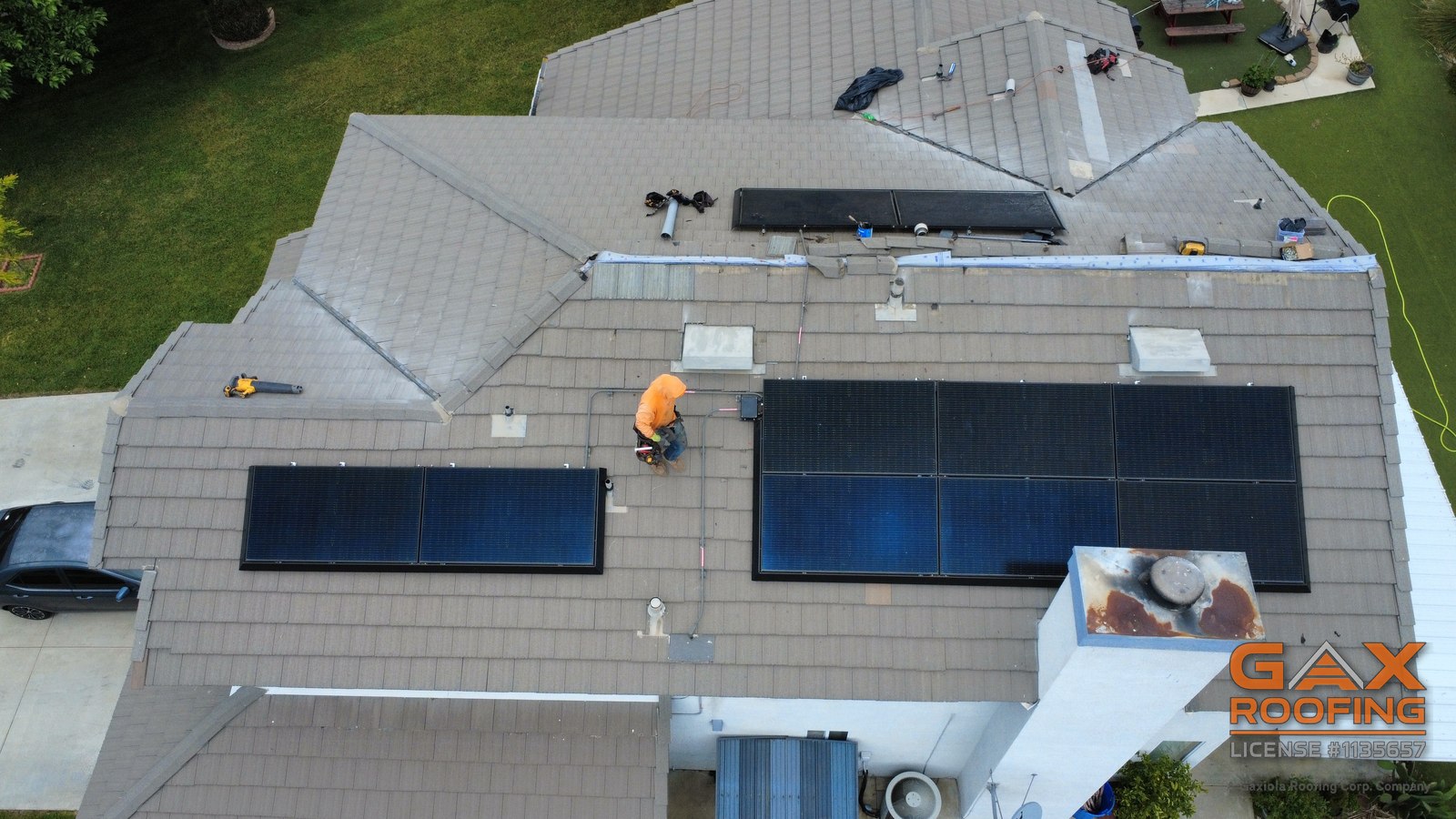
Solar panels sit on top of your roof, and the roof under them is the hardest part to get to later. Here is how to get the order right, and who is responsible for what, before either contract is signed.
Get a Free Estimate →Roof first, then solar. The area under an array is the hardest part of a roof to inspect or repair later, because the panels have to come off before anyone can work on it. Have a licensed roofer look at the roof before you sign the solar contract, decide what the roof needs, and get in writing who is responsible for the panels, the mounts, the holes in the roof and any leak.
Panels, rails and conduit cover the part of the roof that's hardest to reach later. If the roof under them needs work, the panels have to come off first, and that means another crew, another schedule and another bill.
A licensed roofer, not only the solar salesperson. Roofers in California hold a C-39 license; check it yourself on the CSLB license lookup.
The roof covering, the underlayment where it can be seen, flashing, valleys and vents in the area where the array will sit, the attic under it, and on tile, whether the tile can be lifted and reused.
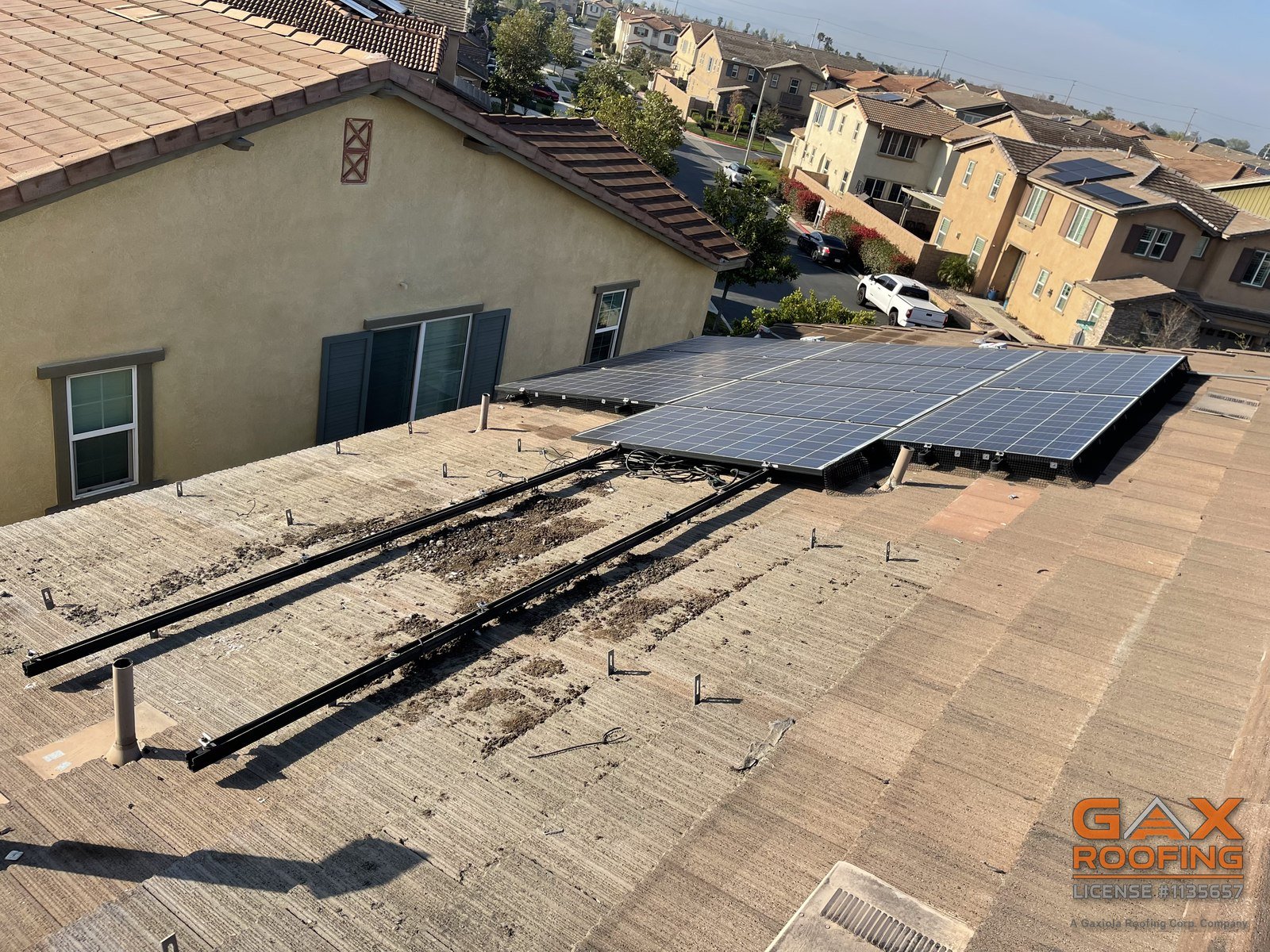
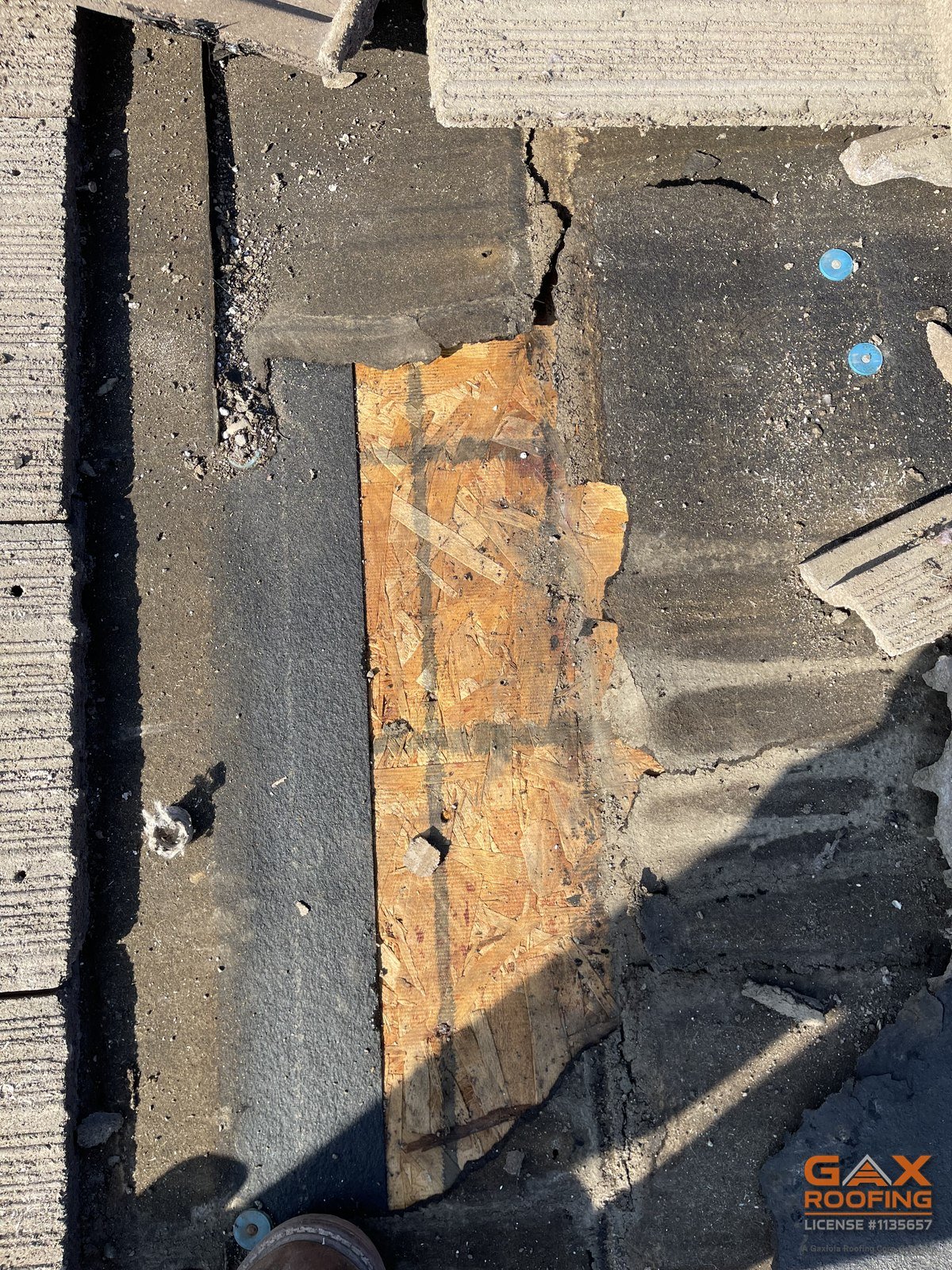
A repair, done and documented before the array goes on.
Under panels, the fix should cover at least the whole section, not two tiles, because you can't warranty work you can't fully see.
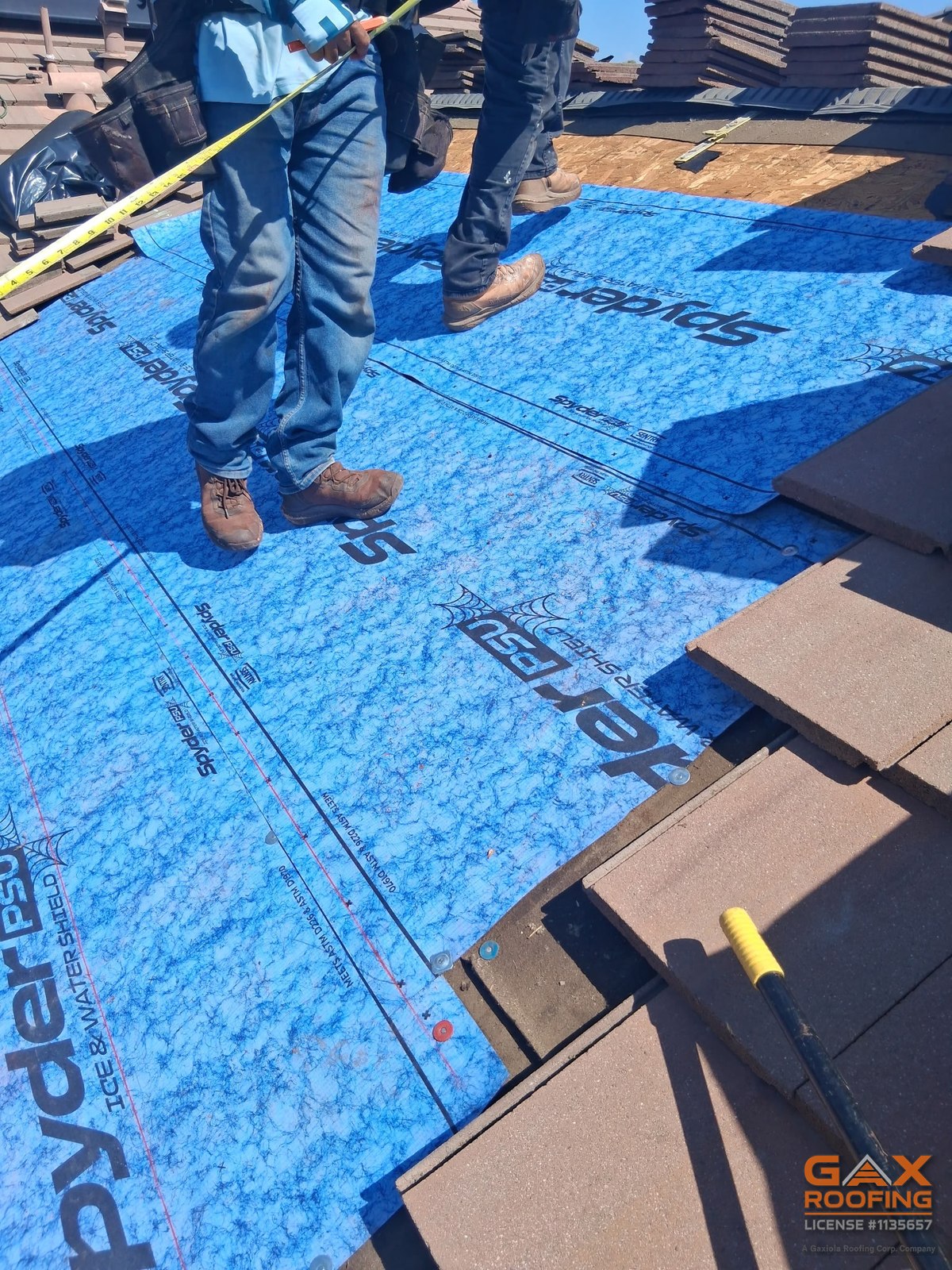
A tile lift and relay: the tile comes up, new underlayment goes down, and the same tile goes back on.
A replacement before the panels, so the array goes on a new roof.
| Part of the job | Who usually does it | Get in writing |
|---|---|---|
| Roof inspection and roof work | A licensed roofing contractor (C-39) | The scope, the products and the workmanship warranty |
| Removing and reinstalling the panels | A licensed solar contractor (C-46) or electrical contractor (C-10), or the solar company that owns the system | Who, their license, and the schedule |
| Mounts and their flashing | Whoever puts the mounts back | Flashing at each mount, and who warrants it |
| The system and its wiring | The solar or electrical contractor | The system warranty and any permit for the reinstall |
| Damage to the roof during solar work | The company that did that work | Photos before and after |
CSLB lists the license classes that can install solar. A C-46 solar contractor can do other trades only when they're needed to install the solar system.
If you lease the system or have a power purchase agreement (PPA), the solar company owns it, and they decide who removes it and how. Read the agreement before you schedule the roof.
Some solar warranties require the original installer, or one they approve, for a removal and reinstall. Ask before anyone touches the panels.
The panels should come off right before the roof work starts, not weeks ahead, and go back once the roof is done.
Some cities want their own permit or inspection for the reinstall. Ask who is pulling it.
Ask where the panels and rails will be kept while the roof is open, and who is responsible for them in the meantime.
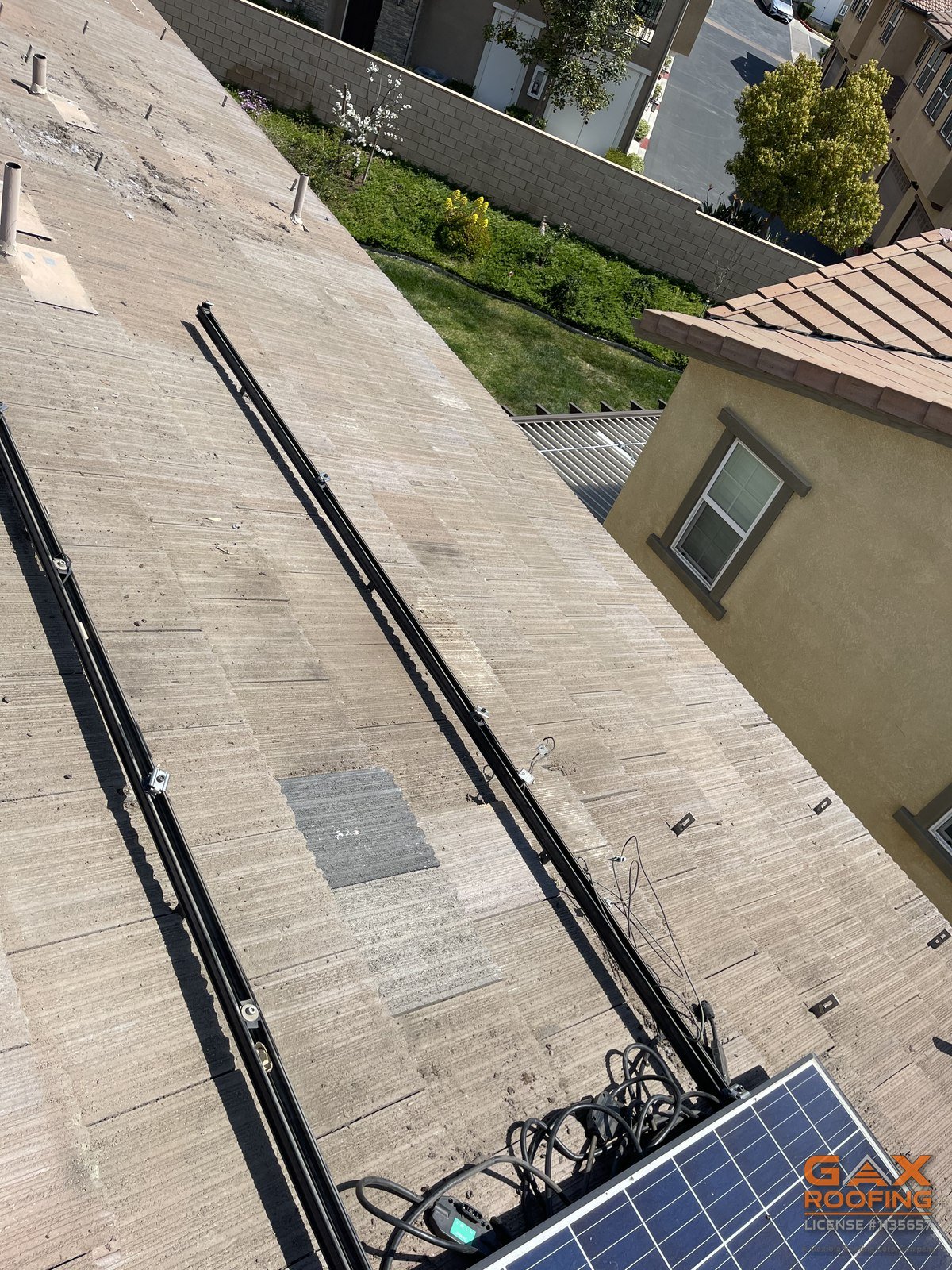
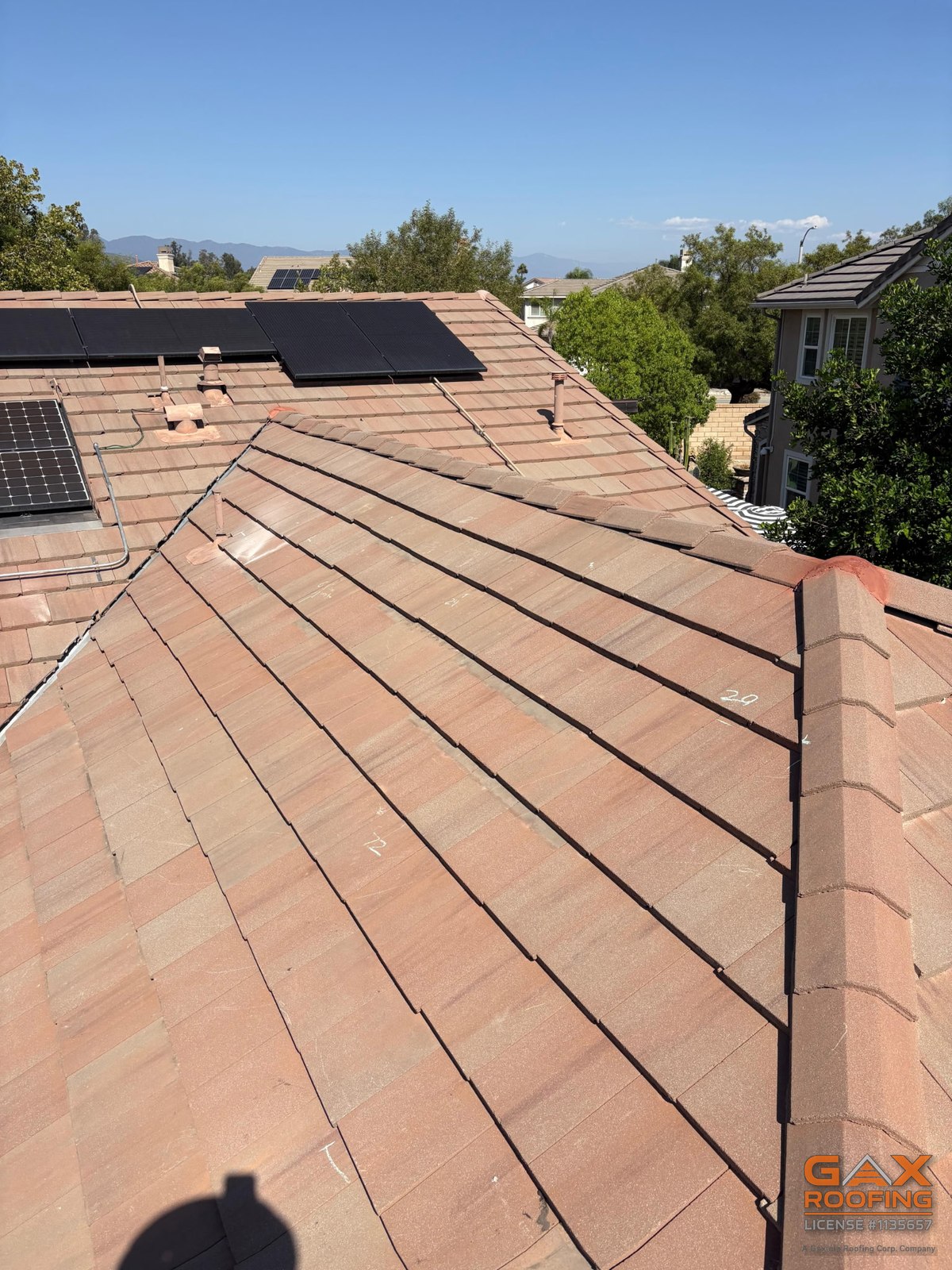
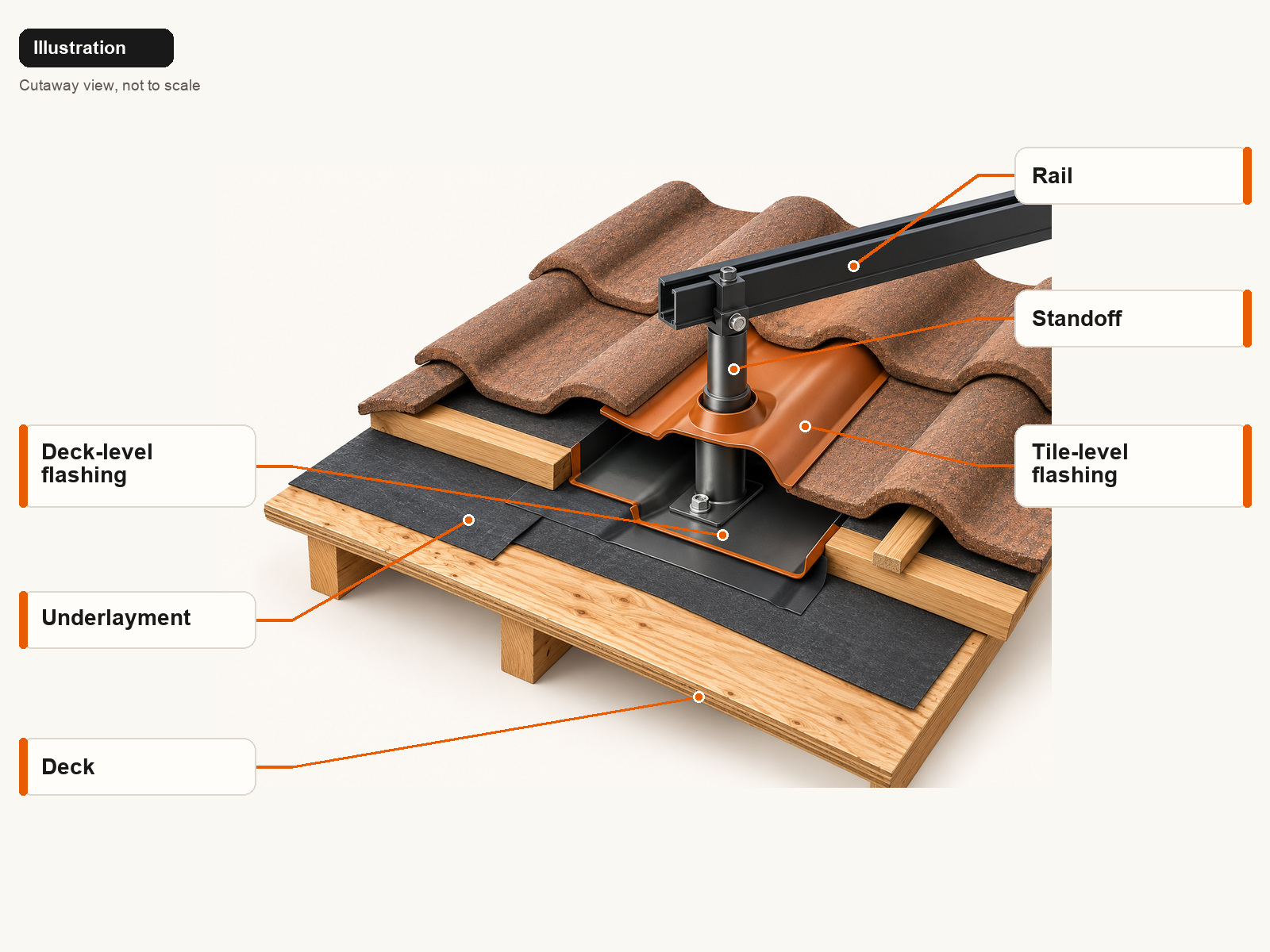
Each one needs its own flashing. On tile, that means a flashing at the tile and another at the deck. Sealant around a bracket is a backup, not the seal.
The membrane under the panels is what saves you the day a flashing fails, not a reason to skip one. Ask for it by name.
Ask the solar company for the panel layout showing where each attachment goes, and keep it. It tells the next roofer where the holes are.
Walking the roof, positioning equipment and drilling mounting points can crack tiles, break grout or damage the underlayment. Older or discontinued tile can be harder to match later.
Rails and conduit shouldn't choke a valley or sit on a vent, and everything taken off for a roof job has to go back the way it came off.
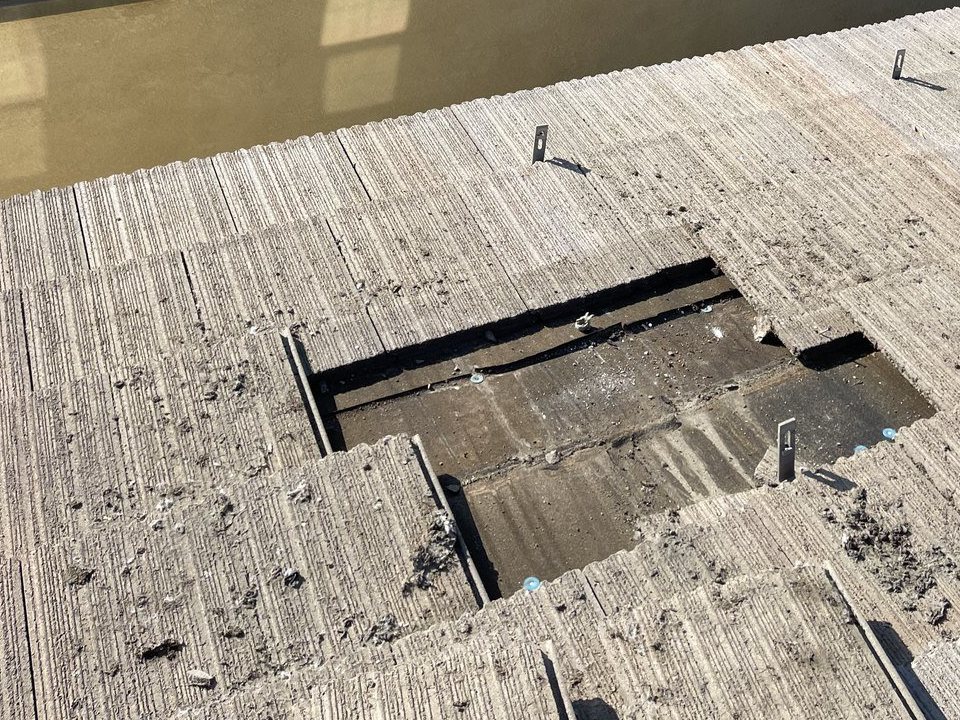
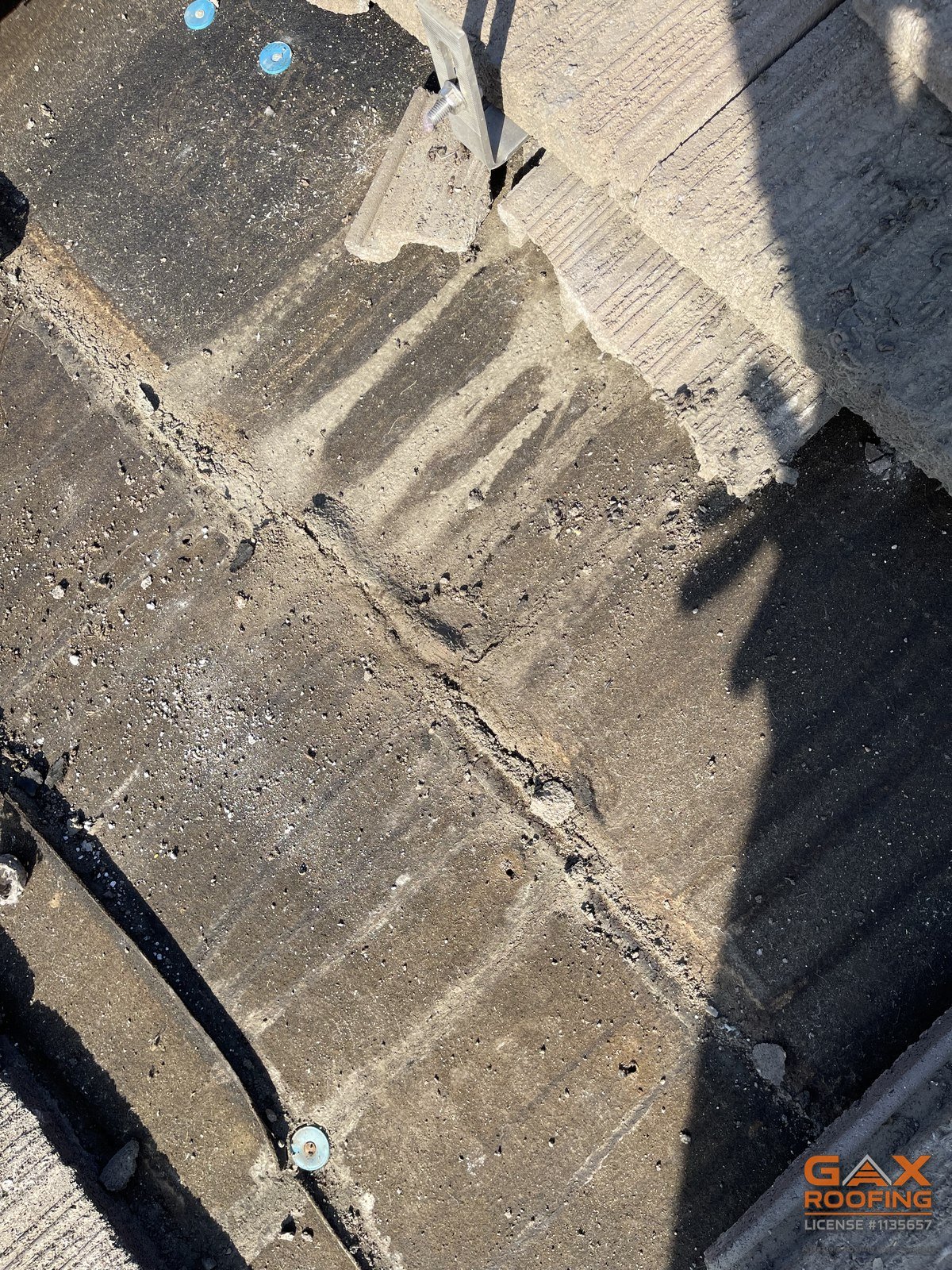
The roofer's workmanship warranty covers the roof they installed.
The solar company's and the manufacturers' terms cover the panels and the array.
Whoever installed or reinstalled the mounts owns those penetrations and any leak they cause. Get that sentence into both contracts.
Tell your roofer before another company goes up on the roof. Our warranty, like many, doesn't cover areas another contractor opens or works on afterward without telling us first.
Keep one folder for the roof and the solar system together. It's what the next roofer, a buyer or a warranty claim will ask for.
If the roof will need major work in the next several years, usually yes, because the panels have to come off for that work later. Our rule of thumb: if the roof has less than 10 good years left, do the roof first. Have a licensed roofer look before you sign the solar contract.
In California, a licensed solar contractor (C-46) or electrical contractor (C-10). If the system is leased or under a PPA, the solar company decides who removes it. Get the name and license in writing.
It can, if the warranty requires the original installer or one they approve. Read the warranty or ask the solar company before anyone touches the panels.
No. The California Energy Commission's solar requirement in the 2025 energy code applies to newly built single-family homes, not to additions or alterations to existing homes like a reroof.
Whoever installed or reinstalled the mounts. The roofer's workmanship warranty covers the roof they installed, and the mounts and the holes belong to whoever did that work. Put it in writing in both contracts.
Often, yes, but under panels the fix should cover at least the whole section, because you can't warranty work you can't fully see. The panels have to come off first.
Planning solar, or have panels on a roof that needs work? We look at the roof first and tell you what it needs before anyone commits to an array. We don't sell solar. We do four kinds of roofs: asphalt shingle roofs, tile replacement with new tile, tile lift and relay, and flat roofs, across the Inland Empire.
Related: Solar Roof Repair and Do You Need One Company for Both?.
Get a Free Estimate →Pages checked October 6, 2026. The GAX notes describe our own work and contract. Nothing here is advice about solar savings, incentives or financing.