Nobody can honestly promise you a number of days before they see your roof. What shouldn't change is the order. Here is the sequence of a well run replacement, and what should be done before the final payment.
A replacement runs in the same order every time: estimate and written scope, contract, permit and products, tear-off, deck repairs and dry-in, installation, inspection, and a walkthrough. How long each step takes depends on the roof, the material, the weather and the city, so treat any number of days as an estimate. What you can hold any roofer to is the order, and that nothing chargeable happens without your signature.
Signs the job is run right
A written scope with every product named, before you sign
A permit pulled under the roofer's license, with the inspections scheduled
Extra wood or extra work in a signed change order before it goes in
Payments that follow finished stages of the work
Cleanup every day, with a magnet over the driveway for nails
A final walkthrough with you before the job is called done
Stop and ask if you see
A roof left open, with no underlayment or cover, and rain on the way
A charge you first hear about on the invoice
A different product on the roof than the one in your contract
A city inspection that should have happened and didn't
A payment due before the matching work is done
Step 1
Before the Contract
The job starts before anyone signs. Most of what goes wrong later traces back to a scope that was never written down.
Someone looks at the roof in person
Measurements from a satellite or a drone help with size, but they can't show the deck, the underlayment or how many layers are on the house. Layers get counted at the edge of the roof, and the attic shows the underside of the deck.
Repair, relay or replace
On tile, the first question is whether the tile can be reused. If the tile is sound and the underlayment isn't, a lift and relay keeps your tile. A different look, or tile that can't be reused, means a tile replacement. Understand Your Roof walks through the difference.
A written scope you can compare
Every product named by manufacturer, line and color, the tear-off, the wood allowance and the price of anything extra, on paper, so bids can be compared line by line. Our bid comparison guide goes through it.
HOA approval comes first
If you're in an HOA, the new roof may need architectural approval before anything is ordered, and that can take from a week to a couple of months. Start the submittal early. More in our HOA roof approval guide.
On a GAX jobWe come out, walk the roof with you and get in the attic where there's access before we write the number. On tile, we price both a lift and relay and a tile replacement when both are honest options. Every shingle job we do is a full tear-off. The photos from the estimate are yours whether you hire us or not.
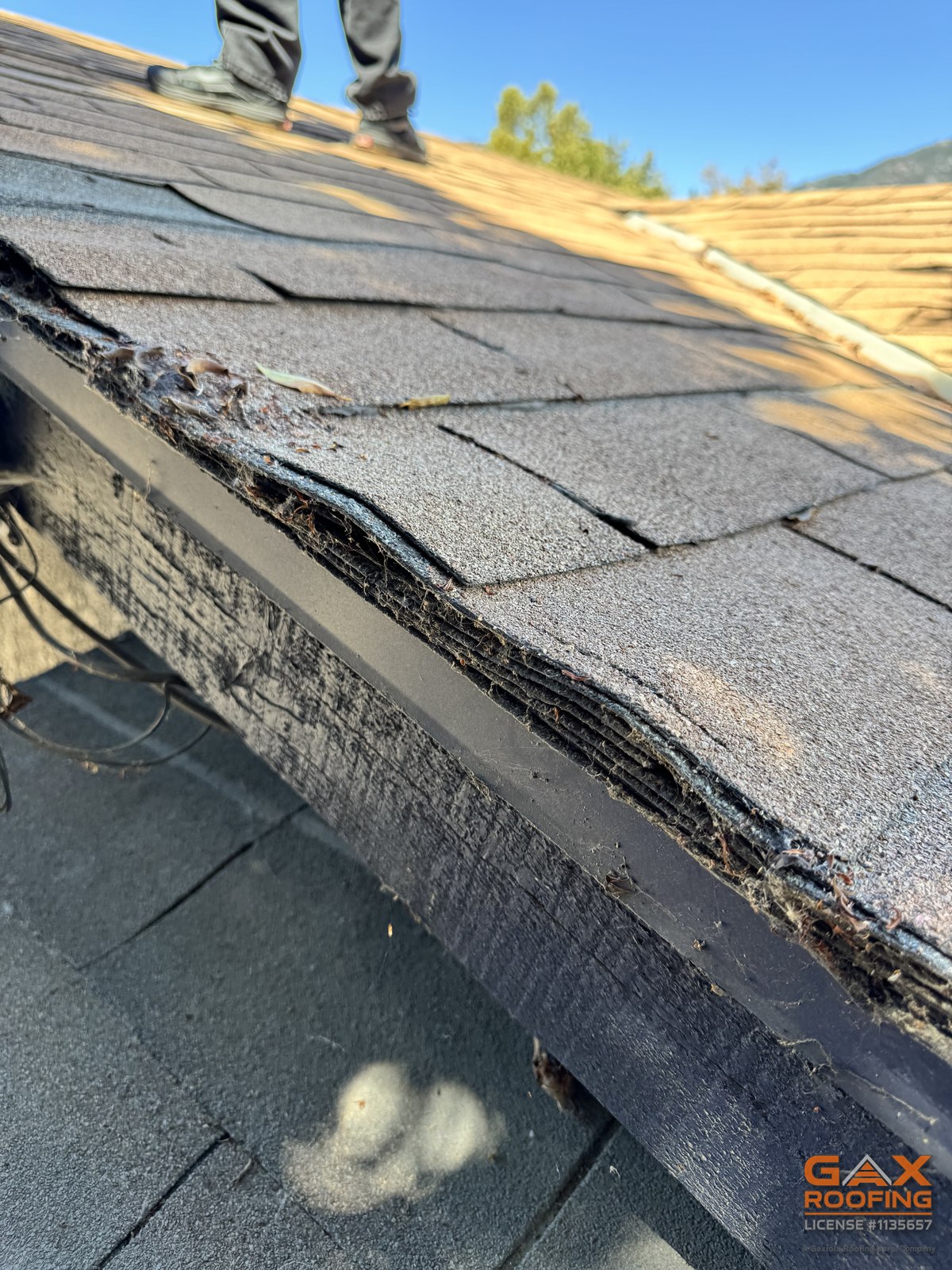
Highland: layers get counted at the edge of the roof, not from a satellite.
Step 2
Before Work Starts
The permit
The contract says who pulls it. Normally the licensed roofer pulls it under their own license and schedules the inspections. What needs a permit depends on your city and the scope, so the building department for your address has the final word.
Products and lead time
New tile is usually made for your order, and that can take up to two weeks. A roofer who promises to start tomorrow with custom tile is telling you something is off.
Solar panels
If there are panels on the roof, someone has to take them off before the roof work and put them back after. Find out who owns the system and who is allowed to remove it before the schedule is set. More in our roof and solar planning guide.
Getting the house ready
Expect to make room for a dumpster or trailer and deliveries, move the cars out of the driveway on work days, take down wall hangings and shelf items that vibration could knock loose, cover or move what's stored in the attic, and keep kids and pets away from the work.
On a GAX jobWe pull the permit under our license and schedule the inspection. When you're close enough, we'll take you to Eagle's Rialto plant and showroom to see and handle tile before you pick, or bring the samples to you. If there are panels, they come off right before we start, not weeks ahead.
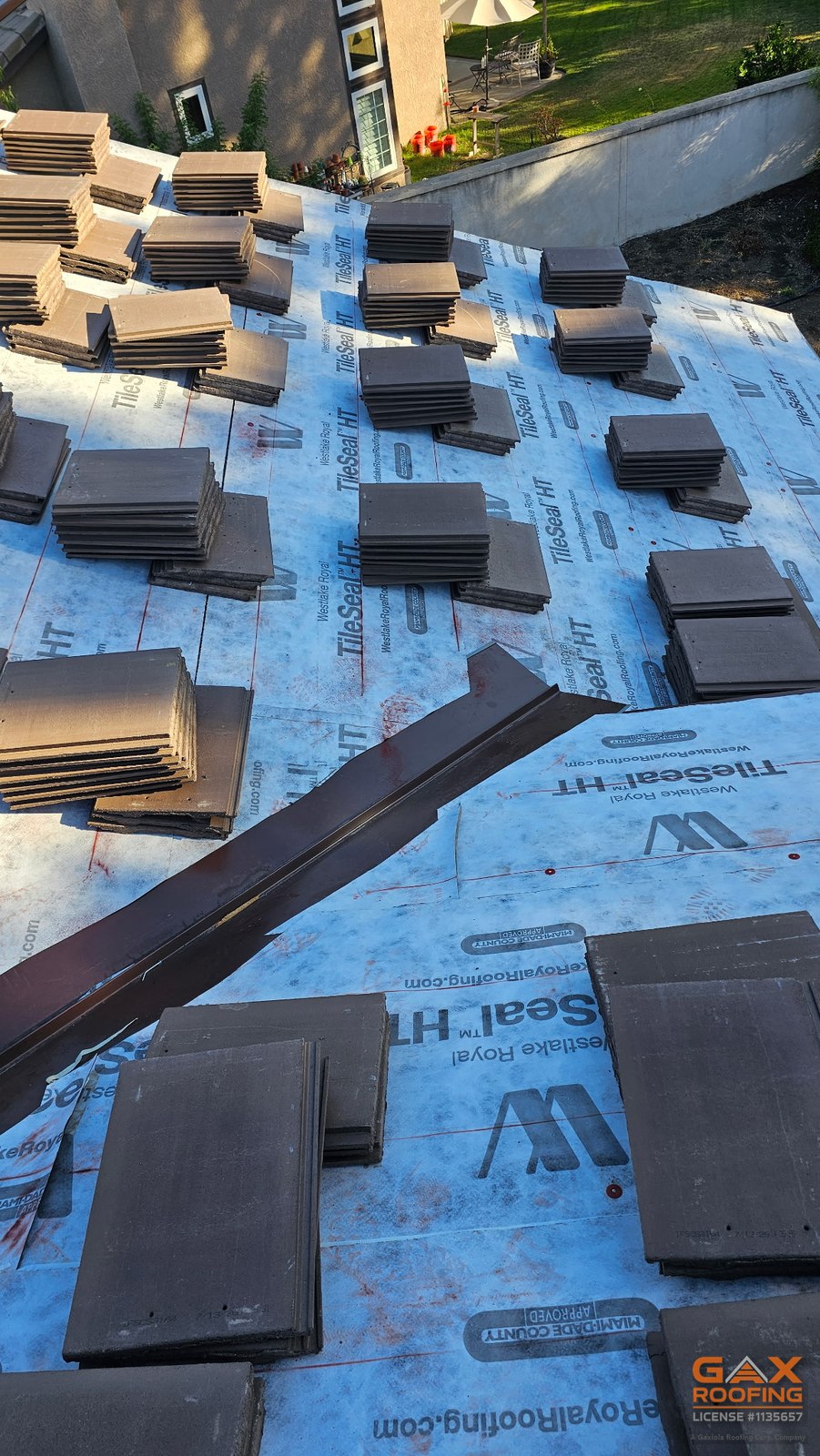
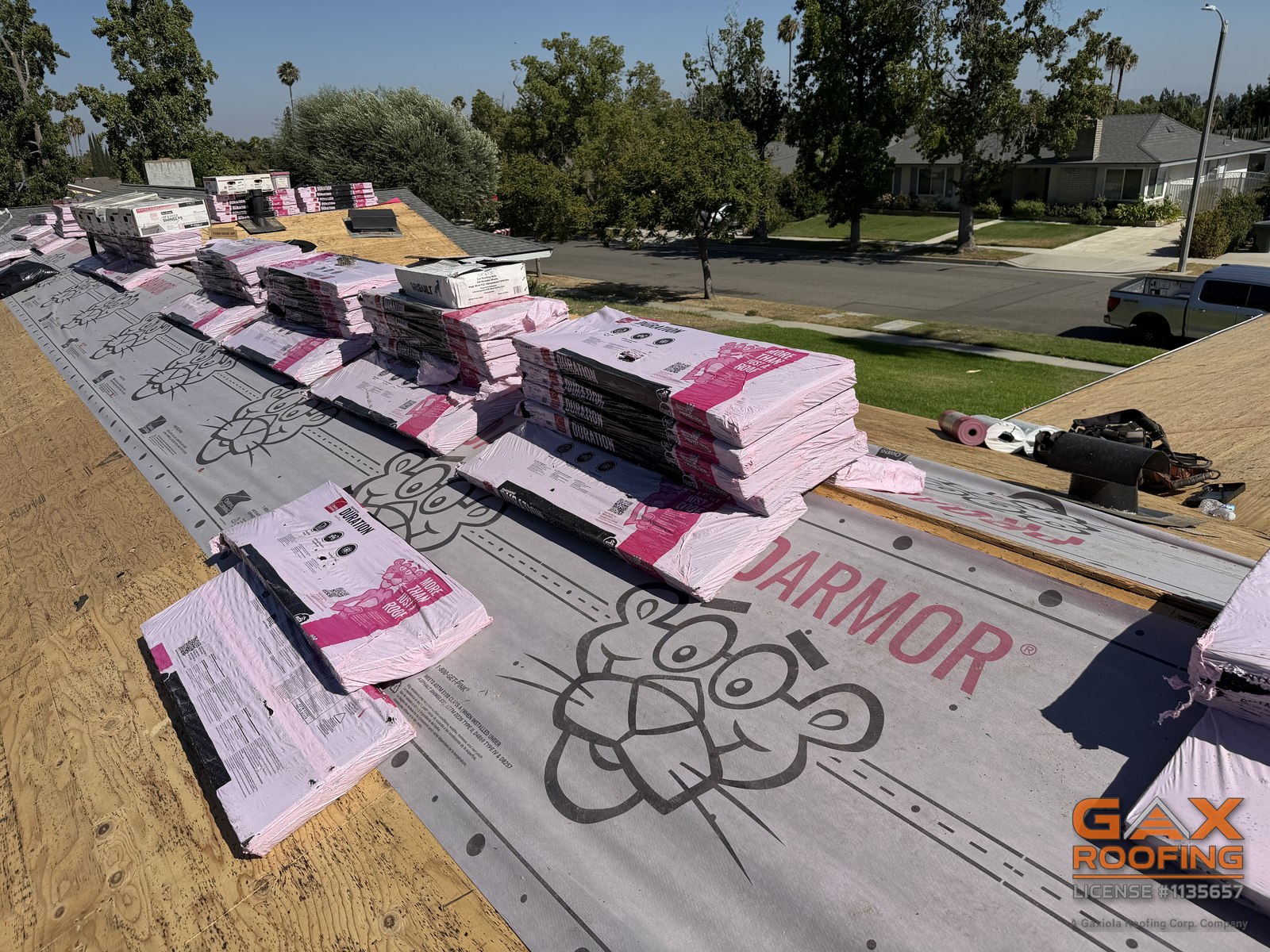
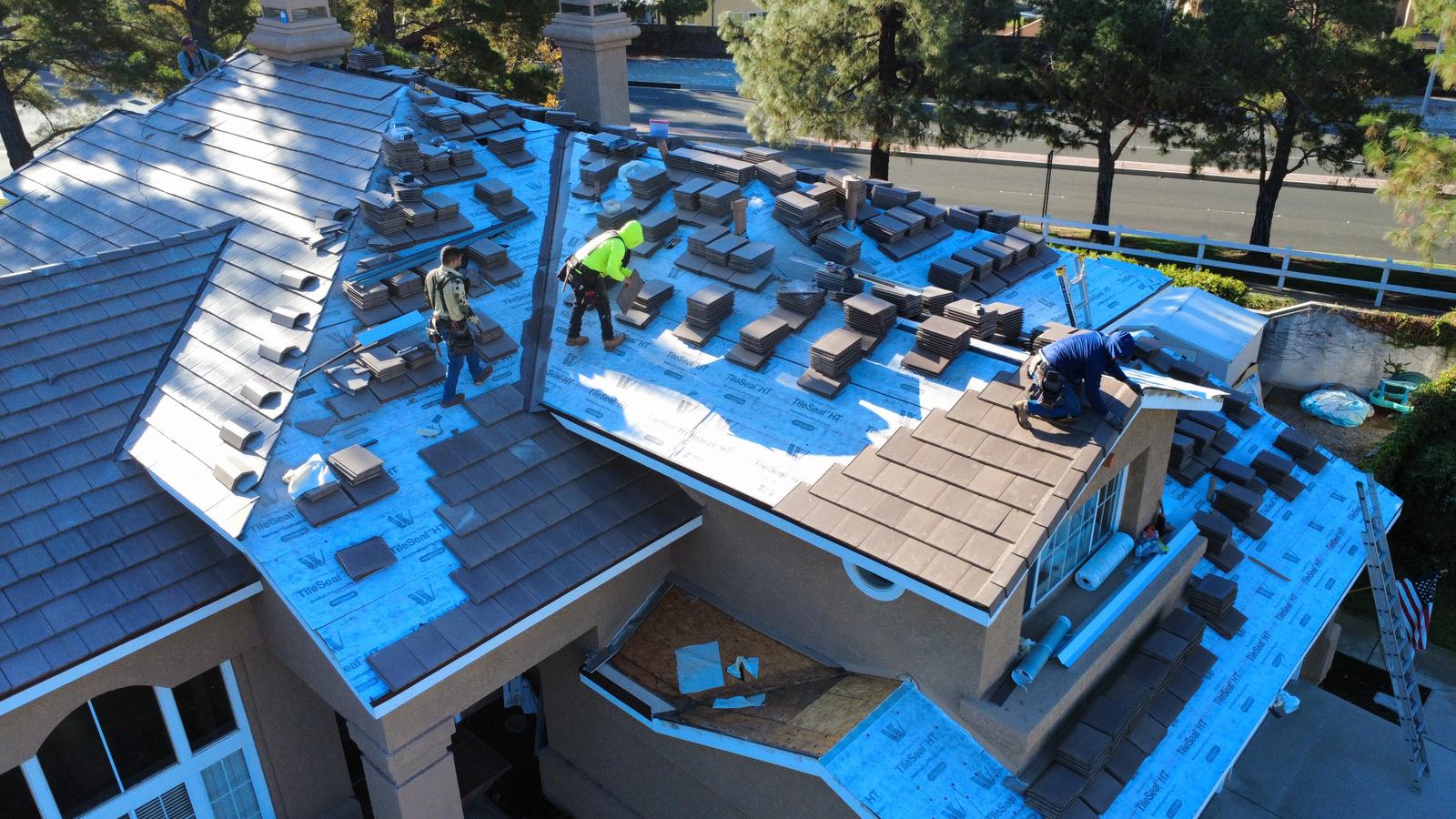
Etiwanda, loading day: tile staged across every section before the crew lays it.Rancho Cucamonga: underlayment and shingles loaded on the roof, ready for the crew.
Step 3
Tear-Off Day
The loudest day of the job, and the one that tells everybody the truth about the roof.
Down to the deck
On a replacement, the old roof and the old underlayment come off down to the wood. On a lift and relay, the tile is lifted and stacked on the roof, not thrown in a pile, and the old underlayment comes off underneath it.
Nobody knows the deck until now
From the attic you see one side of the deck. The weather side only shows when the old roof is off. That's why a good contract carries a wood allowance and unit rates instead of a guess.
Noise, dust and the yard
Tear-off is loud, dust can fall into the attic, and plants close to the house can take some of it even with care. Move patio furniture and potted plants away from the house before the crew arrives.
Cleanup every day
Old roofing should be hauled off and the site cleaned every day, with a magnet run over the driveway and the yard for nails.
On a GAX jobOur contract has us magnet-sweep and clean up daily and again at completion.
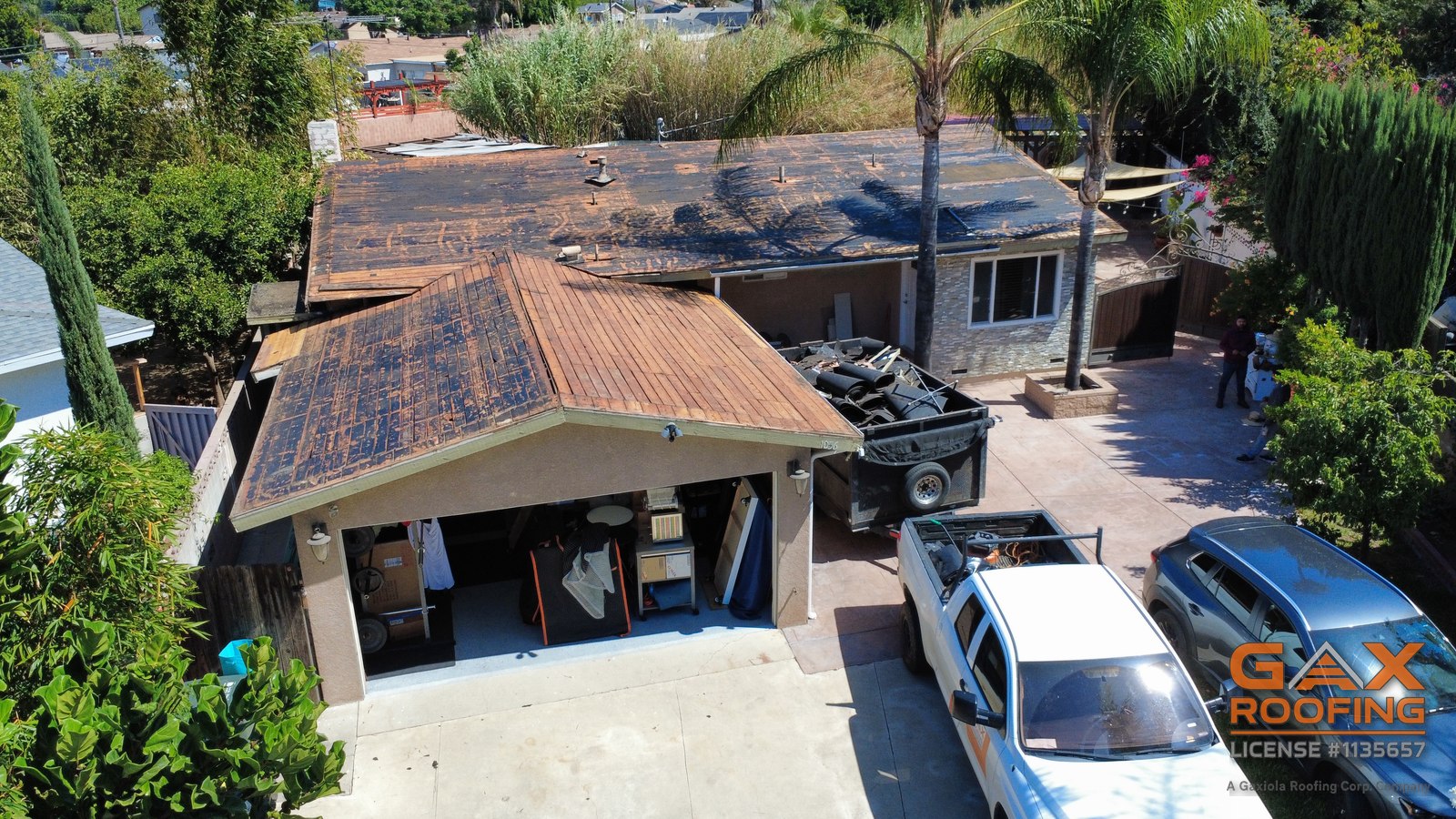
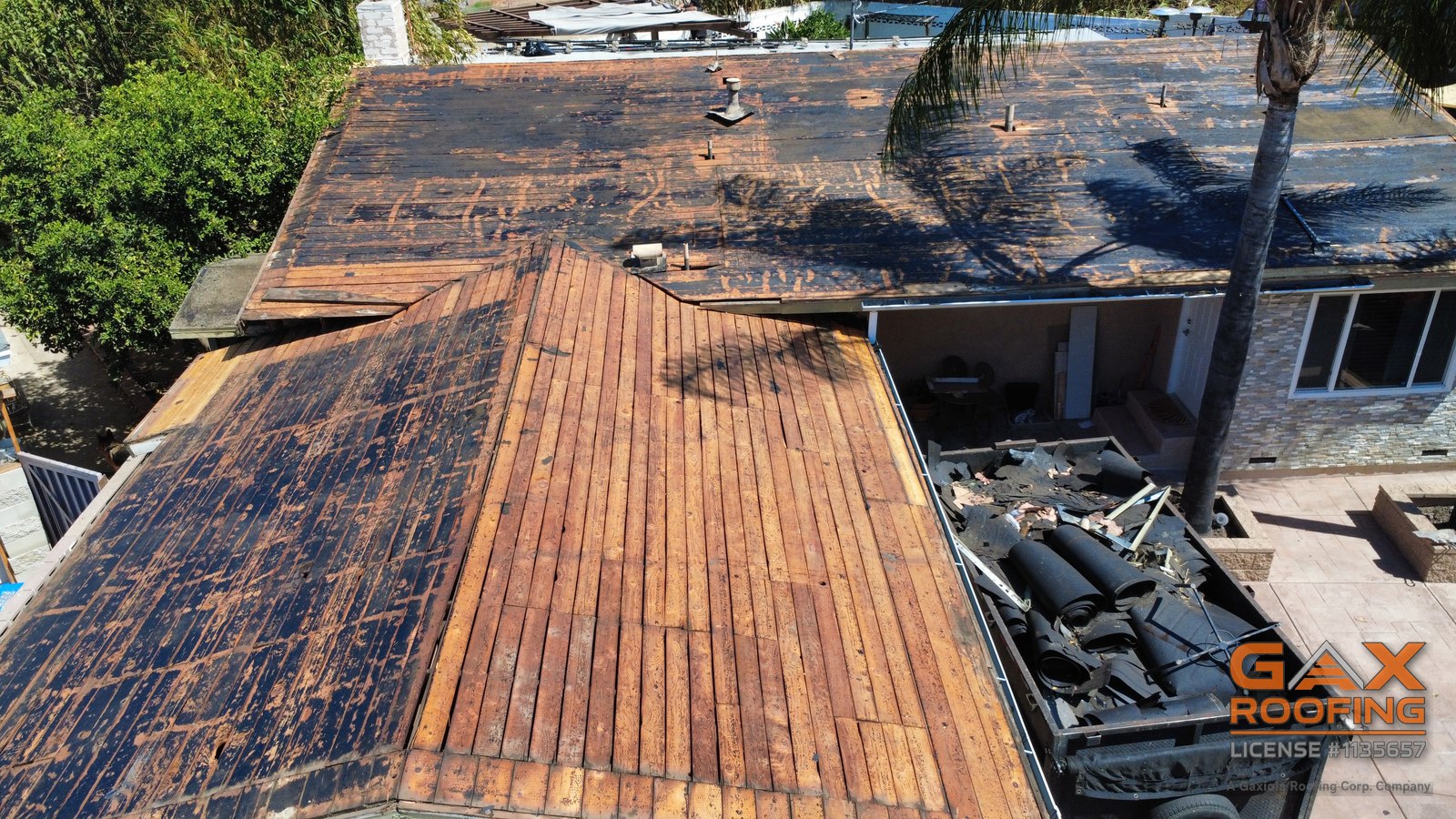
Pomona: tear-off day, old roof off and the trailer in the driveway.The same day, the old roofing on its way out.
Step 4
Deck Repairs and Dry-In
Wood findings, in writing
Damaged wood gets photographed and counted. Anything past the allowance in your contract goes in by a signed change order with the price, before the wood goes on, not as a surprise on the invoice.
Repairs that match the deck
Boards get replaced with boards and sheets with sheets, so the new wood sits flush with the old.
Underlayment by name
The underlayment is the layer that keeps water out of the house. The name printed on the roll should match the name in your contract.
Flashing and dry-in
New flashing at walls, chimneys, pipes and valleys, drip edge at the eaves, and underlayment across the deck. Once those are on, the roof is dried in.
The city may want to see it
Building departments inspect the roof when the work reaches a certain stage, and again when it's finished. When the city has to see the deck or the underlayment, the next layer waits until it does.
On a GAX jobNo chargeable wood goes on a GAX roof on a verbal say-so. We photograph it, write up the quantity and the price, and it goes in after you sign. The one exception is emergency dry-in to keep water out of the house, written up within one business day. Unless the job includes a full resheet, the first 60 linear feet of shiplap, or OSB equal to 10 percent of the deck area (rounded to whole sheets), is included.
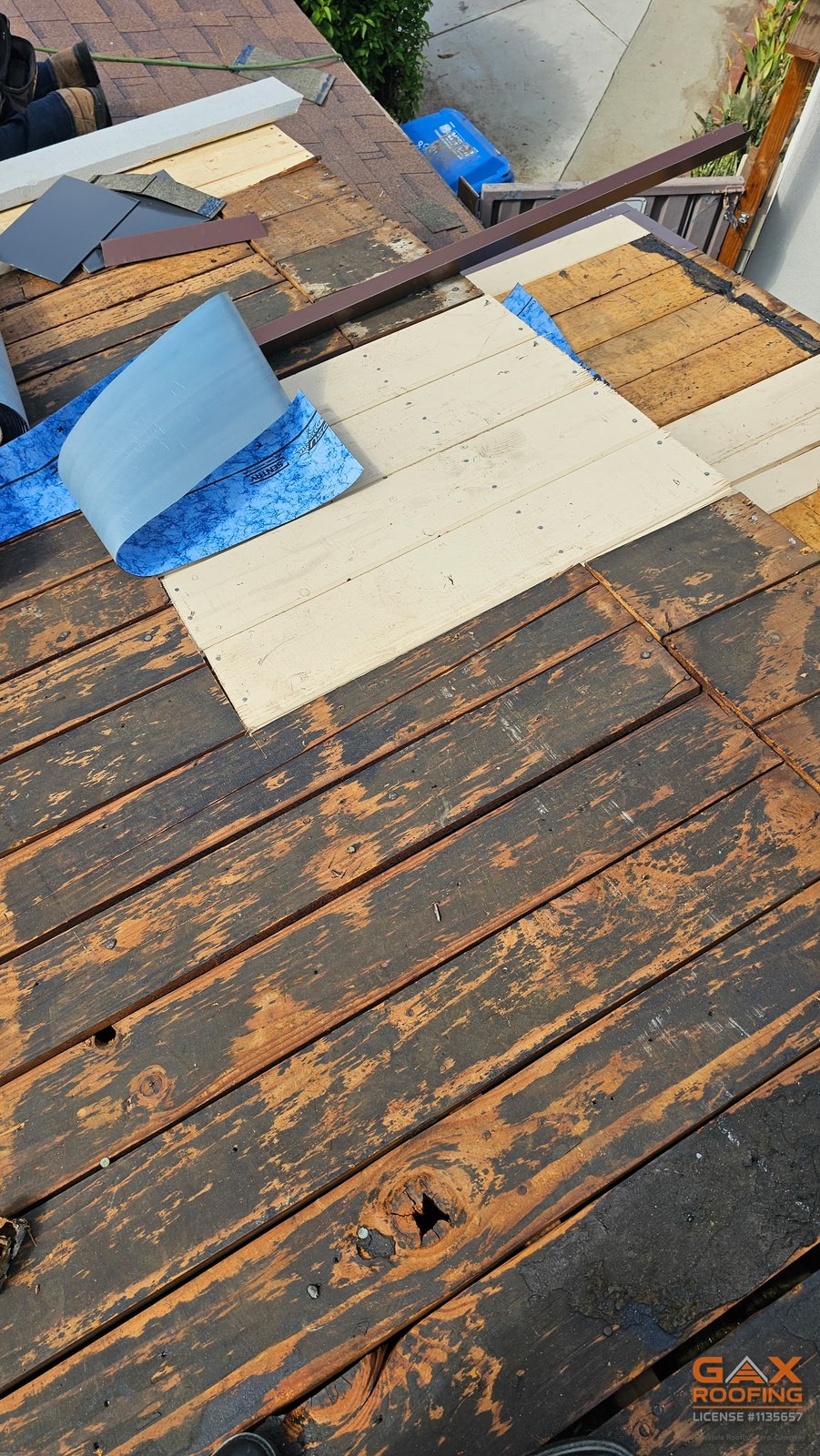
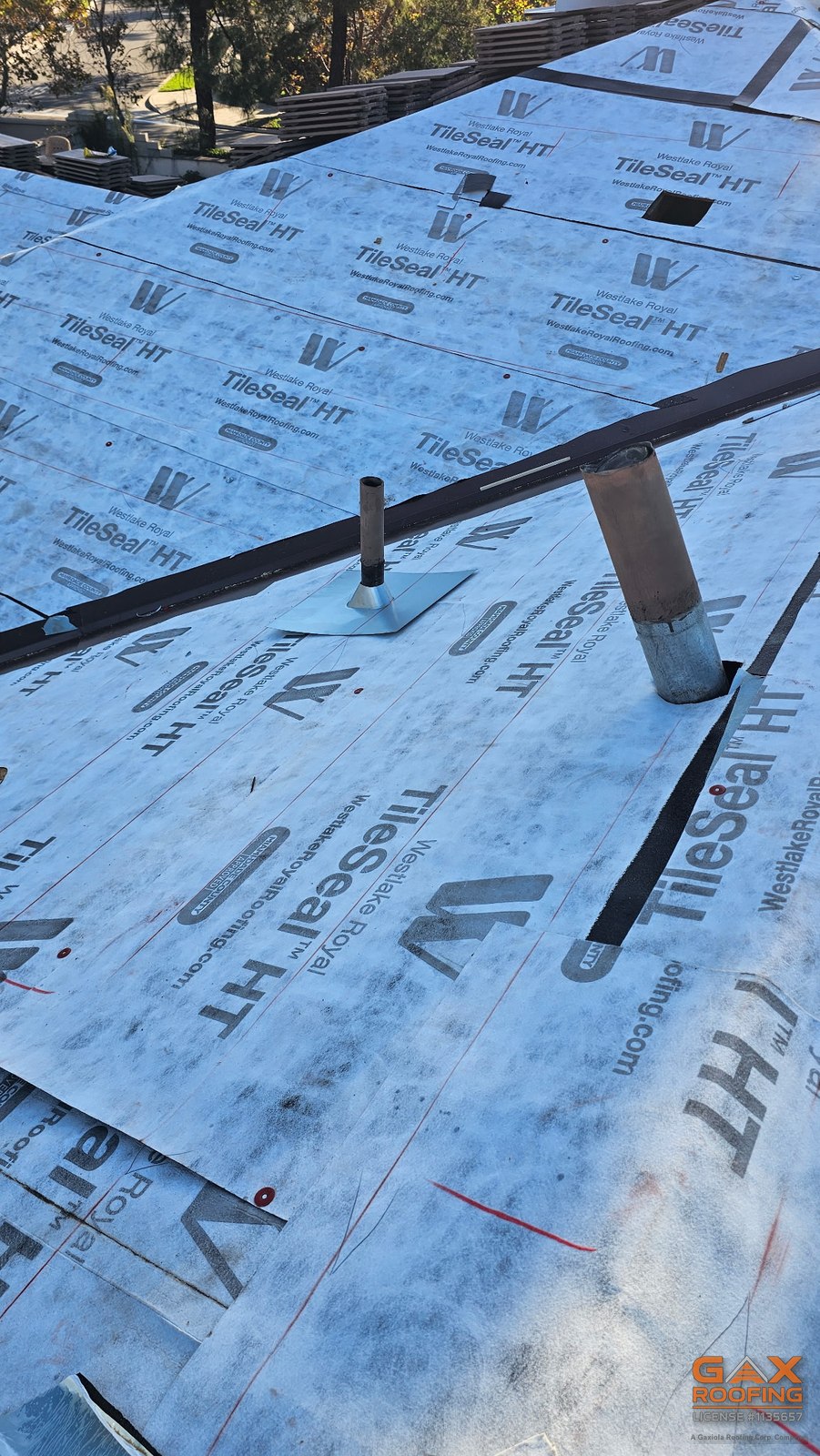
Pomona: the boards that needed replacing, already swapped for new wood.Etiwanda: new pipe flashings and a metal valley over the underlayment, before any tile.
Step 5
Installation
The field
On shingles, a starter course at the eaves and the field from there up. On tile, battens, then tile course by course from the eave, and every tile fastened.
Penetrations and valleys
Every pipe, vent, skylight and solar mount is a hole in the roof and needs its own flashing. Valleys need an open channel for the water.
Ventilation
Vents go in by type and amount, the way the contract lists them, with air coming in low at the eaves and going out high.
Hips and ridges last
The caps finish the roof. On shingles, that should be ridge cap shingles, not field shingles cut into pieces.
On a GAX jobOn our shingle jobs the pipe jacks get painted to match the roof.
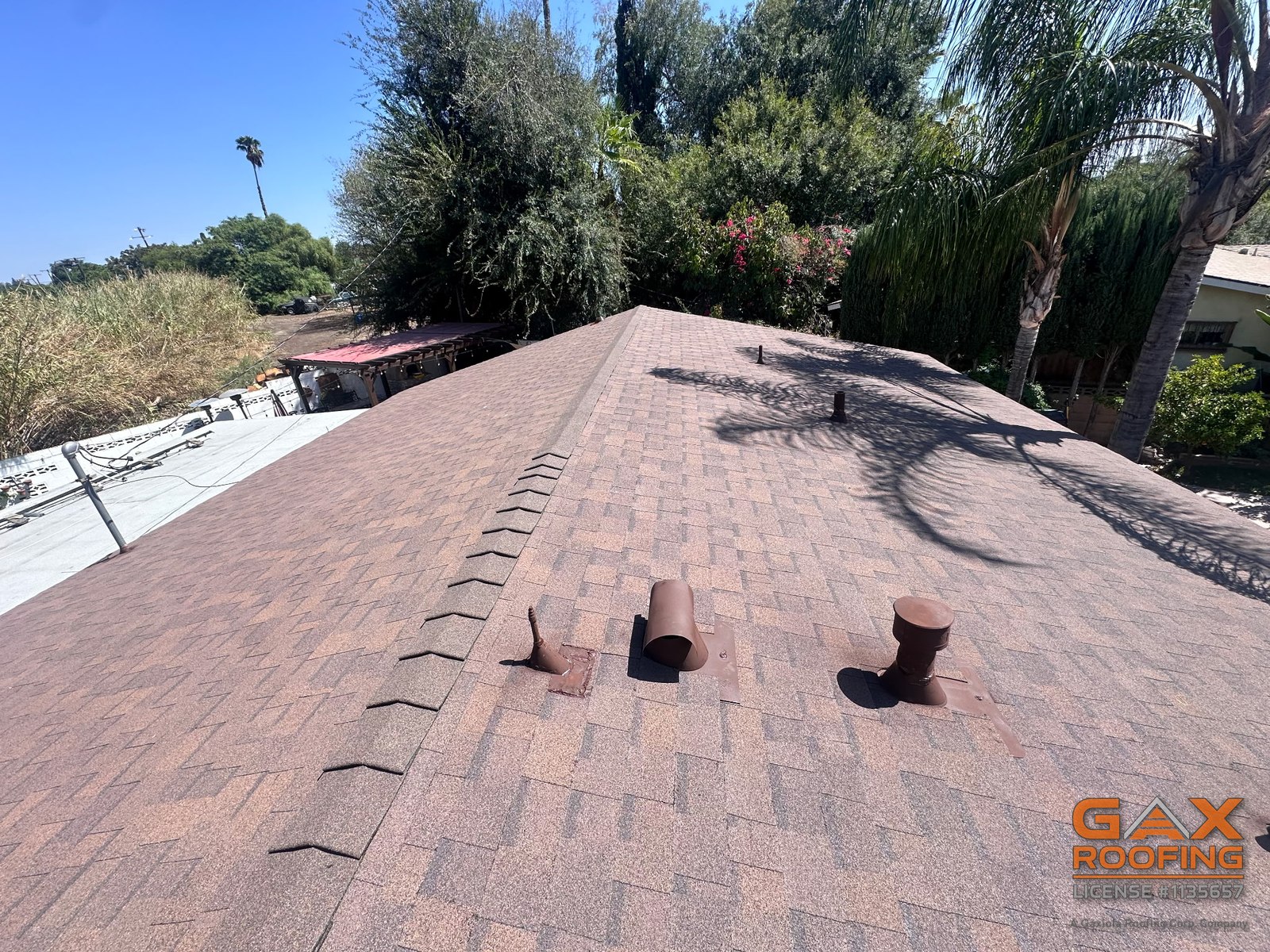
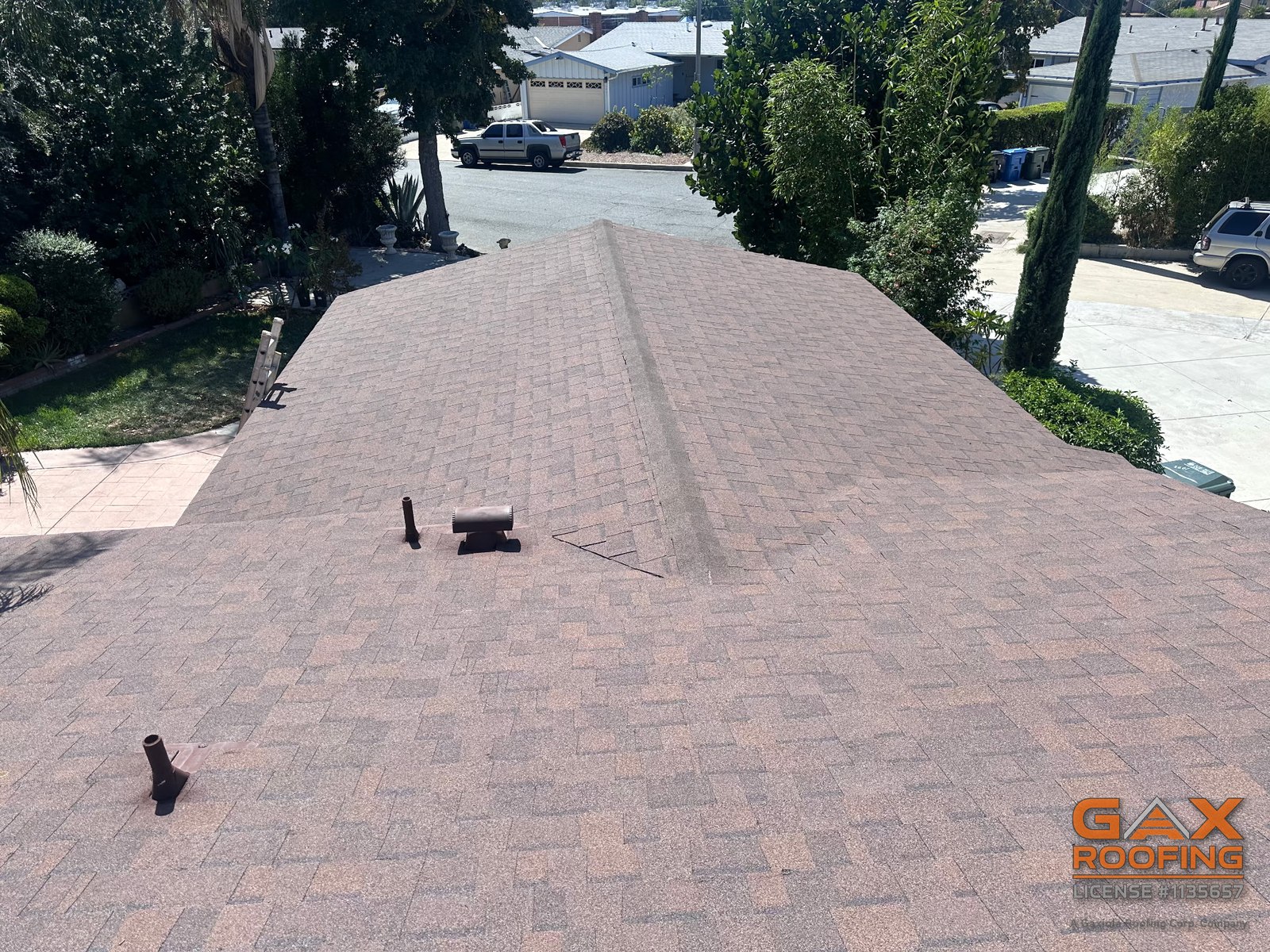
Etiwanda: tile going on one plane at a time.Pomona: pipe jacks painted to match the new shingles.
Step 6
Inspection and Closeout
Final inspection
Where a permit is required, the building department signs off the finished roof. Keep the permit and the final sign-off with your records.
Walk it together
Before the job is called done, walk the property with the roofer: the roof from the ground, the gutters, the yard and the driveway.
Photos and warranties
Ask for the job photos, the workmanship warranty in writing, and the manufacturer registration information.
Lien releases
CSLB's advice is to get a conditional release before you pay and an unconditional one after, and you can hold the next payment until you have the unconditional release for the last one.
The final payment
It's due when your contract says, and never ahead of the work it pays for. Read how your own contract defines the finish line.
On a GAX jobWe do a final walkthrough with you and confirm the city inspection is scheduled or done. We don't consider the job finished until you've walked it with us, and every GAX job is documented with photos you keep. Our final payment is due at substantial completion, which our contract defines as the roof installed and watertight and the site cleaned. In practice, that means the roof is done and waiting on the city's final inspection.
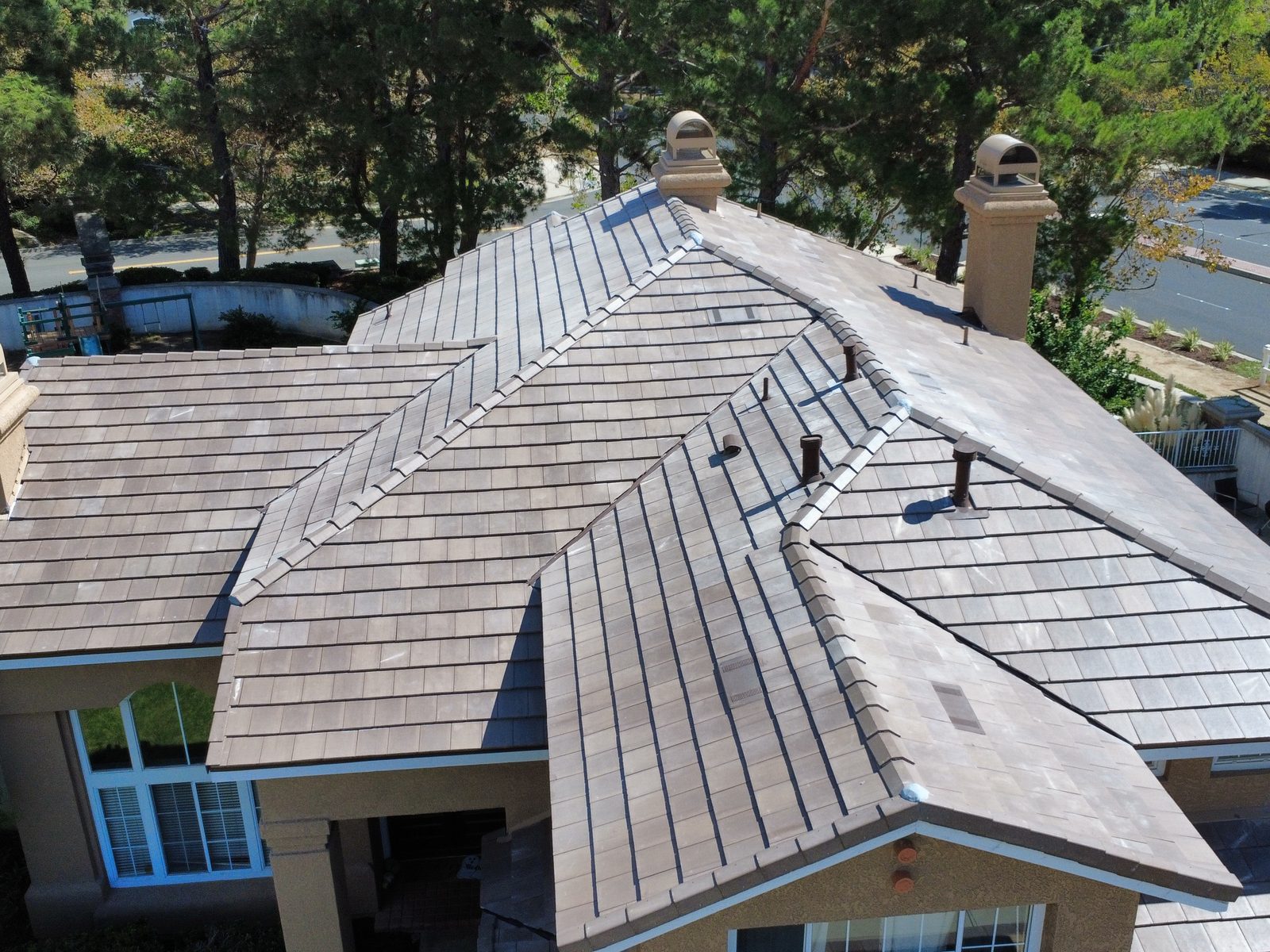
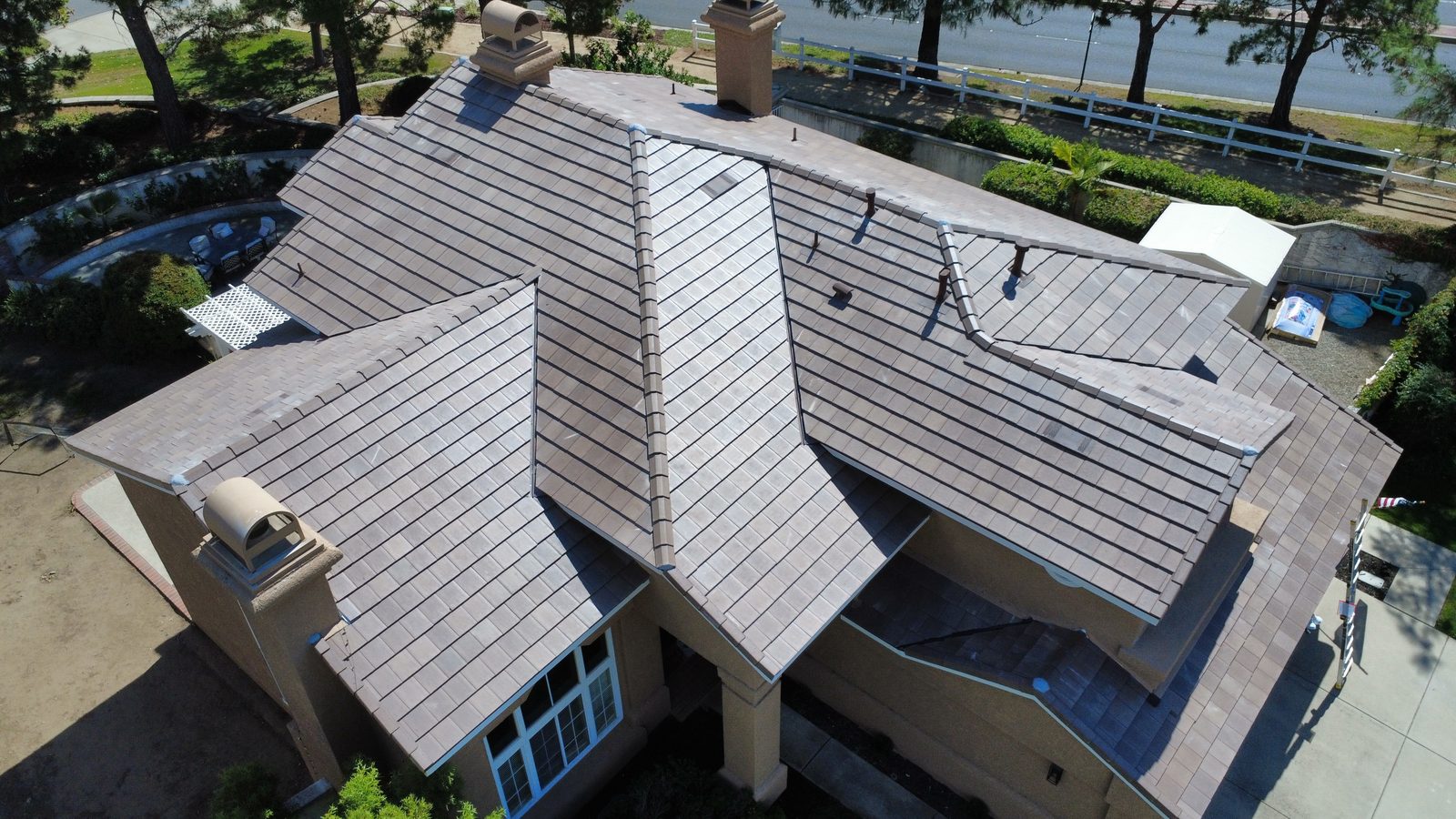
Pomona: the same roof from the tear-off photos, finished.Etiwanda: finished, October 5.
Timing
What Can Honestly Move the Schedule
California requires an approximate completion date in the contract, and a good contract gives a start date too. These are the honest reasons they move, and what you should get when they do.
Cause
What happens
What you should get
Rain
Work stops while the deck is open or wet, and an open roof gets covered.
A text or email with the new date
Permit and inspections
The city sets the inspection calendar, and work that needs an inspection waits for it.
The inspection date once it's booked
Material
Tile made to order and special-order products have lead times.
The order date and the delivery date
Deck repairs
Wood found at tear-off adds work, after you approve it.
A signed change order before the wood goes on
HOA approval
Nothing is ordered until the HOA approves.
The approval letter in your file
Solar
The panel crew's schedule has to line up with the roof crew's.
One schedule with both crews on it
Access
Narrow streets and gates slow deliveries and haul-off.
A plan for the truck and the trailer before day one
How long the job takes depends on the size of the roof, the material and everything in that table, so treat any number of days as an estimate. A date change should be confirmed in writing when it happens, not discovered at the end.
On a GAX jobOur contract counts the job as started when the roofing materials are delivered or work on the roof begins, whichever comes first. Weather, material or permit availability, inspections and other causes outside our control extend the approximate completion date.
Watch for
Red Flags During the Job
The roof left open with no underlayment or cover and rain coming. A tarp keeps water out for a night. It is not a repair.
A charge you first hear about on the invoice. Extra work needs a signed change order before it's done.
A product on the roof that isn't the one in your contract. A substitute should come to you in writing first.
Tile or shingles going on without an inspection your city requires. We've seen a job where the underlayment had to come back off, and the homeowner paid for it twice.
A payment due before the matching work is done. It is against the law for a contractor to collect payment for work not yet completed or materials not yet delivered.
Owner-builder paperwork on your table for a roof someone else is building. Read our owner-builder warning first.
Questions
Frequently Asked
How long does a roof replacement take?
It depends on the size of the roof, the material, deck repairs, the weather, inspections and access. Ask for approximate start and completion dates in the contract, and expect a written update if one moves.
Do I need to be home during my roof replacement?
Not all day. It helps to be there at the start and for the final walkthrough, and reachable by phone in between in case a decision comes up, like wood found at tear-off.
What happens if it rains in the middle of the job?
Work stops and an open roof gets covered so water stays out of the house. The schedule moves, and the new date should come to you in writing.
Why can't the roofer tell me how much wood needs replacing?
Because the weather side of the deck can't be seen until the old roof is off. That's why a contract carries a wood allowance and unit rates, and any wood past the allowance goes in by signed change order.
When should I make the final payment?
When your contract says, and never ahead of the work. Payments should follow finished stages, and you can ask for a lien release for each one. On our contracts the final payment is due at substantial completion: the roof installed and watertight and the site cleaned. For us that means the roof is done and waiting on the city's final inspection.
Will the city inspect my new roof?
Where a permit is required, yes. Building departments inspect the roof when the work reaches a certain stage and again when it's finished. The permit and the final sign-off belong in your records.
Want to know what your roof's timeline would look like? We come out, walk it with you and put the whole sequence in writing. We do four kinds of roofs: asphalt shingle roofs, tile replacement with new tile, tile lift and relay, and flat roofs, across the Inland Empire.