Roof Repair
Tile Roofs
October 2026
The Leak Didn't Start
in a Valley
When a tile roof leaks, most people expect a valley, a flashing or a pipe. On this house in Upland it was none of those. The wind knocked tile off the second story, it landed on the first-story roof, and that's where the water got in.
Arthur G.
Owner, GAX Roofing · C39 Licensed Contractor
"A loose tile is a leak waiting for rain, and a hazard for whoever is standing below it."
Where I Usually Look First
Most leaks we chase on tile roofs start where the roof gets complicated: the valleys, the flashing where the roof meets a wall, and the pipes and vents coming through. Those are the sensitive areas, and they're where I look first. On this house in Upland, none of them was the problem.
What the Wind Did
The wind pulled tiles loose on the second story and dropped them onto the first-story roof below. A tile falling a full story doesn't land softly. It broke the tiles it hit and left the lower roof open.
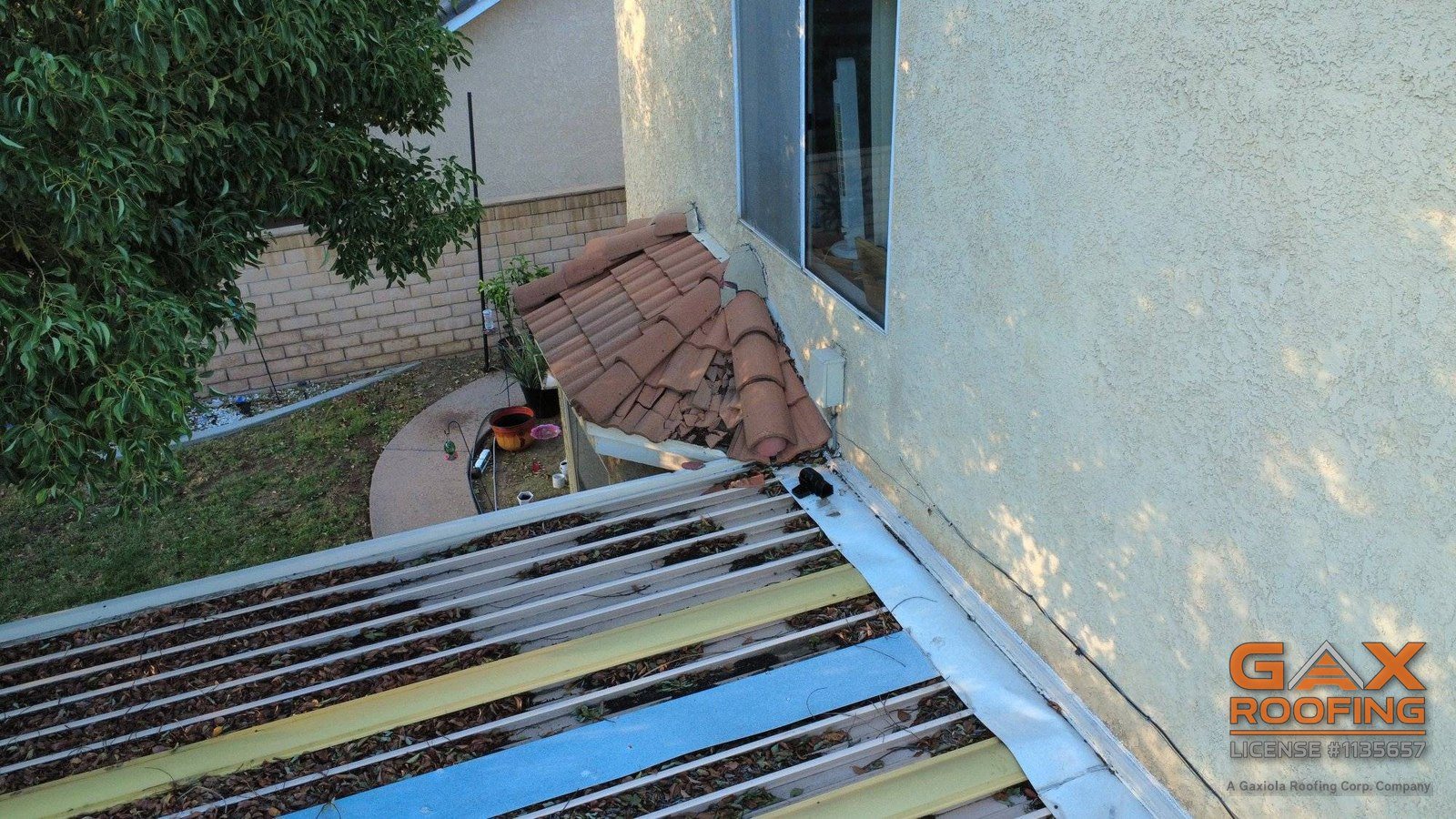
Upland: the first-story roof where the tile from above landed. The broken pieces are piled against the wall.
That was all it took. Morning dew got in first. Then the rains that followed found the same opening. The homeowner saw a leak on the first floor, but it started a story up, with the wind.
Dew Is Enough
People think a roof only leaks in a storm. With a broken tile, the dew can do it. Moisture collects overnight, runs downhill, and goes in where the tile used to keep it out. If you're seeing a stain after a damp morning and it hasn't even rained, take it seriously.
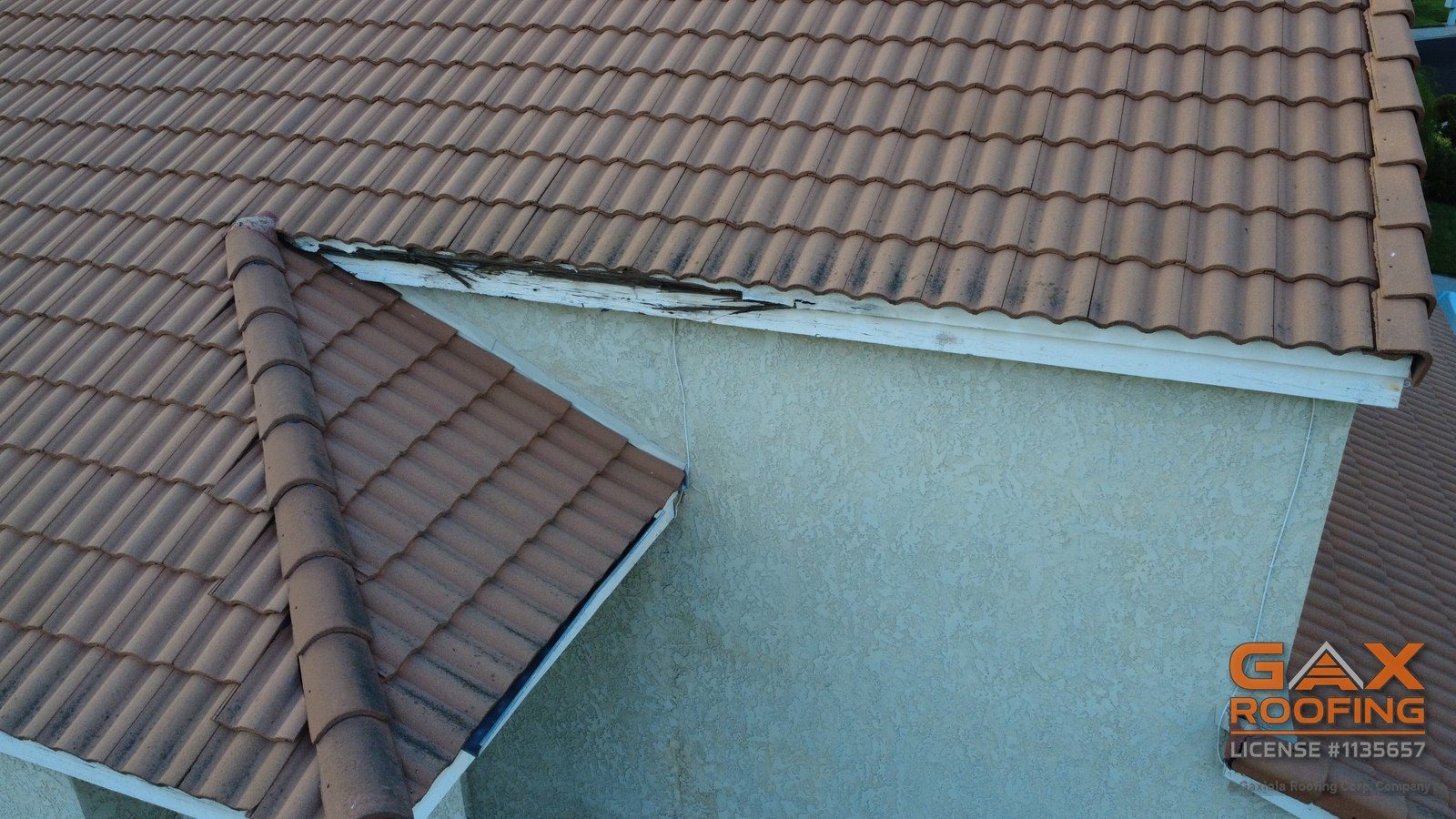
The second story above it. The edges are where the wind gets its grip. Bottom right: a cracked tile at the corner.
A Falling Tile Can Hurt Someone
Here's the part that worries me more than the leak. A concrete rake tile, the trim piece that runs down the edge of a gable, weighs about 7 to 11 pounds depending on the profile. A regular concrete field tile is around 10. Picture one of those coming off a second-story roof in the wind and landing on someone in the backyard. That can seriously hurt someone. It can kill someone.
If you see tile on the ground or on a lower roof after a windy day, keep people and pets out from under that edge until a roofer looks at it. And don't climb up there to check it yourself.
A loose tile is a leak waiting for the next rain, and a hazard for whoever is standing below it.
Why Tiles Come Loose
The wind doesn't have to rip a tile off in one shot. It gets under the edge, lifts, lets go, and lifts again. On Santa Ana days we can hear tiles shifting around on the roof. The edges take the worst of it: the eaves and the rakes are where the wind gets its grip.
The tile industry learned this the hard way in Florida. After the 2004 hurricanes, loose trim tiles came off and went airborne, in the words of the Tile Roofing Institute's technical director, "bouncing across the roof plane, breaking field tiles." That's the same thing that happened on this house, on a smaller scale. A lot of older roofs around here have tiles that were never fastened, or only every so often. More on that in our post on spot nailing and why tiles slide out.
Why We Nail Every Tile
This is why we nail every tile. Every one, not every other row. When we do a tile replacement or a lift and relay, we also offer hurricane clips: metal clips that hold the bottom edge of the tile down, so the wind can't tunnel under it and lift it. That bottom edge at the eaves is where the wind pushes hardest, and it's where the industry's own best practice calls for clips.
Where This One Stands
We documented everything with photos and sent the homeowner an estimate for the repair.
After a Windy Day, Check From the Ground
Look down before you look up. Tile on the ground, on a lower roof or in the gutters means something came loose.
Look along the edges. From the yard, check the eaves and the gable edges for gaps or tiles that sit out of line.
Look inside after a damp morning. A new stain on the ceiling or a wall, even without rain, is worth a call.
Stay off the roof. Wet or dry, it's not worth the fall. Our guide on what to do when your roof leaks in a storm covers the first hour, and our post on Santa Ana winds explains how the wind gets under a roof.
If you're thinking about insurance: a lot of policies cover wind, and your policy and your insurance company decide what's covered after the deductible. Dated photos help either way. Our storm inspection and the estimate are free.
Sources: Journal of Light Construction, Tile Roofs for Hurricane Zones (2006); Eagle Roofing Products, 2026 Technical Specifications (field tile installed weights); All Points Tile & Slate rake listings (7 lb V-rake, 11 lb V-rake).
Tile Down After the Wind?
Free inspection and estimate, in writing. We'll find where the water is getting in, even when it isn't where you'd expect. We do asphalt shingle roofs, tile replacement with new tile, tile lift and relay, and flat roofs across the Inland Empire.
(909) 819-8394
Book an Inspection