Clay Tile
Tile Roofing
October 2026
Clay Tile Roofs:
Repair, Relay, or Convert?
Yes, we work on clay tile. Repairs, lift and relays and replacements. Clay is one of the best looking roofs in Southern California, and if you love it, it's worth keeping. Here is what it takes to work on it right, and why it costs a little more than the same job in concrete.
Arthur G.
Owner, GAX Roofing · C39 Licensed Contractor
"Clay is worth keeping if you love it. It just has to be handled like it's worth keeping."
Yes, We Work on Clay
We do clay tile repairs, lift and relays and replacements. Clay is one of the best looking roofs in Southern California, and if you love the look, a clay roof is worth keeping. There is just a bigger standard of care involved, and that care is why clay projects run a little pricier than the same job in concrete.
Clay tile is fired clay. Concrete tile is made from cement and sand. From the street they can look a lot alike. Up on the roof they don't handle alike, and on an older roof that matters.
Why Clay Takes More Care
- Old clay can break even when you handle it right. Walking it, lifting it and stacking it all take more care than concrete, and that care takes time.
- Some breakage is expected on every lift and relay. That goes for aged concrete too. We plan for it from the start, and our contract says so up front.
- Matching takes real looking. Older clay colors and profiles may not be made anymore. We find the closest match we can and put it where it shows the least.
Same job, more care. That is the whole reason clay costs a little more.
A Cracked Clay Tile Is Not a Sealant Job
This one holds for clay and concrete alike. A cracked tile doesn't get fixed with a bead of sealant. The broken tile comes out, and we look at the underlayment under it, because that layer is what keeps the water out of your house. Sealant on a crack doesn't fix the tile, and it tells you nothing about the layer underneath.
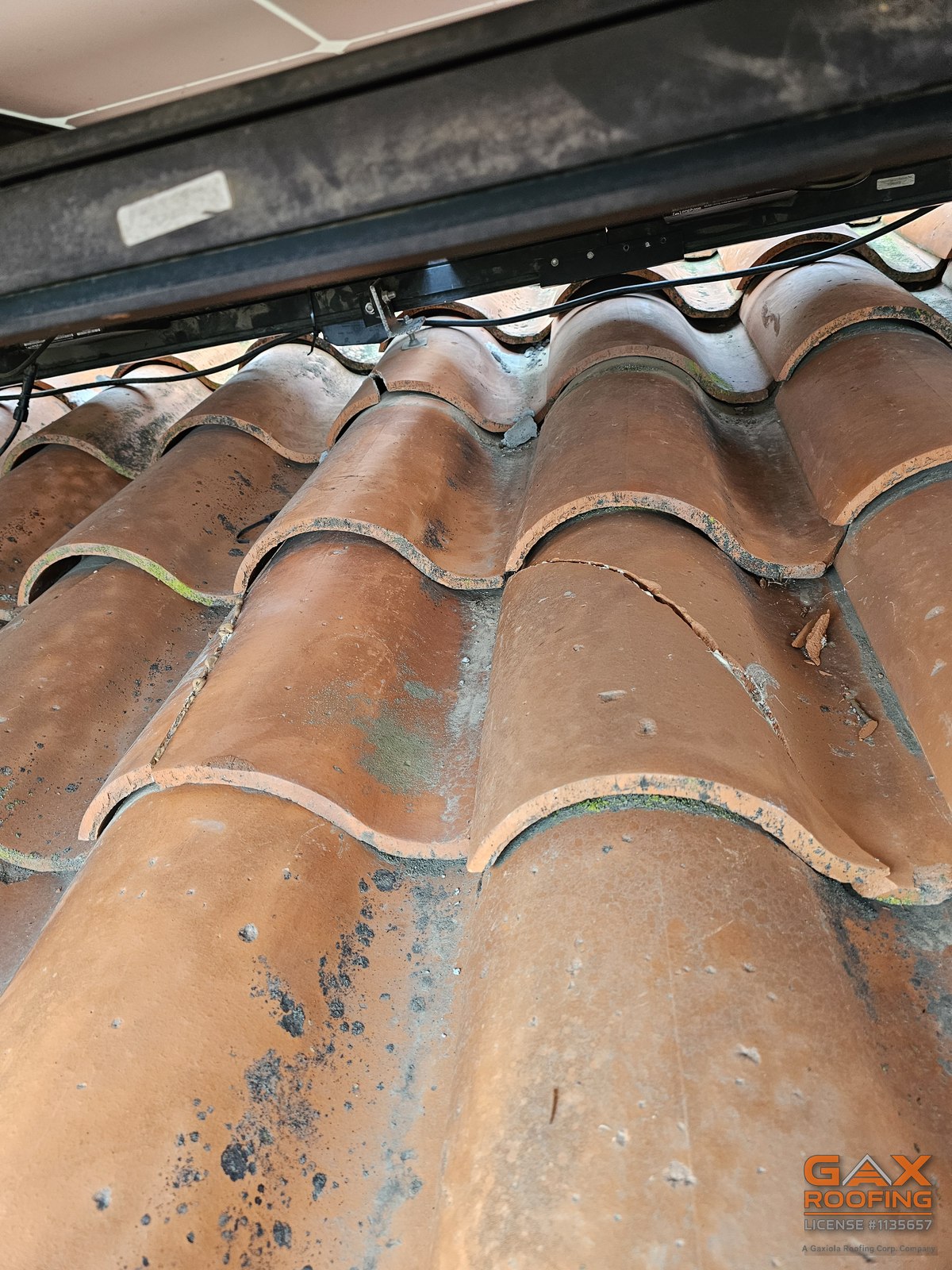
Cracked clay S-tile under the rails of a solar array in Walnut, California.
If you have solar panels on a clay roof, the tile under the array is the hardest part of the roof to get back to. What to watch for under panels is in Solar Panels and Your Roof.
When a Clay Roof Leaks, Look Under the Tile
Clay sheds most of the water that hits it. The underlayment under the tile is what stops the rest, and in my experience the tile usually outlasts the underlayment. So on an older clay roof that leaks in more than one spot, the answer often isn't new tile.
It's a tile lift and relay. We take your clay up and stack it, replace the underlayment and the metal, and set your clay back, with matching pieces where some broke. You keep the roof you love, with a new layer under it.
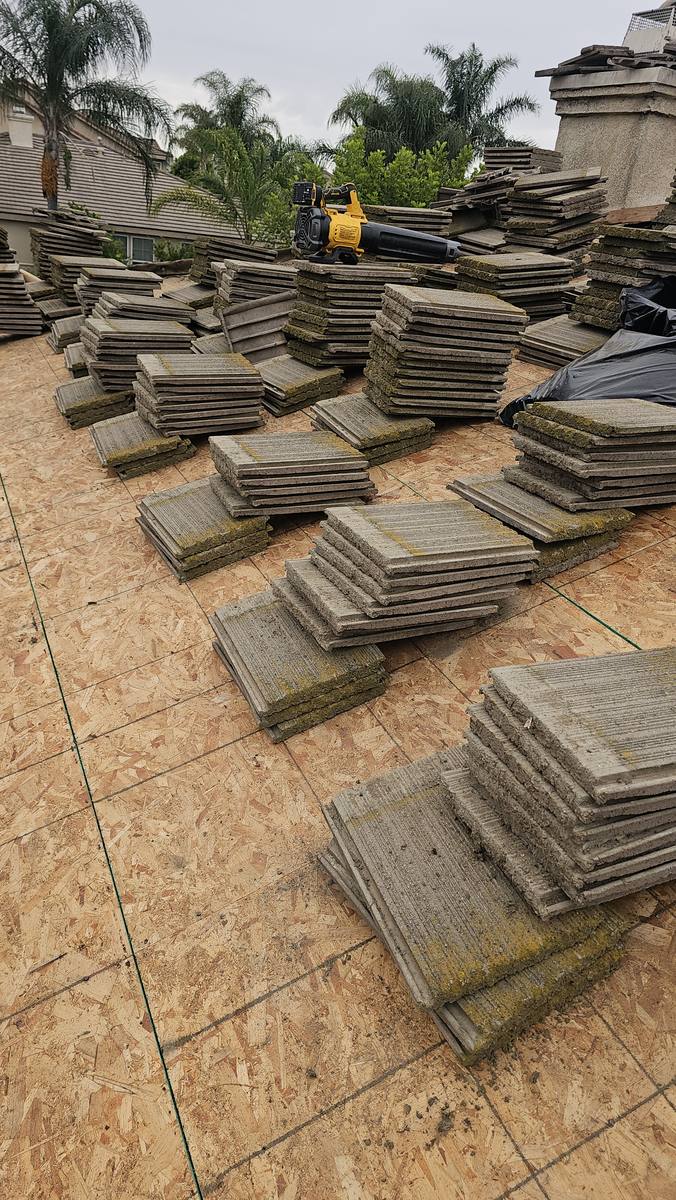
Tile lifted and stacked during a lift and relay in Eastvale. This one is concrete. Clay comes up and goes back the same way, just with more care.
Four Ways a Clay Roof Can Go
- Repair. A few cracked or slipped pieces on a roof that is otherwise sound. The broken tile comes out, the underlayment under it gets checked, and the closest match goes in.
- Lift and relay. The clay is good and the underlayment is done. Keep the clay, replace the layer.
- New clay. The tile itself is worn out and you want to stay with clay. That is a tile replacement with new tile.
- Convert to concrete tile. Many homeowners with older clay choose to go to concrete tile instead, and that is a fine choice too.
One thing we check first on a conversion: weight. A one piece clay S tile and a standard weight concrete tile don't weigh the same, and some cities look at the weight a reroof adds. The published numbers are in Can Your House Carry a Tile Roof?. If you are also weighing a switch to shingle, our guide Tile Roof: Repair or Replace? walks through that option.
HOAs and Permits
Going from clay to concrete changes the look, and changing the look is exactly what an architectural committee reviews. If you are in an association, they will usually want the manufacturer, the profile and the color before any work starts. Our HOA roof approval page covers what they ask for. On the city side, a reroof needs a permit, and we pull it under our license.
Clay is worth keeping if you love it. It just has to be handled like it's worth keeping.
Got a Clay Roof?
Free in-home estimate, in writing. We walk your clay roof with you and tell you whether it's a repair, a relay, new clay or a conversion. We do asphalt shingle roofs, tile replacement with new tile, tile lift and relay, and flat roofs across the Inland Empire.
(909) 819-8394
Book an Estimate