Why a Shake Roof Is
Never an Overlay
Old wood shake was installed on skip sheathing: boards spaced apart with gaps between them so the shakes could dry from underneath. It worked for shake. It does not work for anything else. Asphalt shingles have to be fastened to a solid deck, and a nail that lands in a gap is holding nothing. So a shake roof cannot be overlaid, and the building code out here agrees: Rancho Cucamonga's own re-roofing policy says in one line that a new roof covering shall not be applied over an existing wood shake roof. Other cities word it differently, but I have not worked in one that lets you shingle over shake.
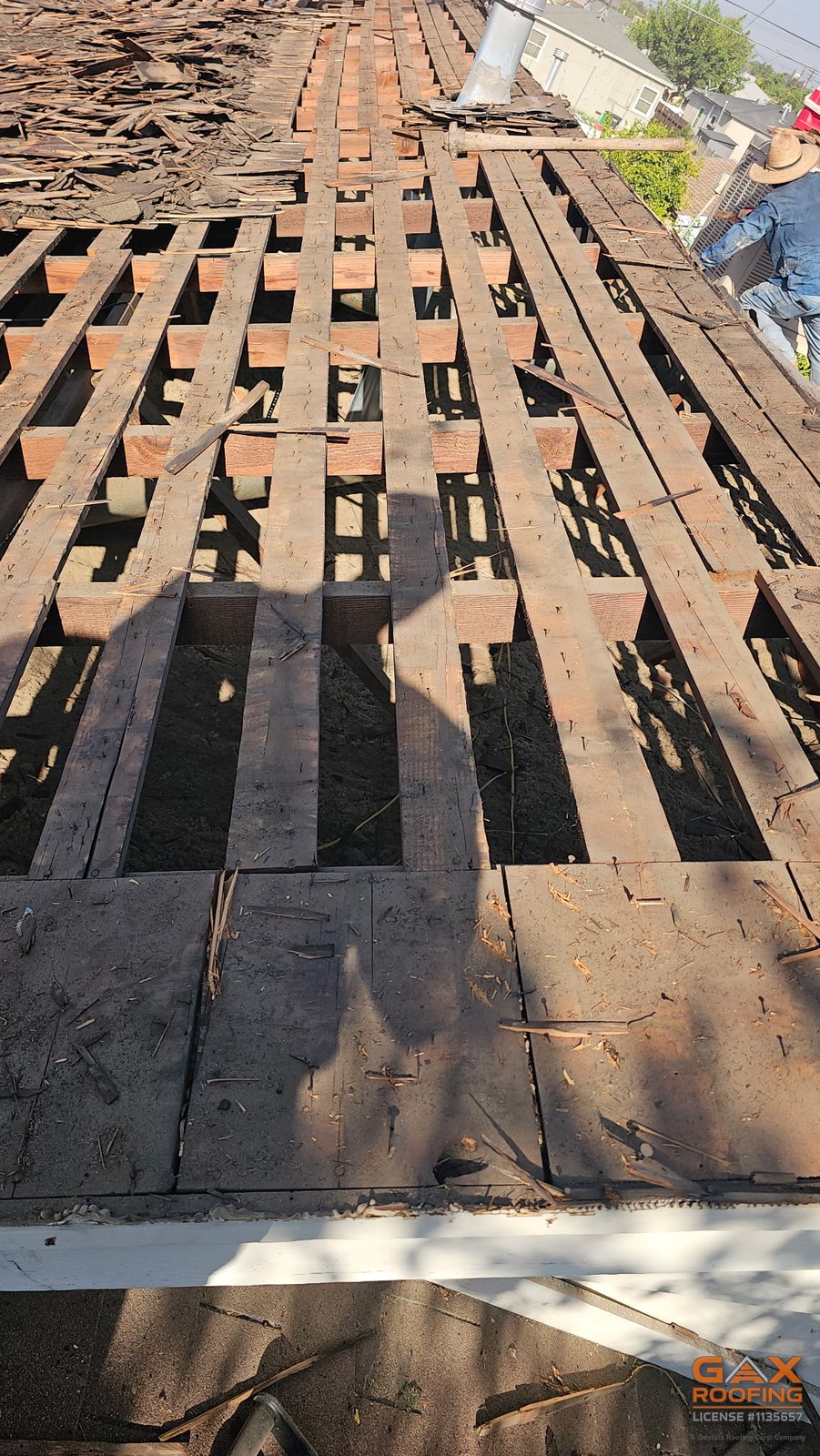
Which is why the job we did in Colton matters. From every angle that roof read as a normal shingle roof. Under the shingles was the original shake from a layover somebody did decades ago, so dry it crumbled under my crew's boots, on skip sheathing that could never have held shingles in the first place. Nobody knew until the tear-off. Nobody ever knows until the tear-off. That is why we look at the rake edge and get in the attic before we quote a shake roof, instead of quoting it from the driveway.
What a Shake Roof Replacement Includes
- Every layer off: the shake, and whatever somebody laid over it
- Skip sheathing inspected; rotten boards out
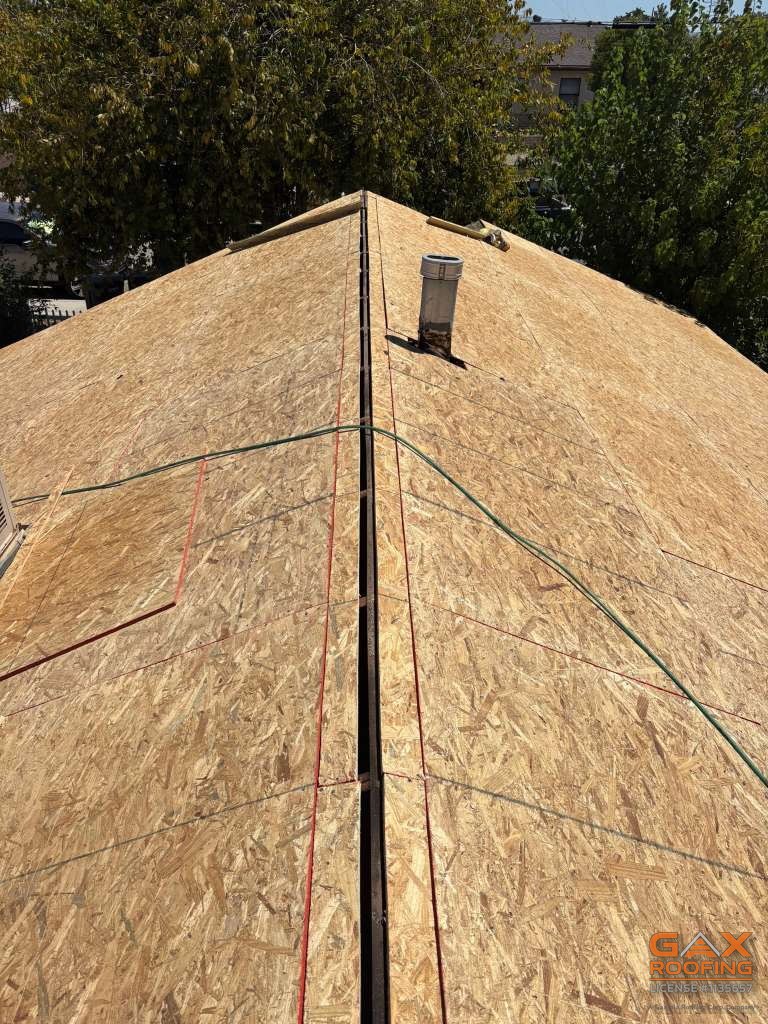
- Resheet: new solid decking (plywood or OSB) over the skip sheathing, nailed to the rafters per code, so there is finally something to fasten a roof to
- City inspection of the deck before it is covered, because that is when the city has to see it
- New underlayment, drip edge and flashings, then a Class A asphalt shingle system: Owens Corning, GAF or Malarkey, and a cool-roof shingle where Title 24 asks for it
- Ridge vent where the attic needs it, every penetration flashed, permit closed out, cleanup, workmanship warranty in writing
The Fire Part
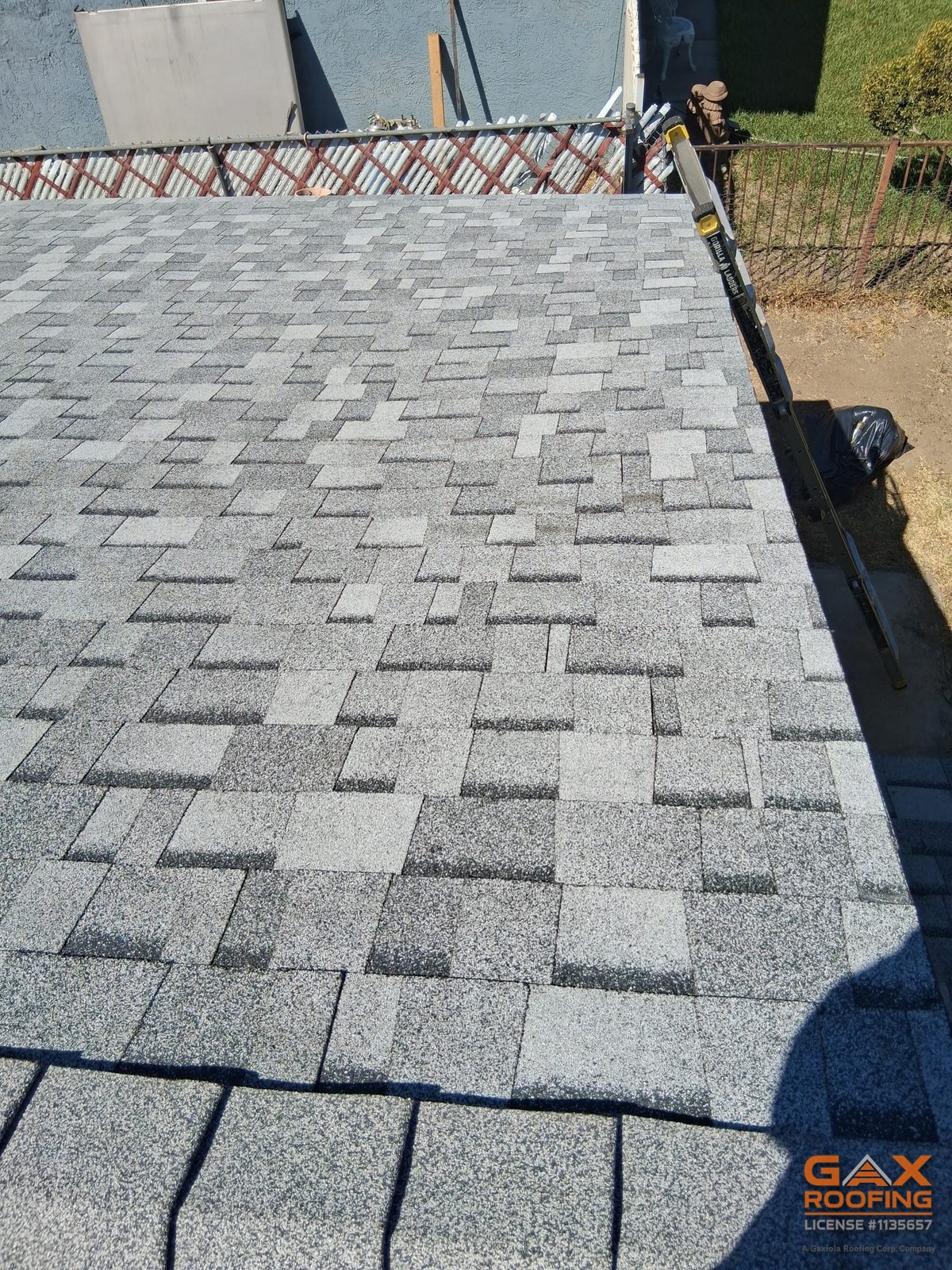
Wood shake is the reason a lot of Inland Empire neighborhoods have a fire-rated roofing requirement now. Every system we install on a former shake roof is Class A, and in a Very High Fire Hazard Severity Zone that is not optional. The longer version is on the fire-rated roofing page. If you still have a shake roof in a hillside neighborhood, that is the conversation to have before the next fire season, not after.
What this costs more than a plain shingle replacement is the resheet, and the resheet is not optional, so the honest number includes it from the start. A bid that does not mention sheathing on a shake roof is a bid that has not looked at the roof. The long version of that argument is in overlay vs. tear-off.
No, and neither can anyone else, legally or physically. Shake sits on spaced boards that cannot hold shingle nails, and Rancho Cucamonga's re-roofing policy prohibits any new roof covering over existing wood shake. The shake comes off and the deck gets resheeted first.
Often you do not until the tear-off. We look at the rake edge for the layer count and get in the attic to look at the underside of the deck. Spaced boards from below means shake was there once, even if it is gone now.
It is the biggest difference between a shake replacement and a plain shingle replacement, and it is not optional. We put it in the written scope from the start so the number you sign is the number you pay.
In most of our service area, no. Fire-rated roofing requirements have made wood shake a non-starter, and we install Class A systems only.