HOA
Roof Replacement
October 2026
HOA Roof Replacement:
Who Pays and Who Approves
We get HOA roof calls from two directions: homeowners who live in an association, and boards and managers with a whole community to roof. The first question is the same either way. Whose roof is it?
Arthur G.
Owner, GAX Roofing · C39 Licensed Contractor
"Read the CC&Rs before you read a bid. They decide who pays."
Whose Roof Is It?
California's default rule is in the Davis-Stirling Act, Civil Code section 4775. The association repairs, replaces and maintains the common area. Each owner repairs, replaces and maintains their own separate interest. But this is one of the few sections where your CC&Rs win. If they divide the work differently, the CC&Rs control.
As a rule of thumb, a detached house in an HOA is usually the owner's roof, and condo or attached townhome roofs are more often common area. Your CC&Rs, and the maintenance chart a lot of associations keep, are the only answer that counts. Read them before you read a bid.
If You Own a Home in an Association
The roof is usually yours to pay for, but the look needs the architectural committee's OK first. Committees want specifics: the manufacturer, the profile and the color. We bring samples and spec sheets to the estimate so you have what the form asks for before you submit. The full step by step is on our HOA roof approval page.
The law sets some ground rules for the committee too. Under Civil Code section 4765 the decision has to be in writing. If they deny your request, they have to tell you why and how to ask the board to reconsider, and you are entitled to that reconsideration at an open board meeting. The decision has to be made in good faith, and it can't be unreasonable, arbitrary or capricious.
And nothing gets ordered before the approval is in writing. A special-order tile color is not something you unwind.
Fire Rules Beat the CC&Rs
Civil Code section 4720 says an association can't require you to install or repair a roof in a way that violates the state's roof fire safety law, Health and Safety Code section 13132.7. In a very high fire hazard severity zone, the governing documents have to allow at least one type of fire retardant roof covering that meets that law. If you live up near the foothills, read our fire-rated roofing page before you pick a material.
HOA Approval Is Not a Permit
An HOA approving a color is not the city approving the job. A reroof still needs a permit from your city, or from the county if the community sits in an unincorporated area. In Riverside County, cities like Eastvale, Corona and Jurupa Valley issue their own permits, and unincorporated communities go through the county. Some cities add a step of their own. Rancho Cucamonga, for one, requires Planning approval before you change roof material type. We handle the permit side. The association side needs the member, or the board.
If You Sit on the Board
When the association is the client, the roof is a community project with a budget, reserves, and a lot of neighbors watching. We bid those jobs too. Whoever you hire, here is what we would want on the table if it were our association:
- A C39 license you can look up yourself, with the name matching the bid. Here is how to check a C39 license.
- A certificate of insurance and proof of workers' comp before anyone climbs a ladder.
- A written scope for each building, with the underlayment named, not "per manufacturer specs."
- Wood replacement priced per unit in writing, so rot found at tear-off doesn't turn into a blank check.
- A plan for residents: notice before work starts, what happens with cars and patios, and cleanup every day.
- Photos of each building before, during and after, so the board can see what's under the roof without going up there.
Tear-Off or Relay?
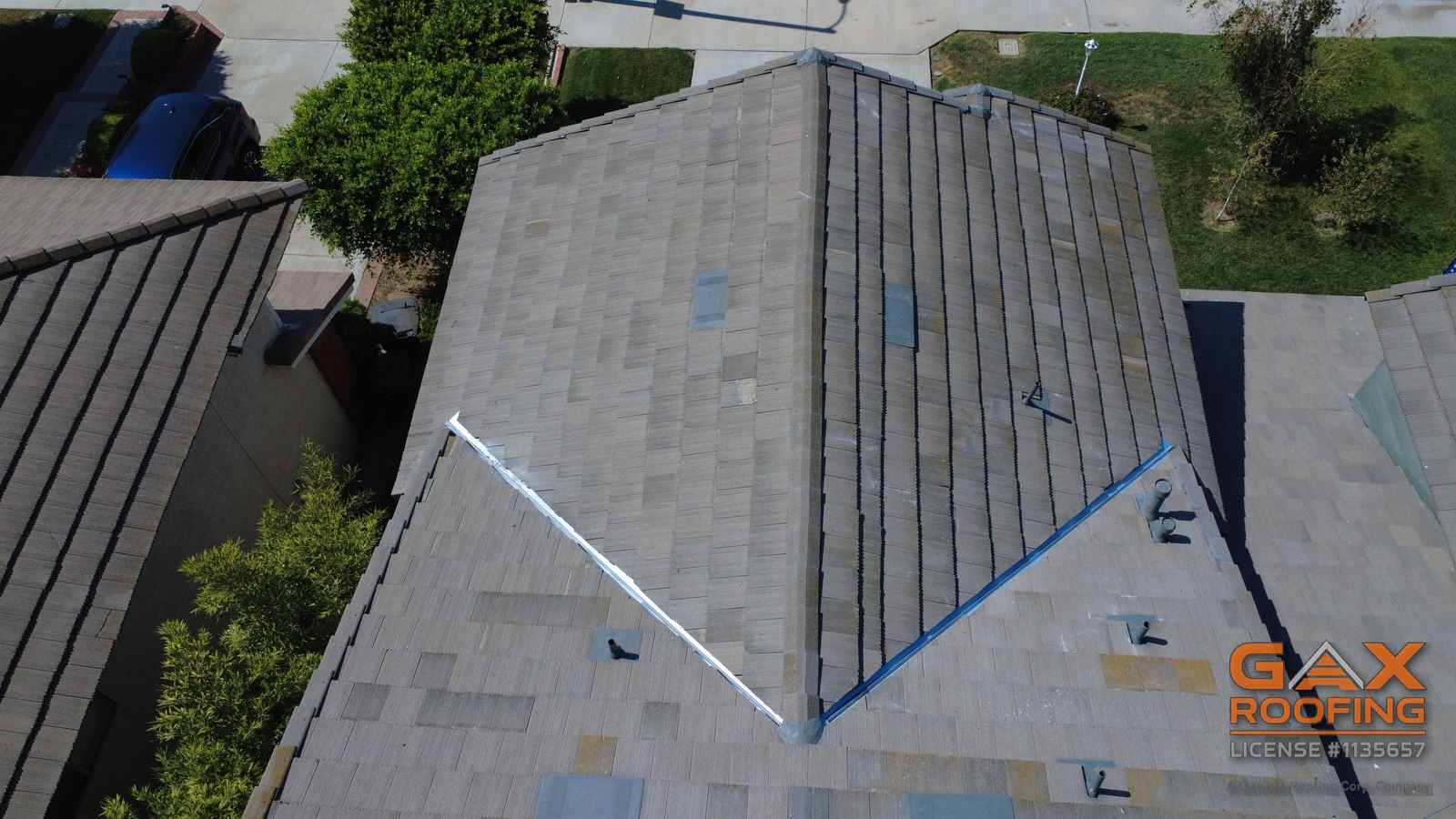
On a tile community, a full tear-off with new tile isn't always the answer. If the tile is sound and the problem is the underlayment underneath, a tile lift and relay keeps the tile you already have: it comes up, new underlayment goes down, the same tile goes back on. The community keeps its look, and most committees don't need to approve it because nothing visible changes. When the tile itself is worn out, or it's a profile nobody makes anymore, new tile is the honest call, and the color approval comes first.
Before You Get Bids
- Pull the CC&Rs and find out who maintains the roof.
- Get the architectural guidelines and the request form.
- Find out whether you are in a very high fire hazard severity zone.
- Ask every roofer to name the underlayment in writing.
The CC&Rs decide who pays. The committee decides the look. The city decides the permit. Your roofer should know all three.
In an HOA?
Free in-home estimate, in writing, for homeowners and for boards. We do asphalt shingle roofs, tile replacement with new tile, tile lift and relay, and flat roofs across the Inland Empire.
(909) 819-8394
Book an Estimate