You don't have to measure it
Don't climb up there with a level. We check the pitch when we measure your house for the estimate.
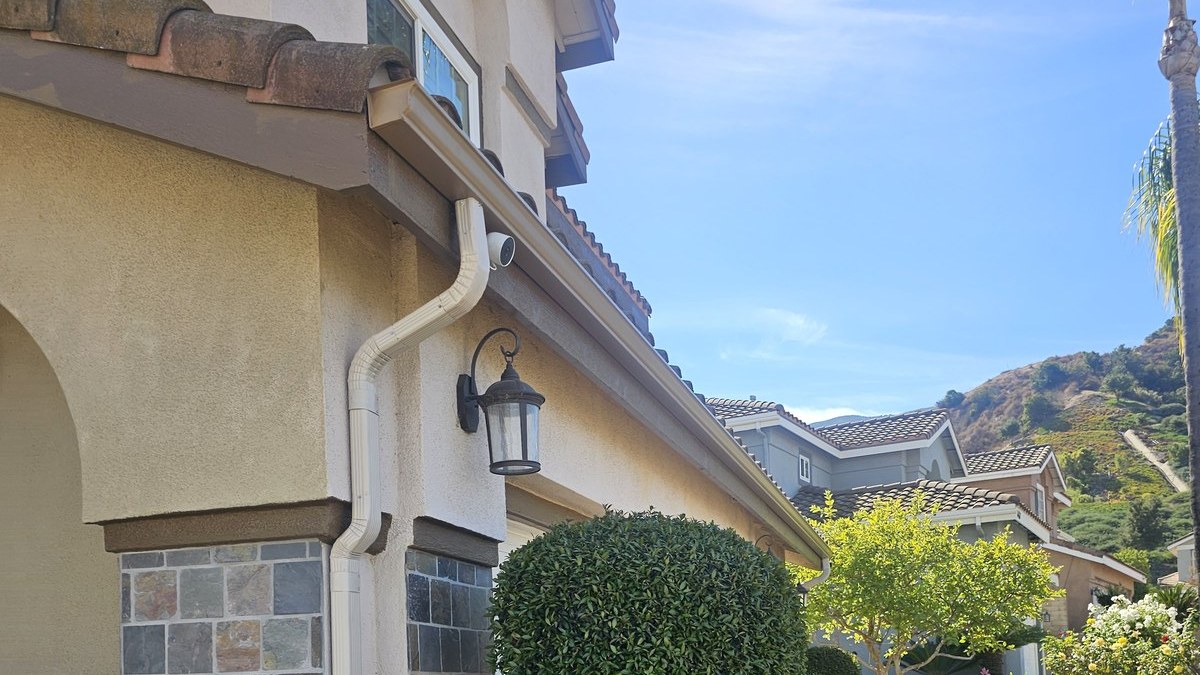
The steeper the roof, the faster the water comes off it. Here is how roof pitch decides between a 5-inch and a 6-inch gutter, and what else decides whether a gutter keeps up in a hard rain.
Call (909) 819-8394 →Our rule: a roof at 6/12 or steeper gets 6-inch seamless gutters. Under 6/12, we install 5-inch. A steeper roof sends its water down faster, and gutter sizing guides account for that by planning for more water as the pitch goes up. Pitch isn't the whole story, though. Valleys, long runs and downspouts matter too, so the final call gets made when we measure your house.
Roof pitch is how many inches the roof rises for every 12 inches it runs. A 4/12 roof rises 4 inches per foot and looks fairly low. A 6/12 roof rises 6 inches per foot. A 12/12 roof rises a foot for every foot, which is a 45 degree angle.
Don't climb up there with a level. We check the pitch when we measure your house for the estimate.
5/12 is the most common pitch in the Inland Empire, which is why our roof calculator uses it as the default. Under our rule, that is a 5-inch gutter.
A main roof and a porch or patio roof often have different pitches, so they can call for different gutters.
We keep it simple. The pitch of the roof picks the gutter.
| Roof pitch | Gutter we install | Pitch factor in sizing tables |
|---|---|---|
| Under 6/12 | 5-inch seamless aluminum | 1.0 from flat to 3/12, 1.05 at 4/12 and 5/12 |
| 6/12 and steeper | 6-inch seamless aluminum | 1.1 at 6/12 to 8/12, 1.2 at 9/12 to 11/12, 1.3 at 12/12 and up |
The pitch factor in the last column comes from published gutter sizing guides (sources at the bottom). It is how much they enlarge the roof area for its slope before they pick a gutter, so a steeper roof gets planned for more water than a flatter roof with the same footprint. Those tables are industry practice, not a California code rule. Our line is simpler than the math: 6/12 or steeper, 6-inch.
A steeper roof sends its water down faster, and it can catch more wind-driven rain on the way. So in a hard rain, more water reaches the gutter at once. If the gutter can't take it, the water goes over the front and lands where you didn't want it, right next to the house.
The same sizing tables rate a 6-inch K-style gutter for about 44 percent more than a 5-inch (7,960 against 5,520 on their scale).
Sizing guides multiply the roof area by a pitch factor before they pick a gutter: 1.0 for a low roof, 1.1 at 6/12, 1.3 at 12/12. Same footprint, more water to plan for.
Short, heavy downpours are what overwhelm a gutter that is too small, and a steep roof makes it worse. That is when you see water sheet over the front.
A bigger gutter doesn't fix a bad layout. These matter as much as the size.
Where two roof planes meet, the water from both comes down in one spot. Even a small roof can overflow the gutter there.
A long gutter needs enough outlets. One rule of thumb from This Old House: a run of 60 feet or more should have at least two downspouts.
A downspout has to carry what the gutter collects. Sizing guides put a 2 by 3 inch downspout at about 600 square feet of roof and a 3 by 4 inch at about 1,200, and they warn against mixing sizes that don't match.
A gutter full of leaves holds less water at any size. Clean them at least twice a year, and more often under trees.
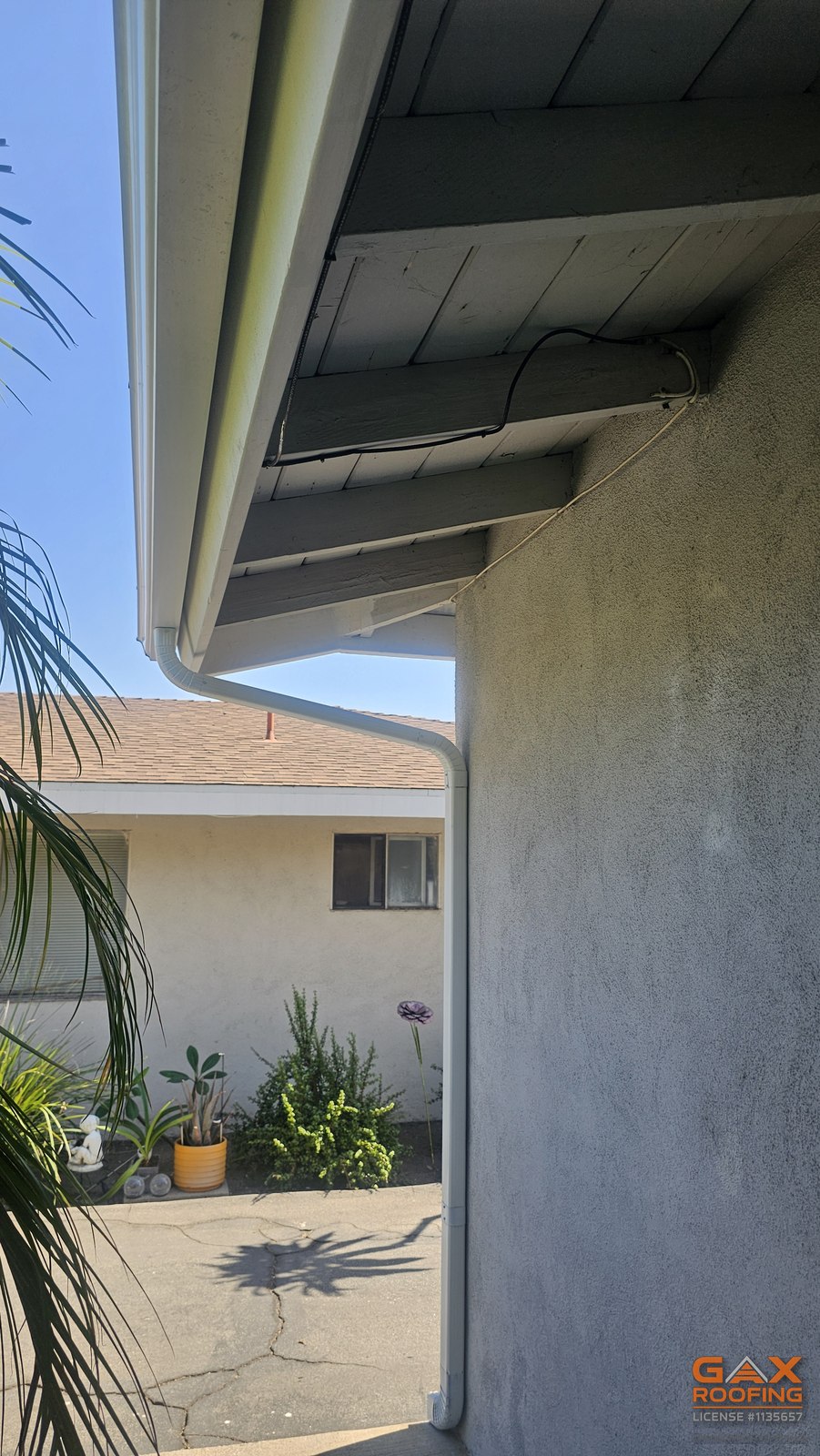
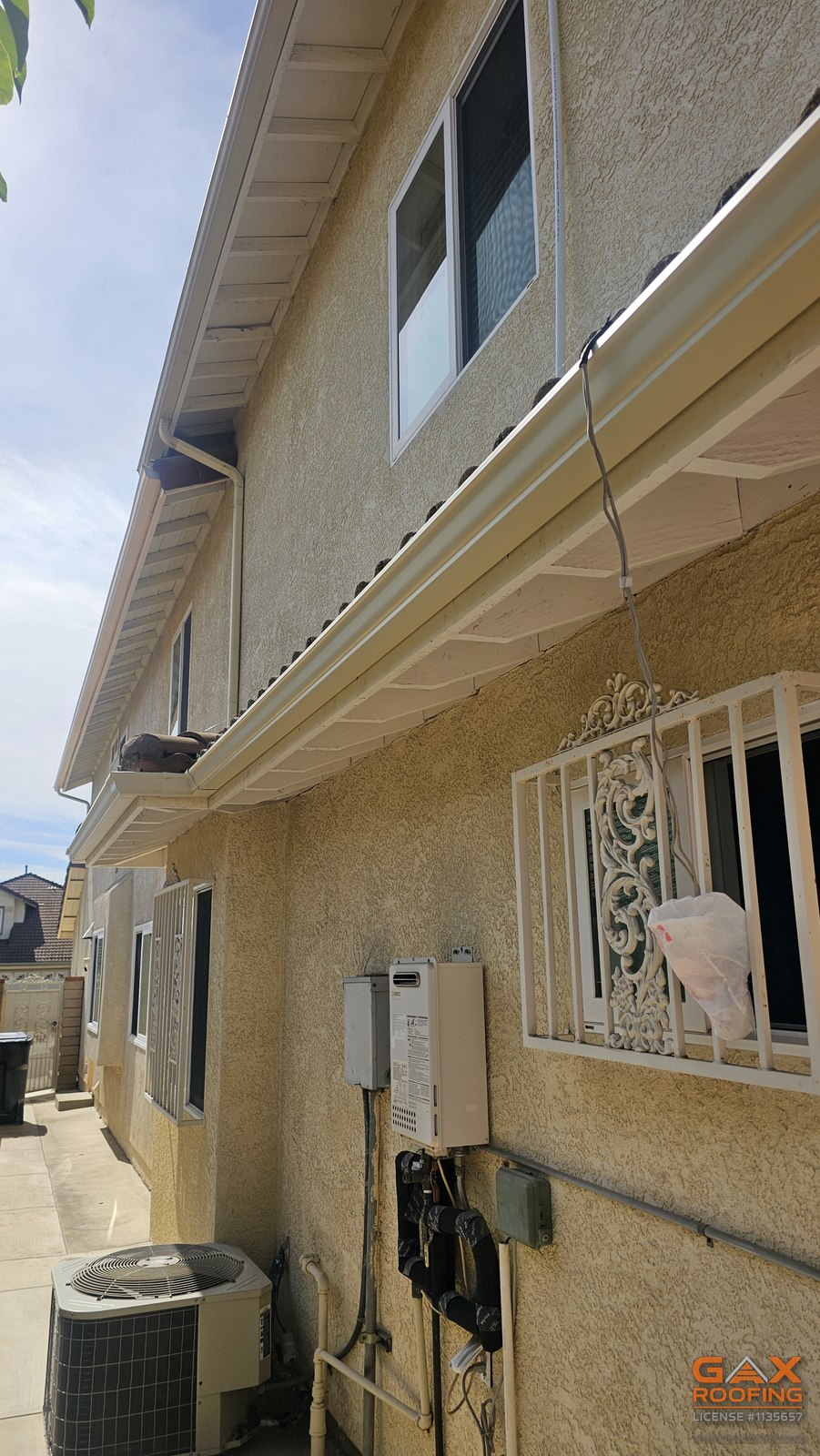
At GAX, a 6/12 roof gets 6-inch seamless gutters, and so does anything steeper. Under 6/12, we install 5-inch.
For roofs under 6/12, 5-inch is our standard, and it is the most common size on homes. Valleys and long runs can still call for more downspouts, so we look at the layout too, not just the size.
Pitch is how many inches the roof rises for every 12 inches it runs. Don't get on the roof to measure it. We check it when we measure your house for the estimate.
A little more per foot, because there is more metal in them. Your estimate shows the price for the size your roof needs.
Water comes off a steep roof faster, so more of it hits the gutter at once in a hard rain. Gutter sizing guides plan for that with a pitch factor that goes up as the roof gets steeper.
No. Gutters are their own job, and we sell them that way. If the roof is getting replaced anyway, that is the easiest time to do them, because the fascia is already getting attention.
Thinking about new gutters, or tired of water coming over the front of the old ones? Call us for a free estimate. We measure, check the pitch and tell you which size your roof needs. We also do four kinds of roofs: asphalt shingle roofs, tile replacement with new tile, tile lift and relay, and flat roofs, across the Inland Empire.
Next in the library: the Roof Maintenance Calendar and Roof Leaking in a Storm?.
Call (909) 819-8394 →Pages checked October 19, 2026. The size rule and the GAX notes describe our own work. The sizing figures come from the published guides below; they are industry practice, not a code requirement.