Chimney Flashing,
Done as Flashing
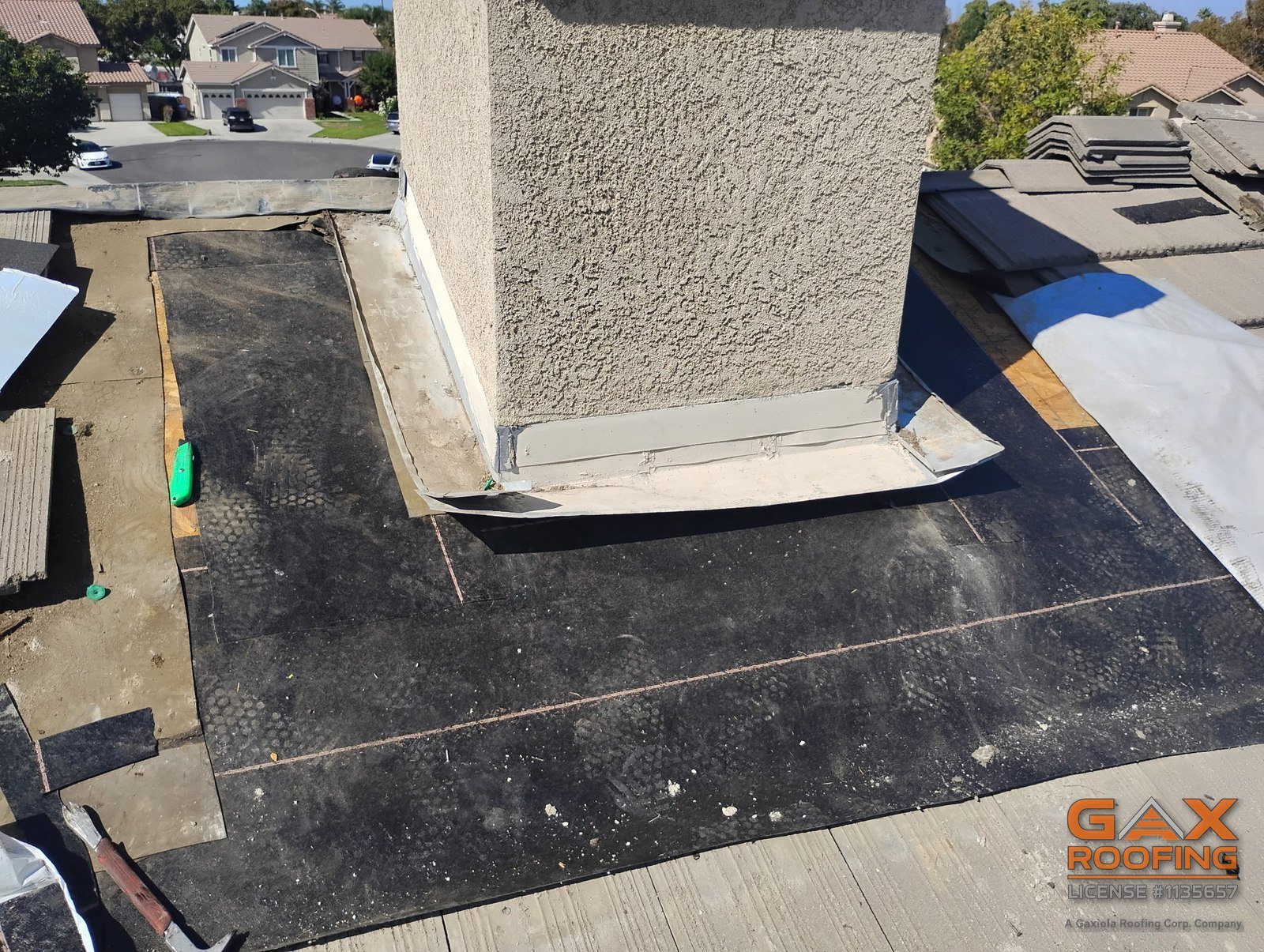
A chimney is a wall that comes up through the middle of your roof. Water runs down the roof, hits the back of it, and has to be carried around and past it. That is what flashing does: base flashing that turns up the chimney, counter flashing set into the masonry that laps over it, and on the uphill side a cricket or saddle so water splits around the chimney instead of pooling behind it. When any of that is missing, rusted through, pulled loose, or was never there in the first place, the chimney leaks. In my experience it usually shows up as a stain on the ceiling near the fireplace, and it usually started years before anybody noticed.
Why We Do Not Caulk It
Caulk is not flashing. A bead of sealant across the joint where the roof meets the chimney is a patch, and on a joint that takes the full runoff of the roof above it every time it rains, a patch is a countdown. The sun out here bakes sealant hard in a couple of summers, it cracks, and the leak comes back in the same place. We see roofs with three or four generations of caulk stacked on a chimney, each one somebody's "repair." The only fix that holds is metal, lapped correctly, tied into the underlayment.
What a GAX Chimney Flashing Repair Includes
- Tile or shingle lifted around the chimney, far enough to work, and stacked to go back
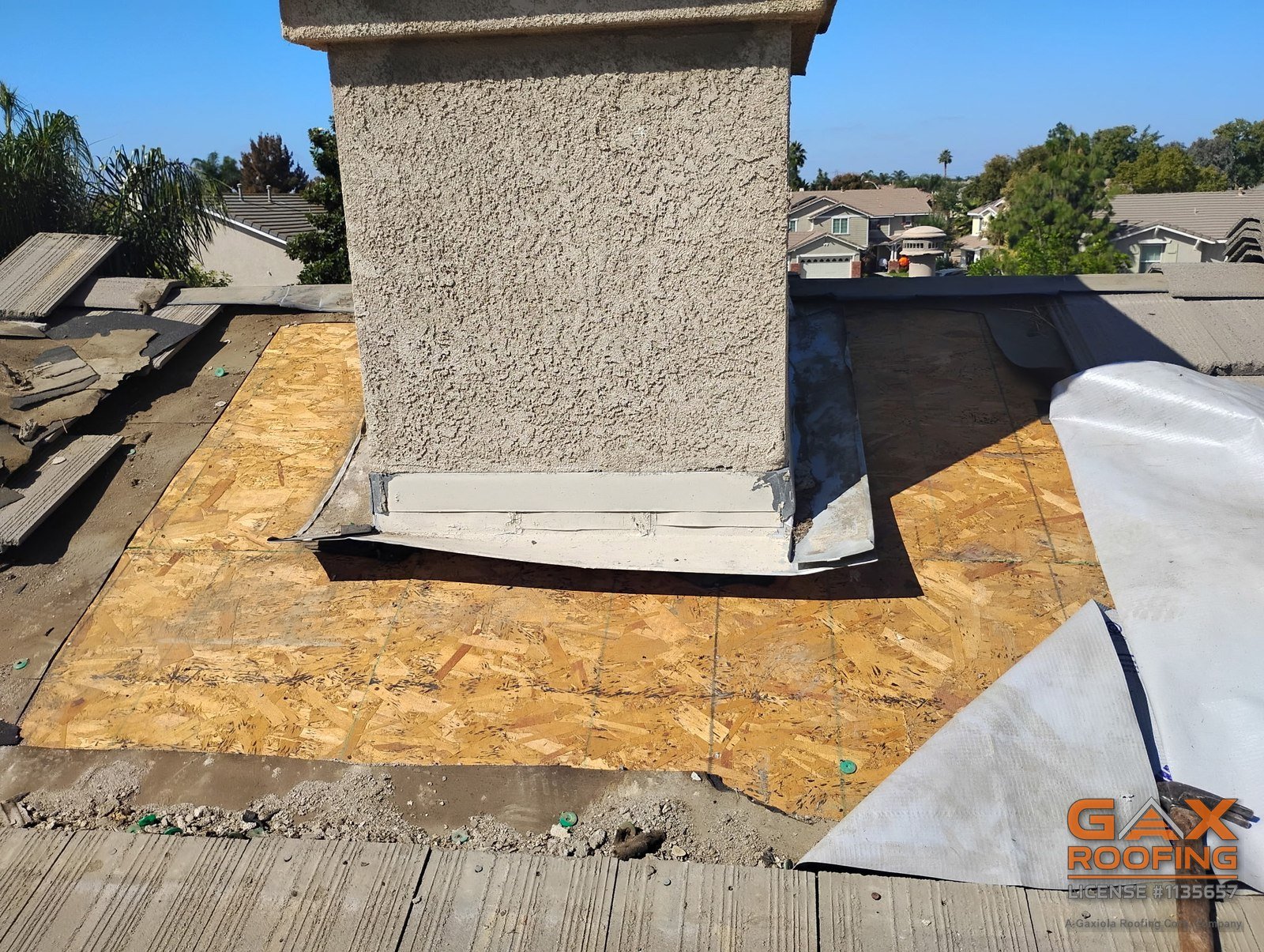
- Old flashing and failed sealant removed, deck around the chimney inspected and repaired if soft
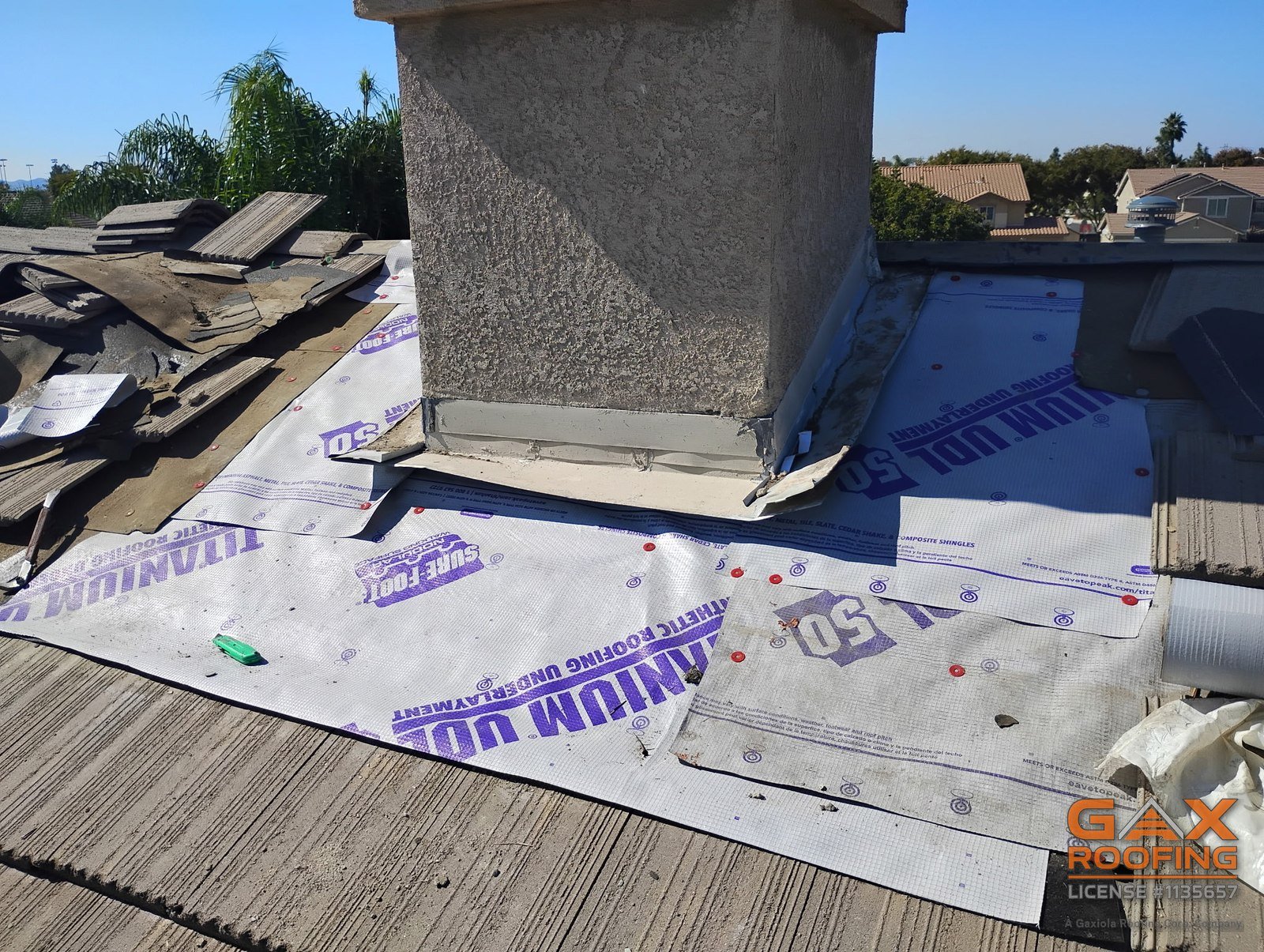
- New underlayment lapped up the chimney, with a self-adhered membrane as the backup layer
- New base flashing, new counter flashing cut into the masonry (not surface-glued), and a cricket on the uphill side where the chimney is wide enough to need one
- Pipe and vent flashings nearby replaced while the roof is open, because they are usually the same age
- Your tile or shingle back, matched and fastened, and a water test before we leave
When It Is More Than the Chimney
Sometimes the chimney is the loudest leak on a roof that has several. If the underlayment around it is worn out and the tile has been sliding, a chimney repair alone is money spent twice. We will tell you when what you actually need is a lift and relay or a section repair, and we will tell you when it really is just the flashing. Same answer we would give a family member.
A stain on the ceiling near the fireplace, or water in the firebox after a rain, points at the chimney first. We confirm from the roof and the attic before we quote anything, so you are not paying for a chimney repair when the problem is the field of the roof.
We can, and we will not. Sealant on a chimney joint fails in a couple of summers out here. New flashing built into the roof system is the repair that holds, and it is what we quote.
Yes. Most chimneys in the Inland Empire are framed and stuccoed, not brick. The counter flashing is set into a cut in the stucco and sealed, the same principle as masonry.
Usually not for a repair this size, but every city draws the line differently. We tell you which side of it your job is on before we start.