Where the Money Actually Goes
on a Roof Replacement
Most residential replacements around here run $11,000 to $20,000 or more. Here is what is inside that number, line by line, including the part we make nothing on.

Most residential replacements around here run $11,000 to $20,000 or more. Here is what is inside that number, line by line, including the part we make nothing on.
Material. Labor, which includes the tear off. And permits.
That is the whole thing. Everything else is a detail inside one of those three.
A roof permit runs anywhere from about $200 to $600 depending on the city. Rancho Cucamonga is one of the expensive ones. I have seen a replacement permit there reach $700, which is honestly a little insane.
We tell homeowners the same thing every time: this is just what it costs, and the city sets it, not us.
We do not make money on permits. What the city charges is what goes on your paperwork. Some companies add an administrative fee on top of the permit, and that fee is not going to the city.
And we are never going to hand you an owner builder permit so the paperwork sits in your name instead of ours. I have written about why that one should end the conversation.
Material is a real number. A roof system is underlayment, starter, flashings, edge metal, ventilation, hip and ridge, fasteners, and then the shingle or the tile everybody pictures when they think about a roof.
Labor covers the tear off, the deck work, the install and the cleanup. You can absolutely make labor cheaper by not tearing the old roof off. We do not do that, for reasons I have gone through at length. Covering an old roof buries the deck, and the deck is what everything else depends on.
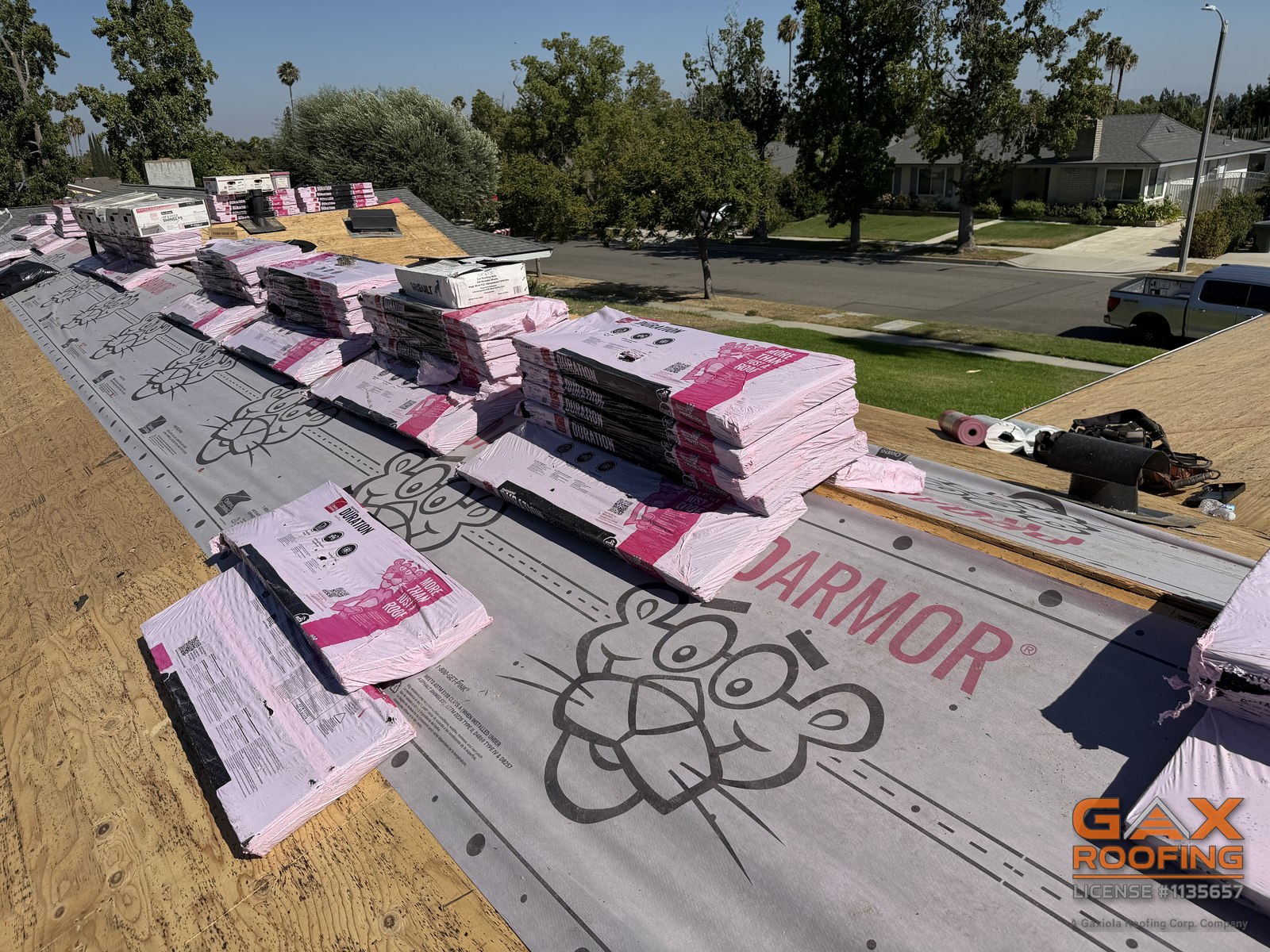
The material bucket, sitting on a roof in Rancho Cucamonga before any of it goes down.
People look at the breakdown and say some version of the same thing. It is expensive to put a roof together.
It is. And here is how I answer it, honestly: that roof is protecting a house worth five hundred thousand, eight hundred thousand, a million dollars. Everything you own is under it. You should be putting heavy duty material up there, and the number reflects that.
The spread between eleven and twenty is not vagueness. It is square footage, pitch, how many stories, how many layers are already up there, how much wood needs replacing, and what the flashings look like when we get to them.
Nobody can give you a real number without seeing what is under the roof. Anybody who does is either guessing or planning to make the difference up later.
When somebody shows me a bid that is way under everybody else, I do not argue about it. I get out the material samples and build the roof on their table, piece by piece, so they can see what is in their bid and what is not.
It is almost always the same missing pieces:
Take five components out of a roof and of course it costs less. The bid is not cheaper. It is smaller. I wrote a whole piece on reading the scope instead of the price if you are holding bids right now.
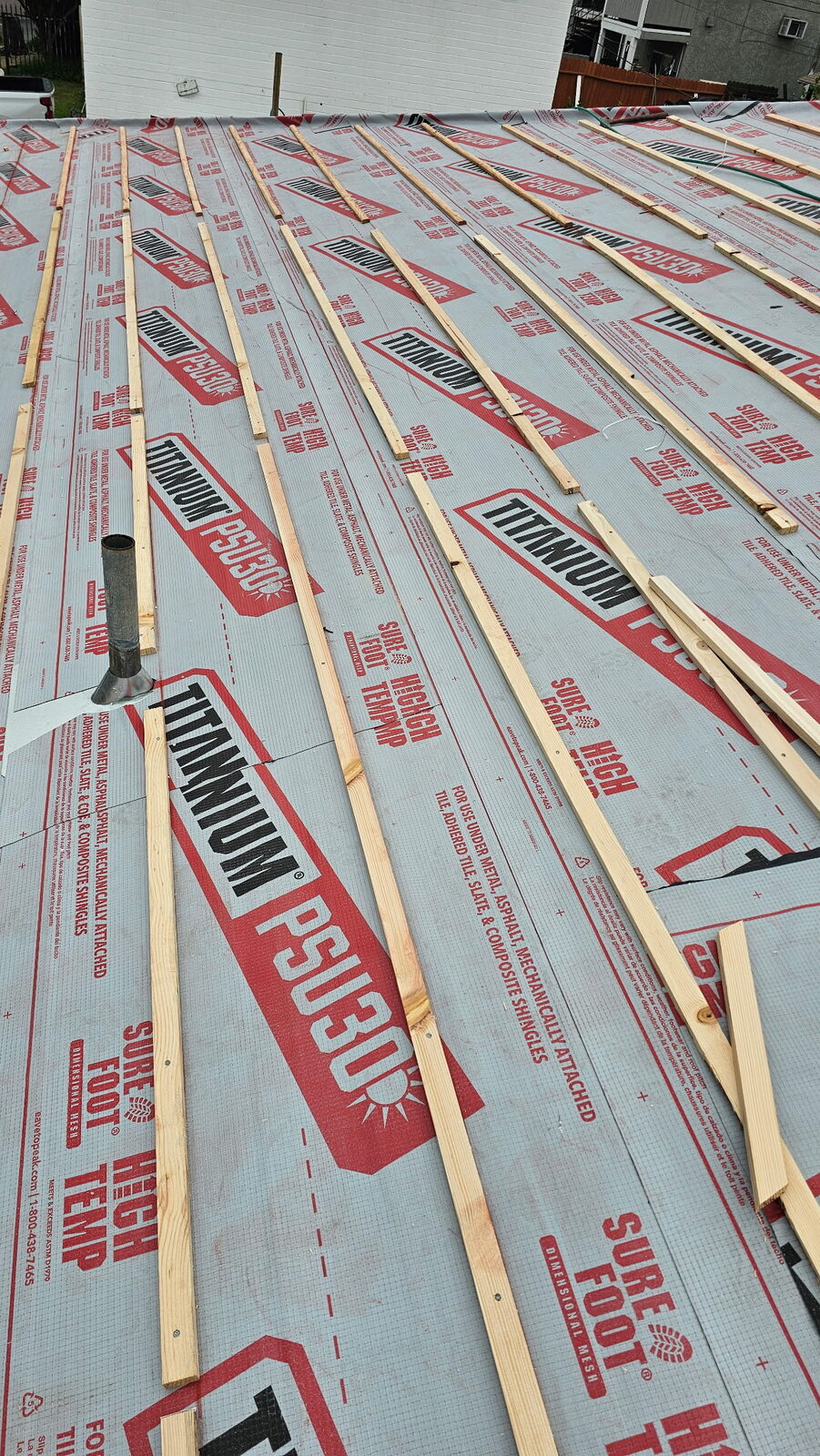
The layer that is doing the actual waterproofing, and one of the first things a cheap bid downgrades.
I want to be careful how I put this, because the easy version of the argument is not quite right.
If your roof is leaking and there is thirty pound felt under it, that does not prove the felt caused the leak. Most leaks are flashing, penetrations, or simple age, and felt that has been up there twenty five years failing is mostly a story about twenty five years.
The real argument for modern underlayment is durability, not blame. Peel and stick and quality synthetics hold up better to the thing that actually kills roofs in the Inland Empire, which is heat cycling. They seal around the fasteners. They do not tear as easily when somebody walks the roof to install solar or chase a satellite dish. Over the decades your roof is supposed to last, that is where the money shows up.
Cheap is not good, and good is not cheap. The bid you want is the one that shows you, in writing, where every dollar sits on your roof.
Ask any bidder to name the underlayment, the starter, the edge metal and the shingle line in writing. Ask whether the permit fee on the paperwork is the city's actual fee. Ask whether anything is being reused.
Those three questions will separate the bids faster than anything else you can do.
We will walk it, measure it, and give you a written estimate that names every component. Free, and you get the same answer I would give a family member.
(909) 819-8394