When Ridge Caps Finally Give Out
The highest line on your roof takes the most sun, the most heat, and the most movement. When the caps split down the middle, the ridge underneath is exposed. Here is what that looks like, from a real Upland roof.

The highest line on your roof takes the most sun, the most heat, and the most movement. When the caps split down the middle, the ridge underneath is exposed. Here is what that looks like, from a real Upland roof.
These photos are from a roof we replaced in Upland. Look at the ridge, the peak line where the two slopes meet. Those caps cracked straight down the middle, one after another, all along the line.
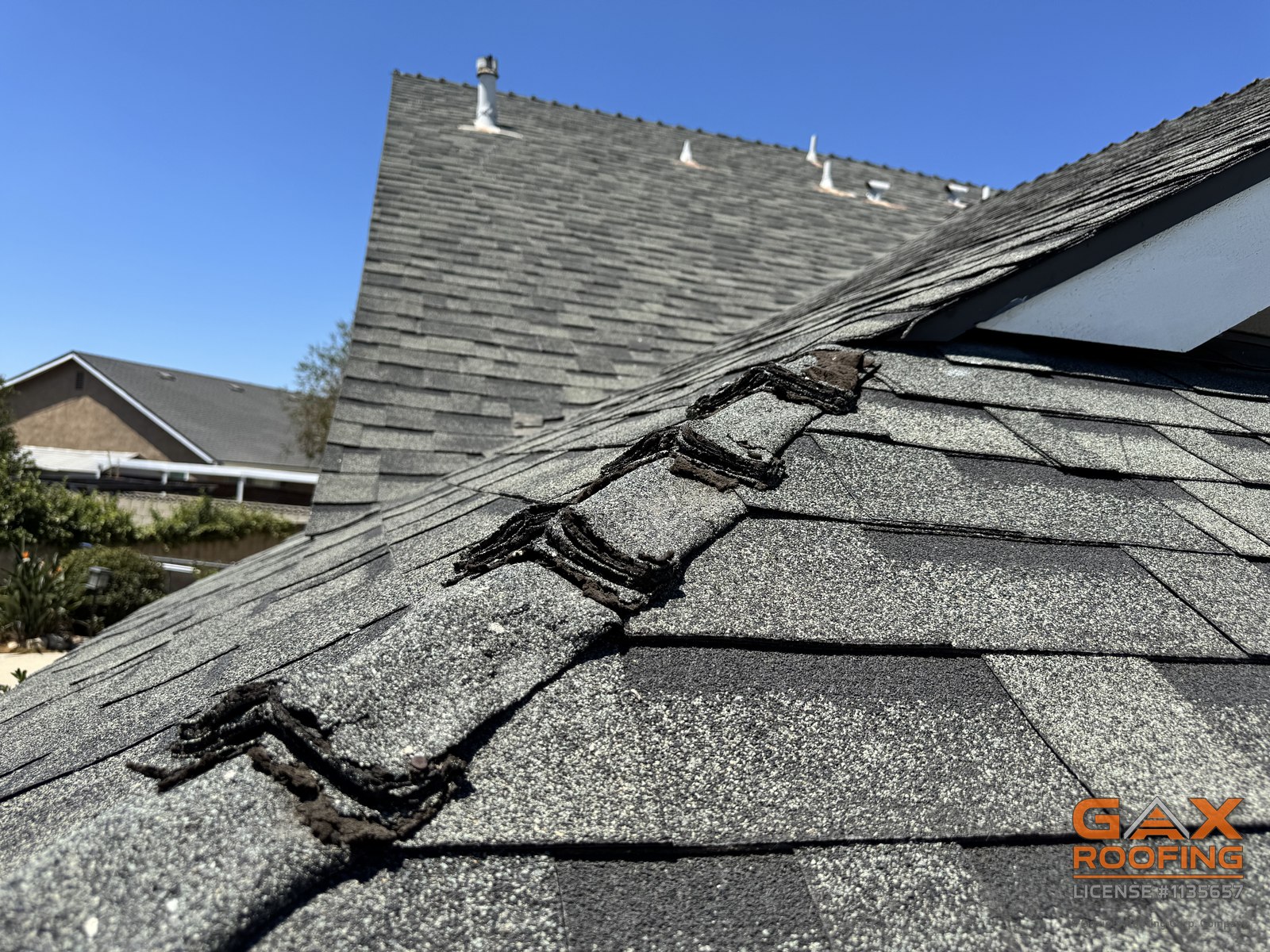
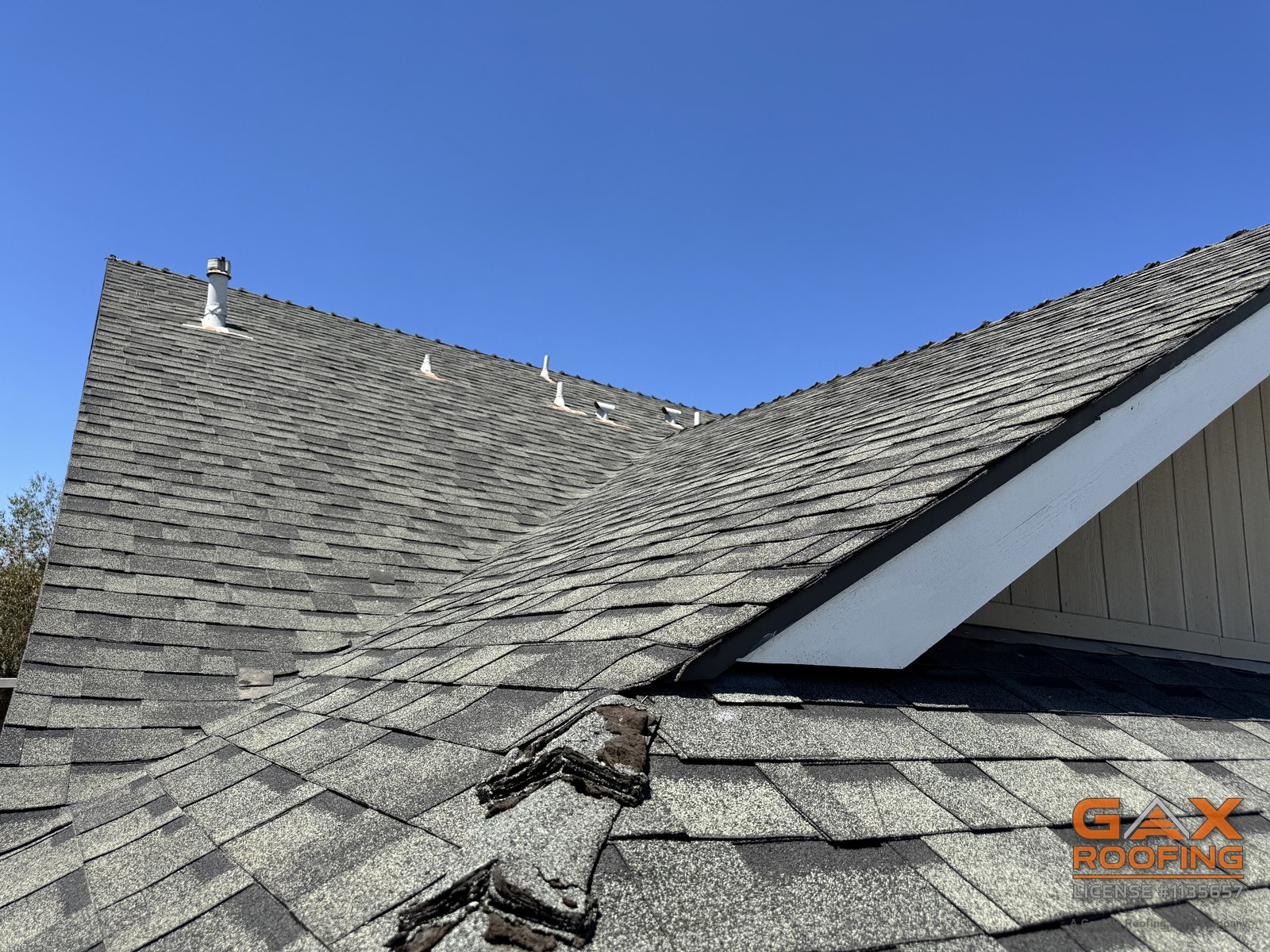
That is not storm damage and it is not bad luck. It is what ridge caps do when they age out. The ridge is the most exposed spot on the entire roof. It takes the most sun, the most heat, and the most expansion and contraction, because a ridge cap is a shingle bent over a peak and asked to hold that bend for decades. Eventually the bend is where it gives. The crack runs right down the middle.
A split ridge cap is not just a cosmetic problem, because of what sits underneath it: the ridge itself, the open joint between the two roof planes. The cap is the only thing covering that joint. Once the crack opens, the ridge is exposed, and water that gets in there does not stay put. It travels. The roof starts leaking down the ridge line, and by the time it shows up on a ceiling, it can be a long way from where it entered.
"A ridge cap is a shingle bent over a peak and asked to hold that bend for decades. Eventually the bend is where it gives."
Because the ridge ages hardest, it usually goes first. Cracked caps on an older roof are an honest preview of where the rest of the field is headed. Sometimes the right answer is replacing the caps and buying time. On this Upland roof, the caps were the loudest symptom of a roof that was done, and the honest answer was a full replacement.
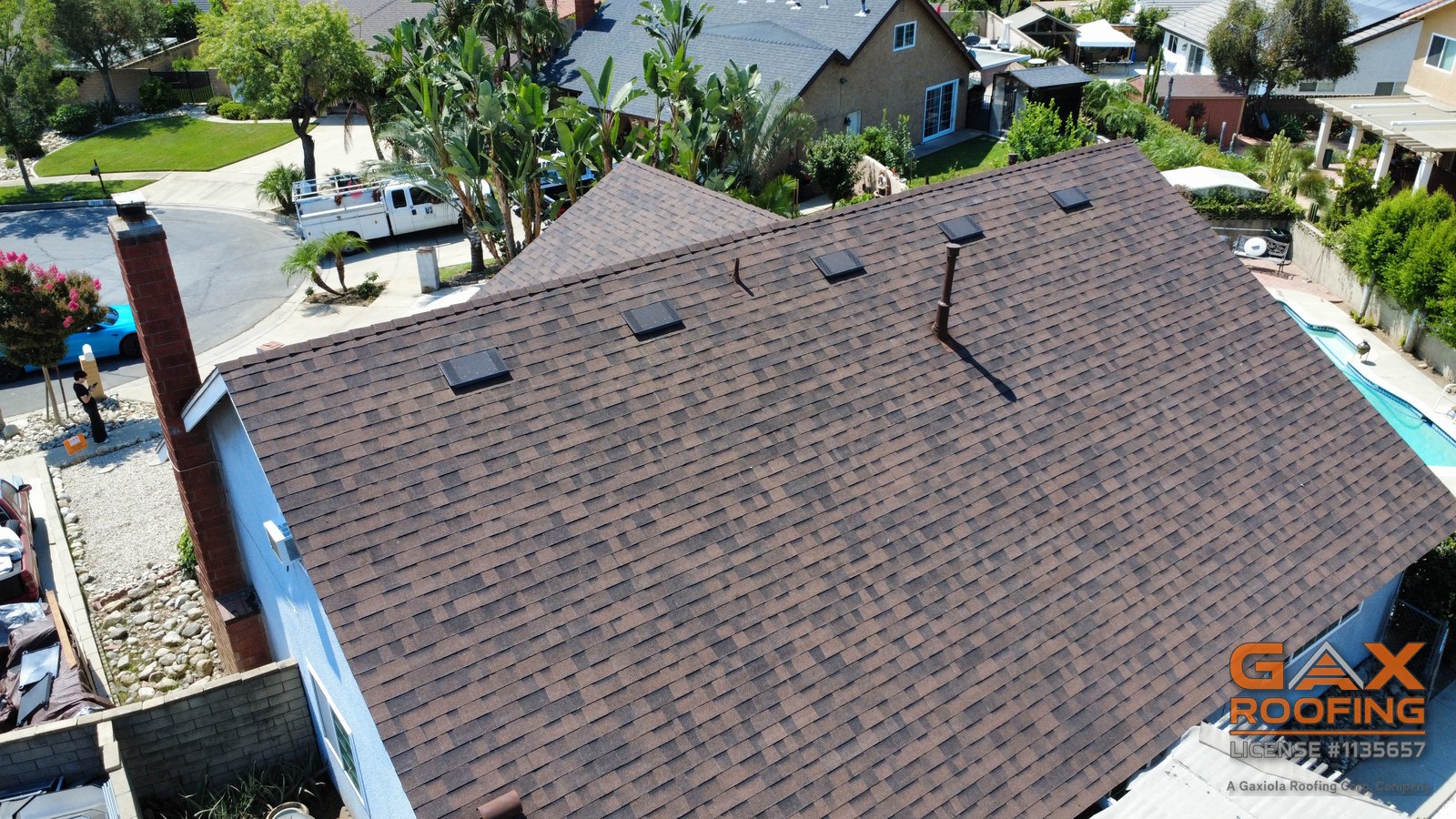
One more thing worth knowing: not all ridge caps start life equal. Some roofs get purpose-made ridge caps, and some get field shingles cut into pieces and bent over the ridge to save money. The cut ones fail years earlier, and I wrote about that shortcut here.
You do not need to get on the roof for this one, and please do not. From the street or the backyard, look at your ridge line against the sky. Caps that are lifting, curling, or showing daylight through cracks are visible from the ground, especially in low morning or evening light. If your roof is 20-plus years old and the ridge looks rough, that is the roof telling you where to look next. We will get up there and give you the straight answer.
If your caps are cracking or you can see daylight through them, let us take a look before the next rain does. Straight answer, no pressure.
(909) 819-8394