The Ridge Cap That Was Never a Ridge Cap
On a Jurupa Valley inspection this week, the ridge was made of cut-up field shingles instead of real ridge caps. An old shortcut, and it is failing exactly the way you would expect.

On a Jurupa Valley inspection this week, the ridge was made of cut-up field shingles instead of real ridge caps. An old shortcut, and it is failing exactly the way you would expect.
On an inspection in Jurupa Valley this week, the first thing that jumped out was the ridge. Not because it was damaged, though it was getting there, but because of what it was made of. Instead of actual ridge caps, someone had cut regular field shingles into pieces and folded them over the ridge.
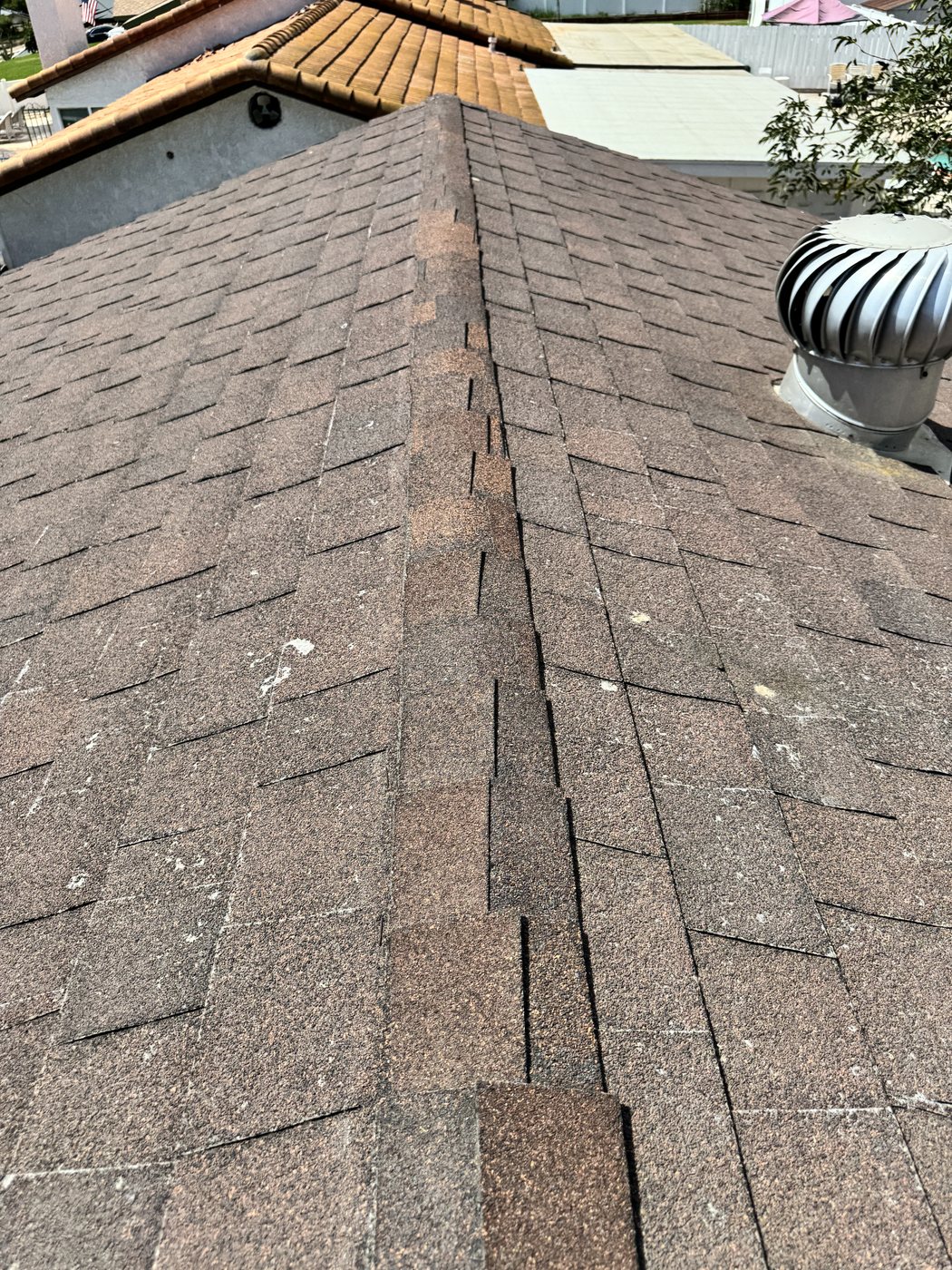
Roofers used to do this all the time. Sometimes proper ridge caps were not available, and sometimes it was just about not paying for the extra material. Either way, the ridge, the most exposed line on the entire roof, got dressed in leftovers.
The ridge takes wind from both sides, the most direct sun, and all the expansion and contraction of the roof meeting itself at the top. Purpose-made ridge caps are built thicker and shaped for that job. A cut field shingle is not. It is thinner, its cut edges are unsealed, and it fatigues fast up there. On this roof, the cut pieces are already lifting, and a lifted ridge is an open door for wind-driven rain.
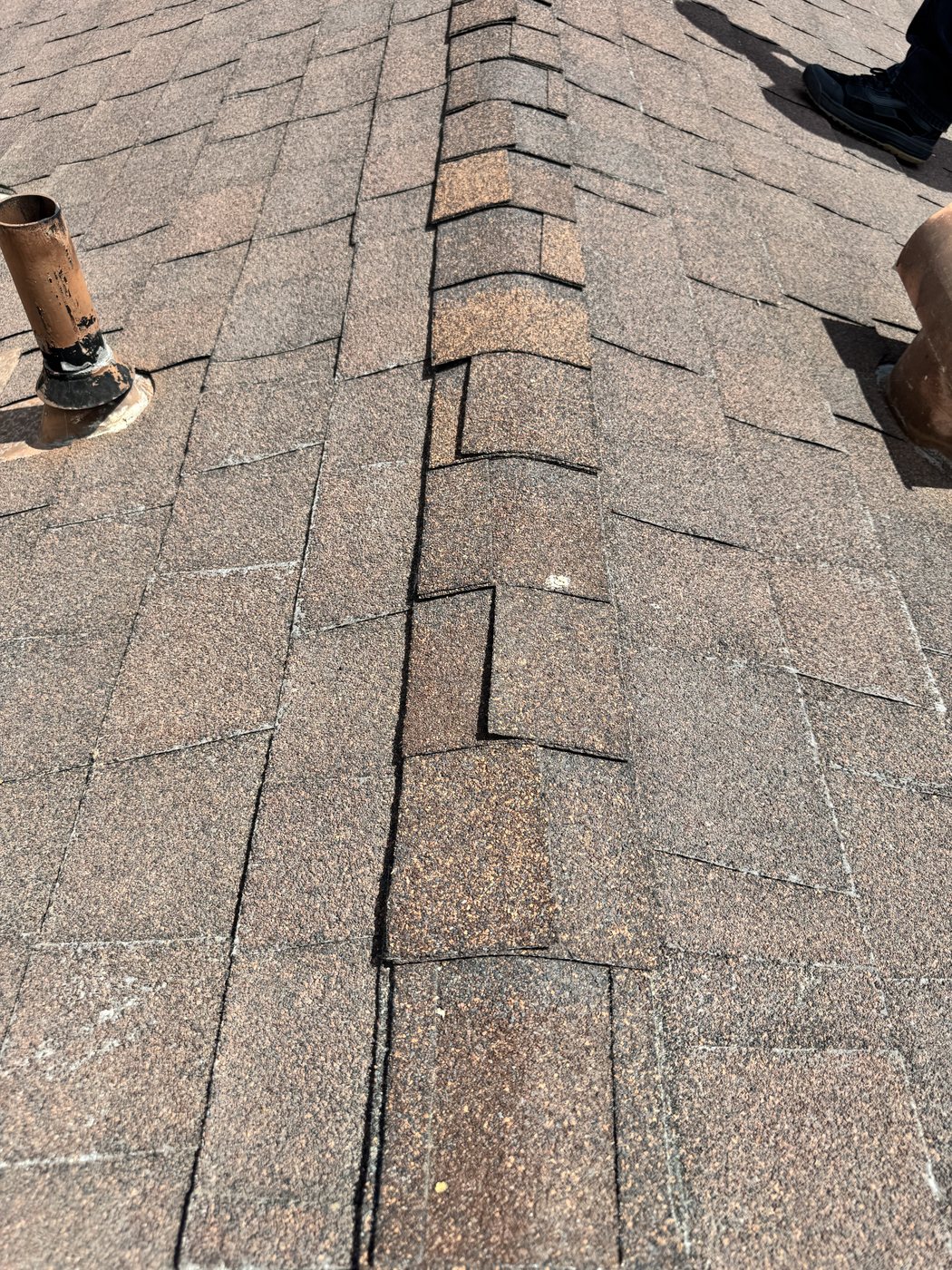
Walking the field told the rest of the story. In the sun, sections of this roof have a sheen to them. A shiny shingle roof is not a clean roof. It means the protective granules have worn away and the fiberglass mat underneath is exposed. Once the mat is showing, the shingle has lost its armor, and it is on borrowed time before water finds a way through.
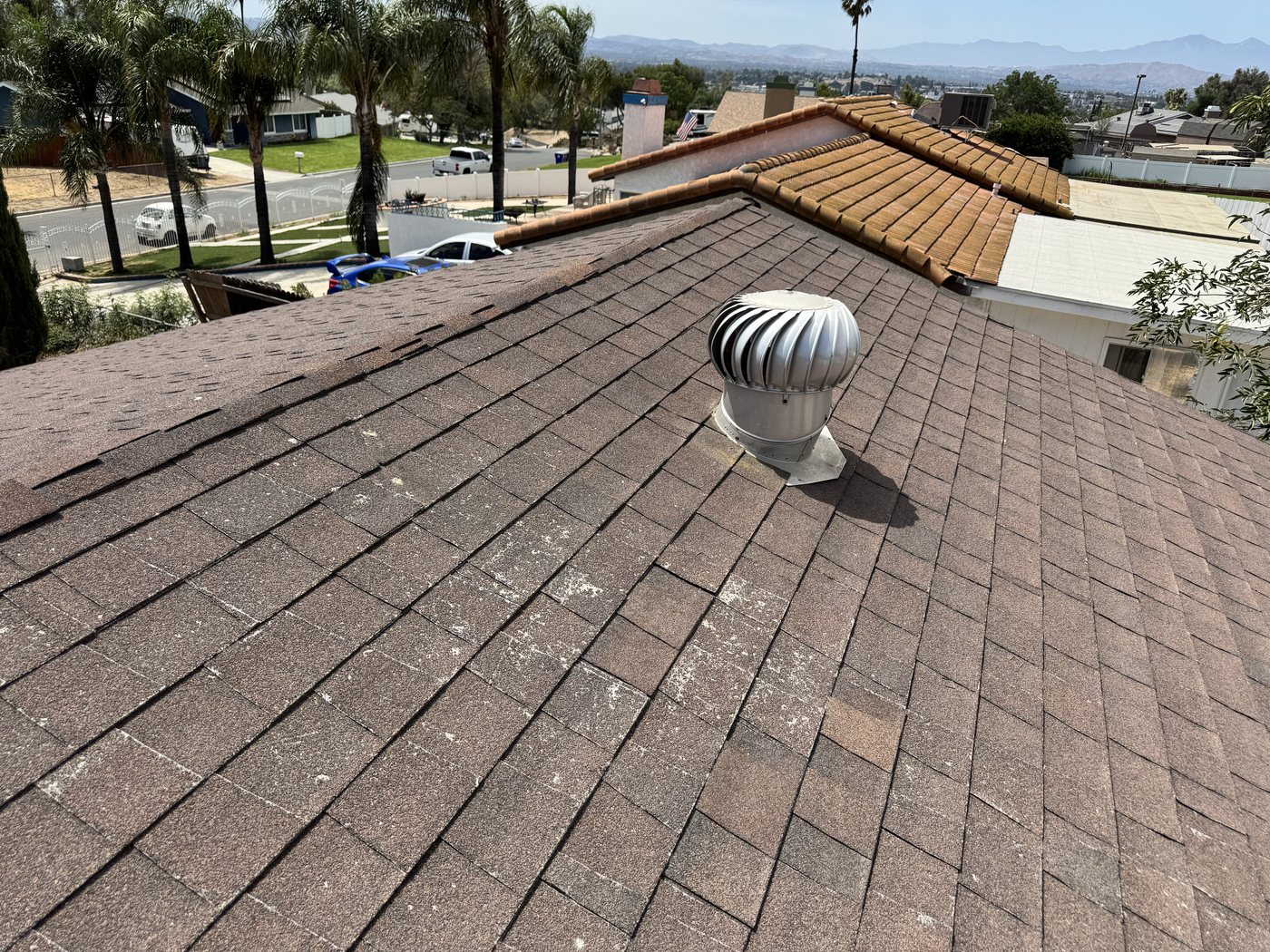
When we install a roof, everything goes on per manufacturer specification, including purpose-made hip and ridge caps. That is not us being precious. It is the difference between a roof that qualifies for its manufacturer material warranty and one that does not, because manufacturers do not stand behind installs that skipped their spec. It is also simply how the ridge survives twenty summers instead of eight.
If you are getting a roof quoted, ask what goes on the ridge. If the answer is "we cut field shingles," you now know what that costs you later. And if your current roof has a cut-shingle ridge that is starting to lift, it is worth a look before the next windy storm, not after. Our post on repair versus replacement walks through how we make that call.
We walk the roof, check the ridge, the field, and the flashings, and tell you straight what has life left and what does not. Free estimate, no pressure.
(909) 819-8394