Roofing Tips
Inland Empire
September 2026
Why Your Fascia Boards Are Rotting,
and the Strip of Metal That Prevents It
Every roof replacement has an unsung hero. It is not the shingles, not the tile, not the underlayment everybody asks about. It is a plain strip of metal most homeowners never notice.
Arthur G.
Owner, GAX Roofing · C39 Licensed Contractor
"It is some of the cheapest metal on the roof protecting some of the most expensive wood on your house."
If Your Fascia Is Chewed Up, I Can Usually Guess Why
If you have ever noticed the boards along the edge of a roof looking chewed up, peeling, or straight up rotted, I can usually tell you what happened without climbing a ladder. There was no drip edge protecting them.
Let me explain what this thing actually does, because it is one of the least glamorous parts of a roof and one of the most important.
What a Drip Edge Is
A drip edge is a strip of metal that runs along the edges of your roof, tucked under the roofing material. It comes down over the top of the fascia board, which is the board your rain gutters are mounted to, and it has a small lip at the bottom.
That lip is the whole trick. Water running off your roof hits the lip and gets flicked away from the wood, either into the gutter or clear off the roof.
No drip edge and that water does not get flicked anywhere. It wraps around the edge, runs down the face of the fascia board, and soaks in. Do that through enough rainy seasons and you get rotted wood. Rotted fascia means repairs that cost real money, and it can spread back into the roof deck and the rafter tails behind it.
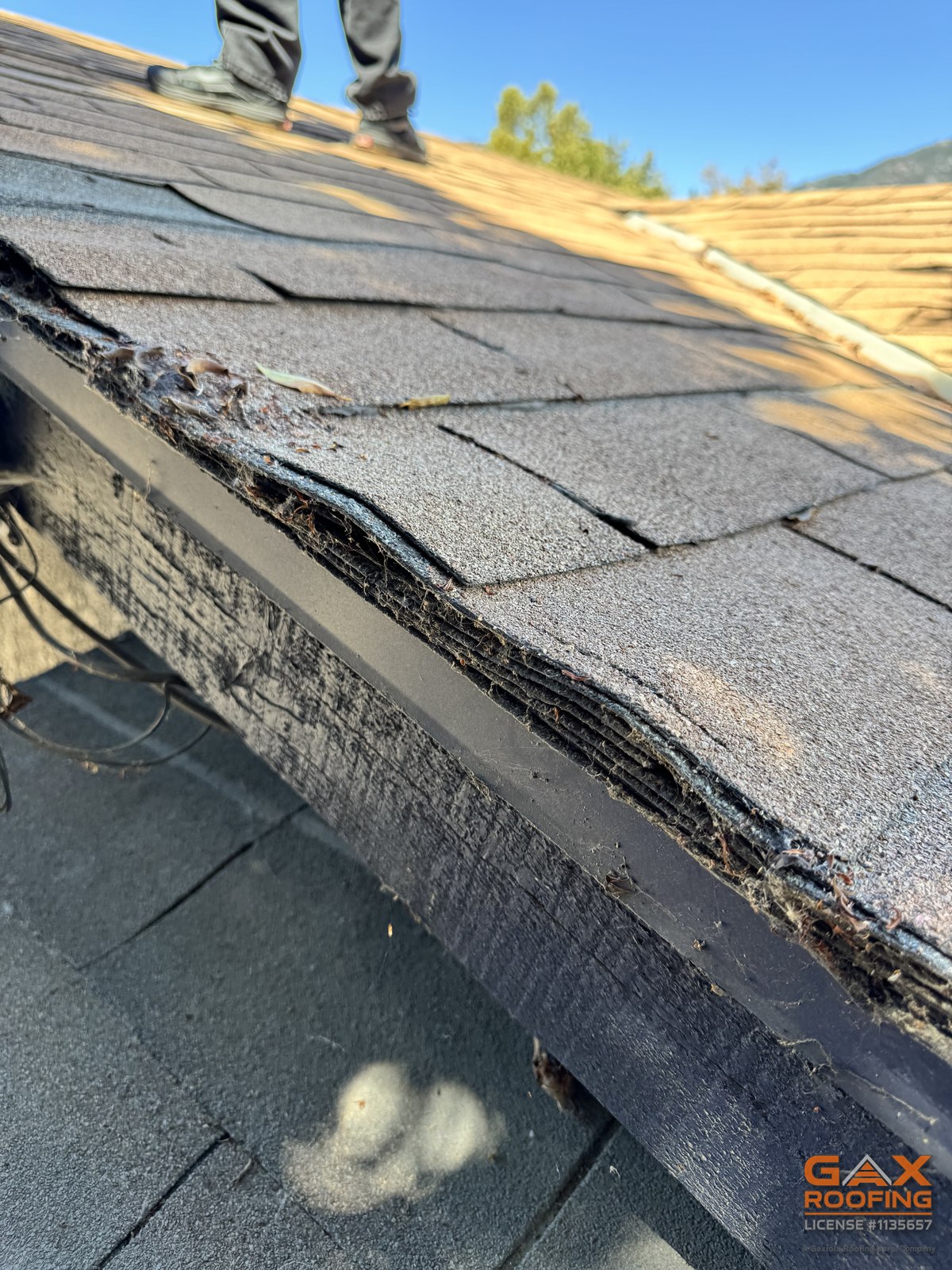
A rake edge on a Highland inspection. Three or more layers of shingle stacked up, and no drip edge anywhere in that sandwich.
The Second Problem Nobody Warns You About
Water is only half the story. The other half is the sun.
As shingles get old and dry, they start to lift and curl at the edges. If there is a drip edge under that shingle, the metal is still covering the top of the fascia board underneath. If there is no drip edge, that lifted shingle just exposed the top edge of the fascia where it is mounted, and now the sun is working on bare wood every single day.
That is how you end up with fascia that rots from the top down. In bad cases the board gives up completely and comes down, and sometimes it takes the gutter with it.
This is the part that surprises people. They assume rotted fascia means a leak. Out here it is just as often the sun finishing off a board that lost its cover twenty years ago.
How We Handle It
New metal drip edge is written into our scope on roofing projects, replacement or lift and relay. Baked enamel metal, installed at the edges before the roofing goes down, so the fascia is protected from day one.
It is one of the cheapest components on the entire roof. Skipping it saves a contractor almost nothing and costs the homeowner fascia boards down the road. That math has never made sense to me, so we do not do it.
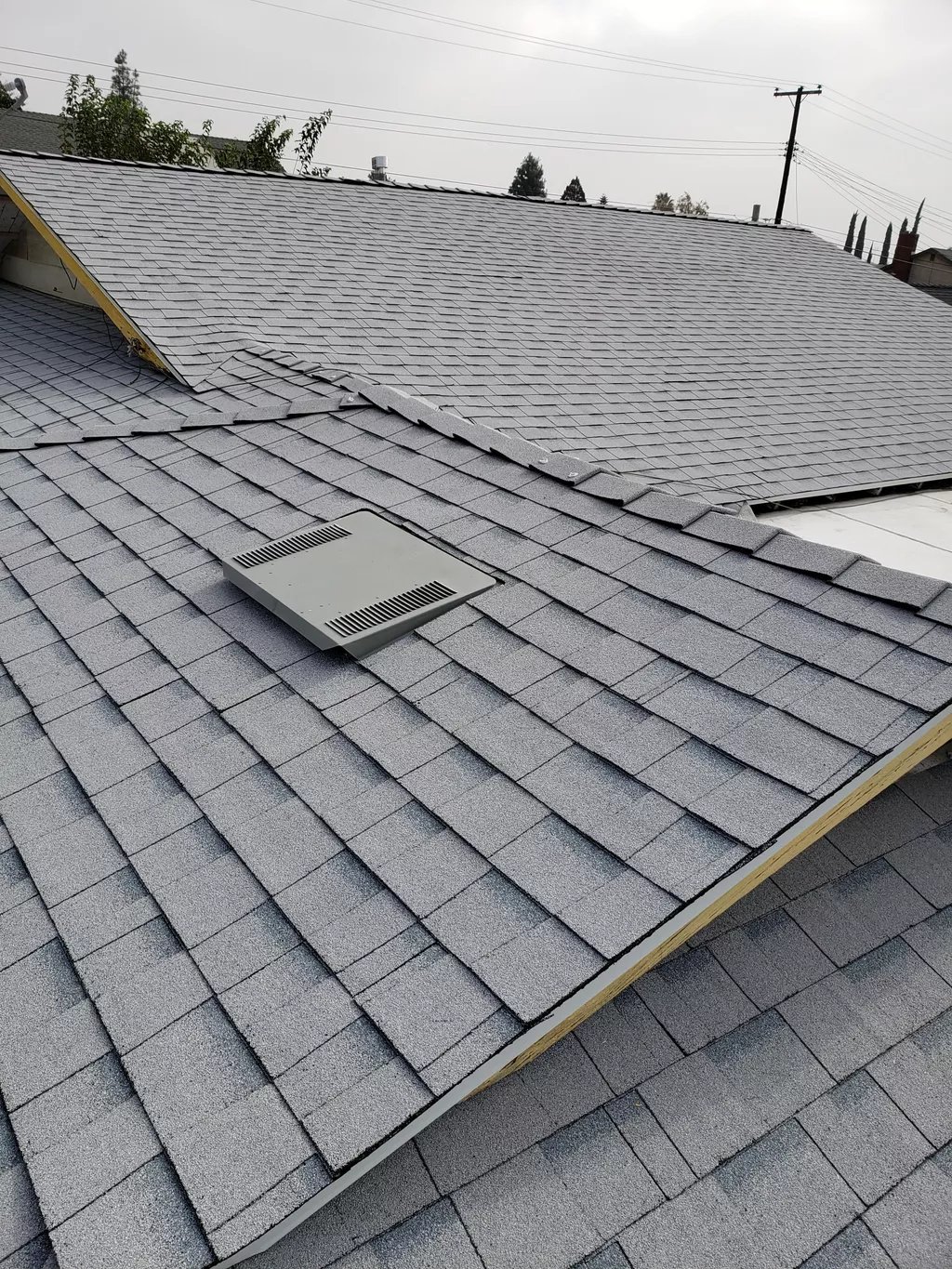
The other version. New drip edge running the rake, metal covering the top of the fascia before a single shingle went down.
What You Can Check From Your Driveway
Look at the edge of your roof. If you can see a clean metal edge just under the first row of roofing, you have a drip edge. If you see shingles hanging over bare wood, or fascia that is peeling and dark along the top, your roof edges are unprotected.
Worth a look before the rainy season, not after.
And If the Roof Is Coming Off Anyway
If you are already replacing the roof, this is the moment the fascia question gets cheap, because the eaves are open and the new edge metal is going on regardless. I wrote about that timing separately: the best time to replace fascia is while the roof is off.
If you want a second set of eyes on your edges, that is what a free estimate is for. Same answer I would give a family member: sometimes it is fine, sometimes it needs edge metal, and you deserve to know which one it is.
Dark or Peeling Boards at Your Roof Edge?
Send us a photo or let us come look. If your fascia is going, we will tell you how far it has gone and whether it can wait. Straight answer, no pressure.
(909) 819-8394
Send Us a Message