Roof Replacement
Pomona
September 2026
The Best Time to Replace Fascia
Is While the Roof Is Off
A dispatch from the middle of a Pomona job. The roof is off, the deck is open, and the homeowner asked me a question that only gets asked when the crew has been leaving the place clean.
Arthur G.
Owner, GAX Roofing · C39 Licensed Contractor
"We magnet sweep every day, because at the end of the day you still have to walk from your car to your front door."
It Starts in the Street
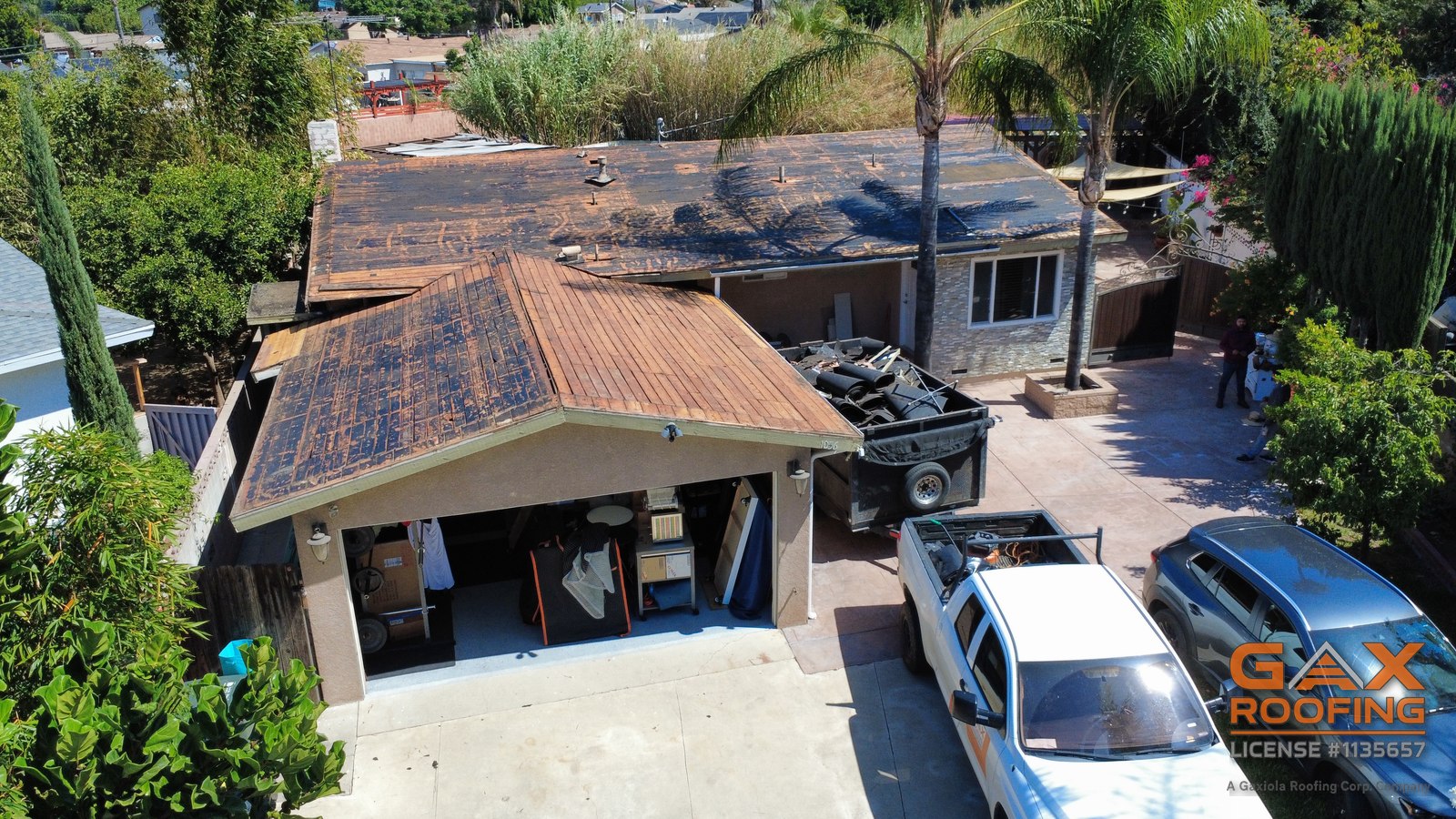
Before I think about the roof, I think about where the truck goes. Pomona has narrow streets, and on a lot of them there are cars parked down both sides all day. That decides more about a job than people realize, because if I cannot get the dump truck close to the house, the crew is double carrying every piece of the old roof further than they should have to.
I take that into account when I price a job. Not every company does, and I am not going to pretend it costs nothing, but we do everything in our power to keep it off the homeowner's number rather than passing the whole thing along. It is our problem to solve, not theirs.
What Was Under It
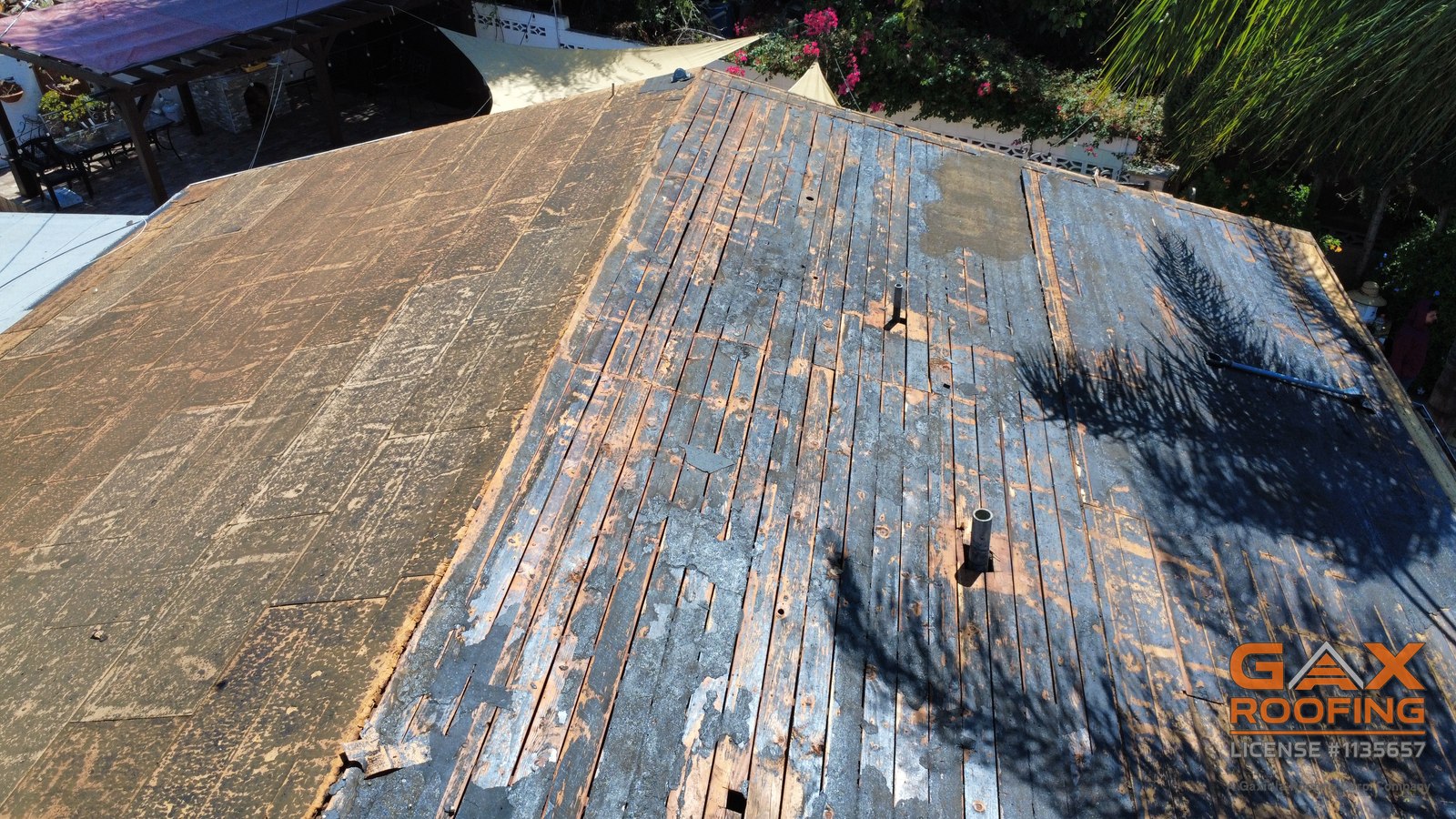
When the old roof came off, the deck underneath was tongue and groove. Solid boards, still sound after all these years, which is a good morning for everybody.
Tongue and groove is not a problem. It is just a different animal than plywood, and it changes one thing about how we work: when a board has to be replaced, we replace it with the same thing. We are not going to drop a sheet of OSB into a tongue and groove deck. That is a shortcut that shows up later, in how the roof sits and how it moves, and it is the kind of thing nobody sees until somebody opens the roof again in twenty years and wonders what happened.
Why We Sweep Every Single Day
At the end of each workday on this job, same as every job, we run the magnet over the driveway and the walkways and we blow the whole area down. Not at the end of the week. Not at the end of the job. Every day.
Here is the reason, and it is not about looking tidy. At the end of the day you are still going to walk from your car to your front door. Your kids are going to be out there. I do not want you driving over a nail, and I really do not want you stepping on one. Blowing the driveway is the same idea: a tear-off throws fiberglass around, and that is not something I want a family breathing on their own patio.
It is a safety thing first. The fact that it also makes the job site look like somebody cares is a bonus, and it turns out that bonus matters more than I used to think.
The Question That Came Next
The homeowner came out, said he had noticed how clean we had been through the tear-off, and then asked me something. What do you think of the fascia boards?
That question is the whole reason I am writing this one down. He did not ask because I pitched him. He asked because the job site told him we were the kind of crew you could ask.
Fascia Is Cheapest Right Now, and Only Right Now
Fascia is the board that runs along the edge of your roof, the one you actually see from the curb. Here is the part most homeowners never get told: the cheapest moment in the entire life of your house to replace it is the moment the roof is off.
When the roof is off, the eaves are open. We set new boards straight in. Nothing has to come apart first.
Decide to do it two years later and the job changes completely. Now somebody has to lift the shingles along the eaves to get the boards in and put the roofing back after. You are paying for roof work to do carpentry. Same boards, same paint, much bigger bill.
So on every job, when the roof comes off, I bring it up. Not as an upsell at the door, at the moment it is actually the right call.
What We Are Doing on This One
Two hundred and ten linear feet, the entire property. Two by eight, which is our default, and they come primed so they are already white when they go up. The homeowner is planning to paint them eventually, and we may end up doing that for him too.
On board size: most houses around here already have two by eight, so that is usually a straight swap. When a house has two by six, I will generally recommend moving up to two by eight, because it simply looks more substantial along the edge. On some very old homes we still find two by four up there, and then we go to two by six or two by eight depending on the height of the house. A taller house carries a bigger board better.
In my experience this is one of the biggest facelifts you can give a house for what it costs. Most homeowners do not think about the fascia at all until it is done, and then they stand in the street looking at it.
Where the Job Is Right Now
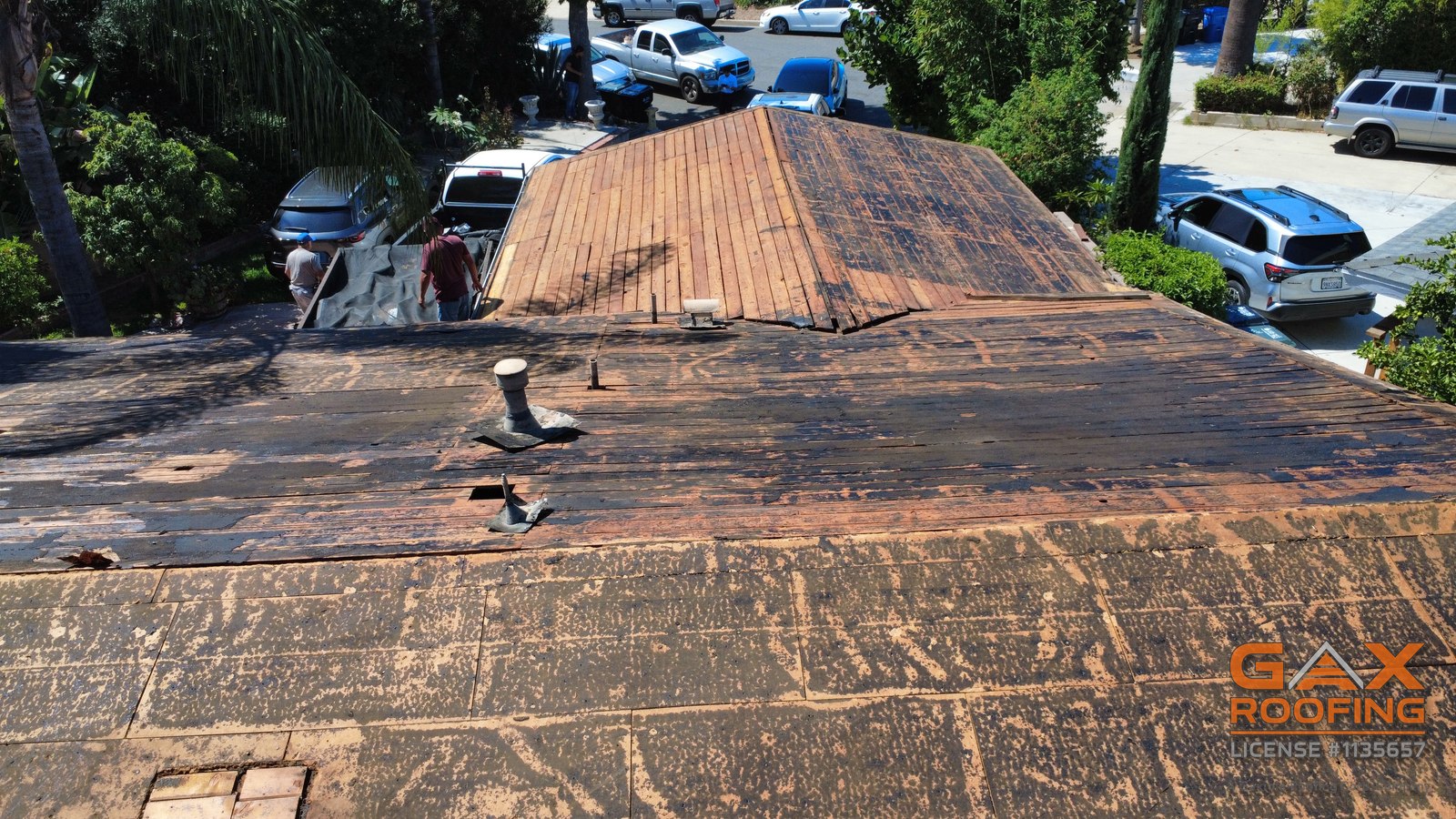
Deck is open and inspected. Fascia is going on. Shingles go down tomorrow after the inspection clears, and the Owens Corning TruDefinition Duration COOL system goes on from there.
I will post the finished shots when it is done. In the meantime, if your roof is coming off this year, ask your roofer about the fascia before the shingles go back on. Whoever you hire. That timing is worth real money and almost nobody brings it up.
Is Your Roof Coming Off This Year?
If it is, there are a few things that are cheap while it is open and expensive afterward. Let us walk it with you and tell you which ones actually apply to your house. Straight answer, no pressure.
(909) 819-8394
Send Us a Message