This Week in Yorba Linda: A Tile Roof That Could Not Breathe
We just wrapped a tile lift and relay in Yorba Linda during a 100-degree week, and the attic told us everything we needed to know the moment we opened it up.

We just wrapped a tile lift and relay in Yorba Linda during a 100-degree week, and the attic told us everything we needed to know the moment we opened it up.
This one was a tile lift and relay on a two-story home in Yorba Linda: lift the original tile, replace the worn underlayment beneath it, and set the same tile back down. We did it during a stretch where it hit 100 degrees every single day. Perfect weather for finding out whether an attic can breathe. This one could not.
The house did not have adequate ventilation for its attic. Not enough intake, not enough exhaust. When that happens, the heat that builds up under the roof all day has nowhere to go. It just sits there, a massive blob of hot air parked right above the ceiling. Above the bedrooms. Above everything.
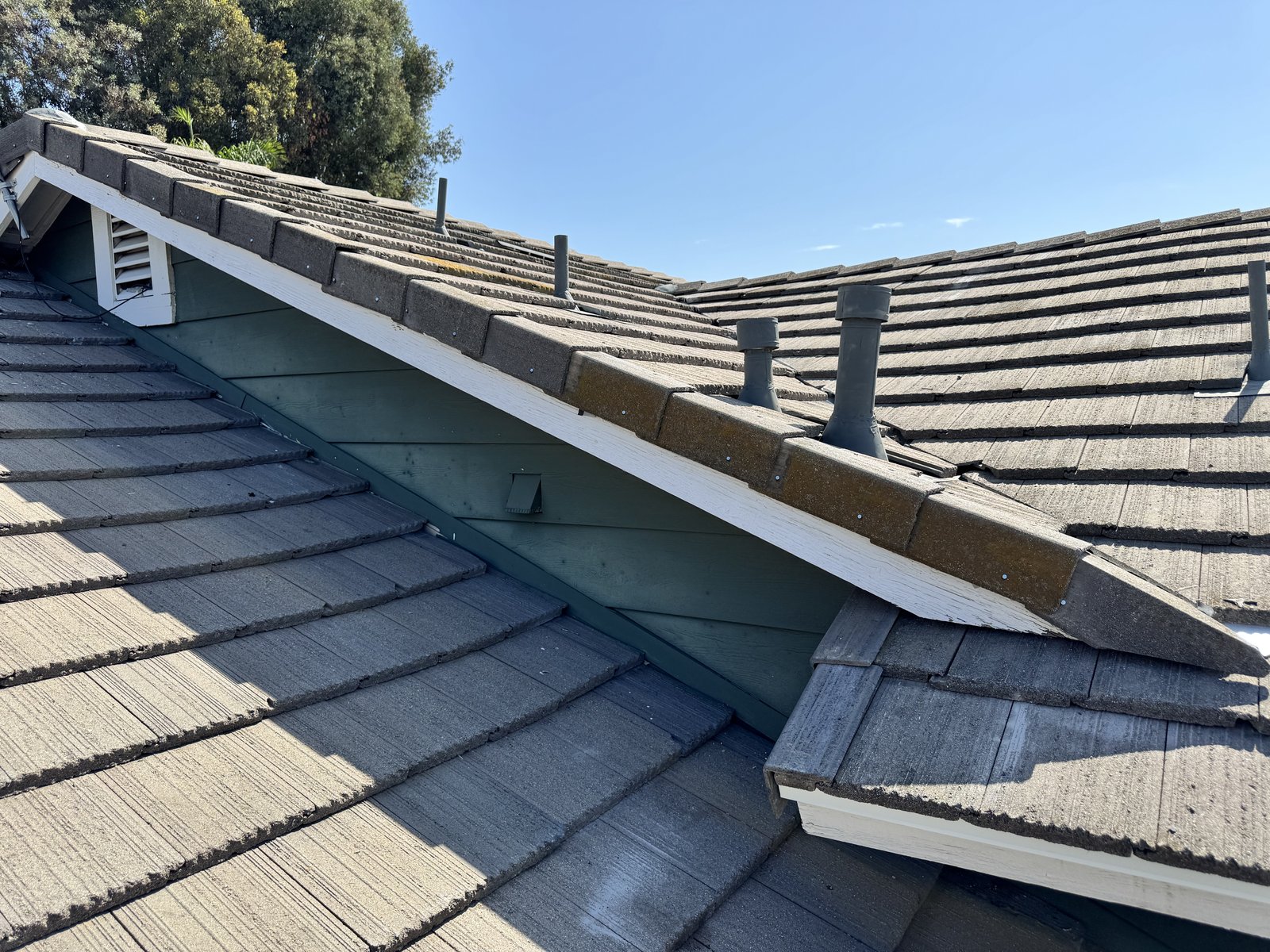
That trapped heat works against you from both sides. From above, it cooks the roof system itself: the underlayment ages faster and the whole assembly wears out years before it should. From below, your AC spends the whole afternoon fighting a furnace that is sitting on top of your ceiling drywall. The upstairs rooms never quite cool down, and the system runs and runs trying.
I wrote a whole piece on this after putting a temperature gun on an attic with no vents at all. If you want the numbers, read The 157-Degree Attic. The short version: attic heat is not a comfort problem. It is a money problem wearing a comfort costume.
Here is the thing about a lift and relay: the tiles come up anyway. That makes it the single best moment to fix ventilation, because adding vents costs a fraction of what it would as a standalone job.
So on this house, we installed additional low-profile O'Hagin vents, sized to what the attic actually needs. They sit nearly flush with the tile, you barely notice them from the street, and they let the attic finally exhale. New Titanium PSU-30 underlayment went down first, the original tile went back on top, and air now moves through that attic for the first time in the house's life.
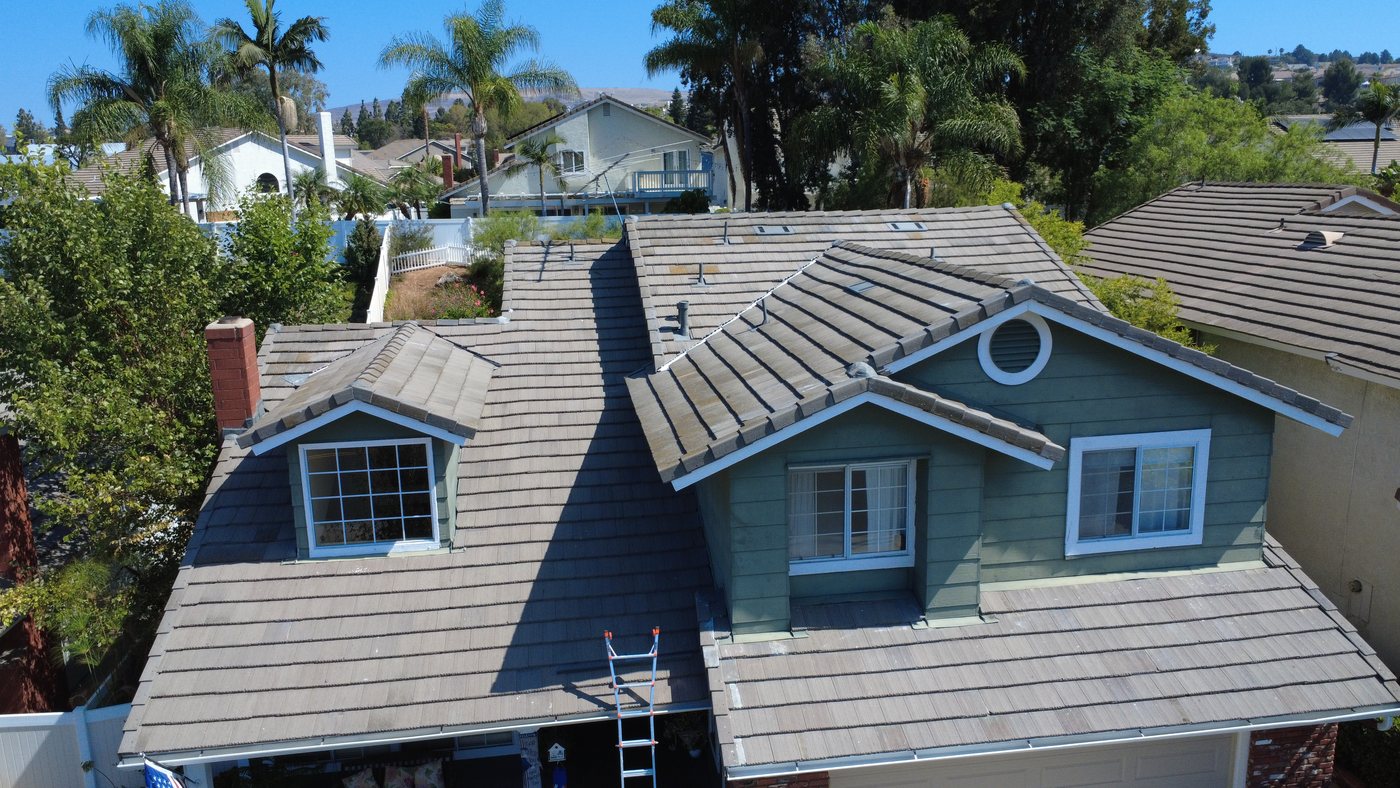
When the work was done, we flew the roof. Every ridge, every valley, every flashing point, checked from above before we called it complete. Open valleys with a clear waterway, straight courses, vents seated tight in the field.
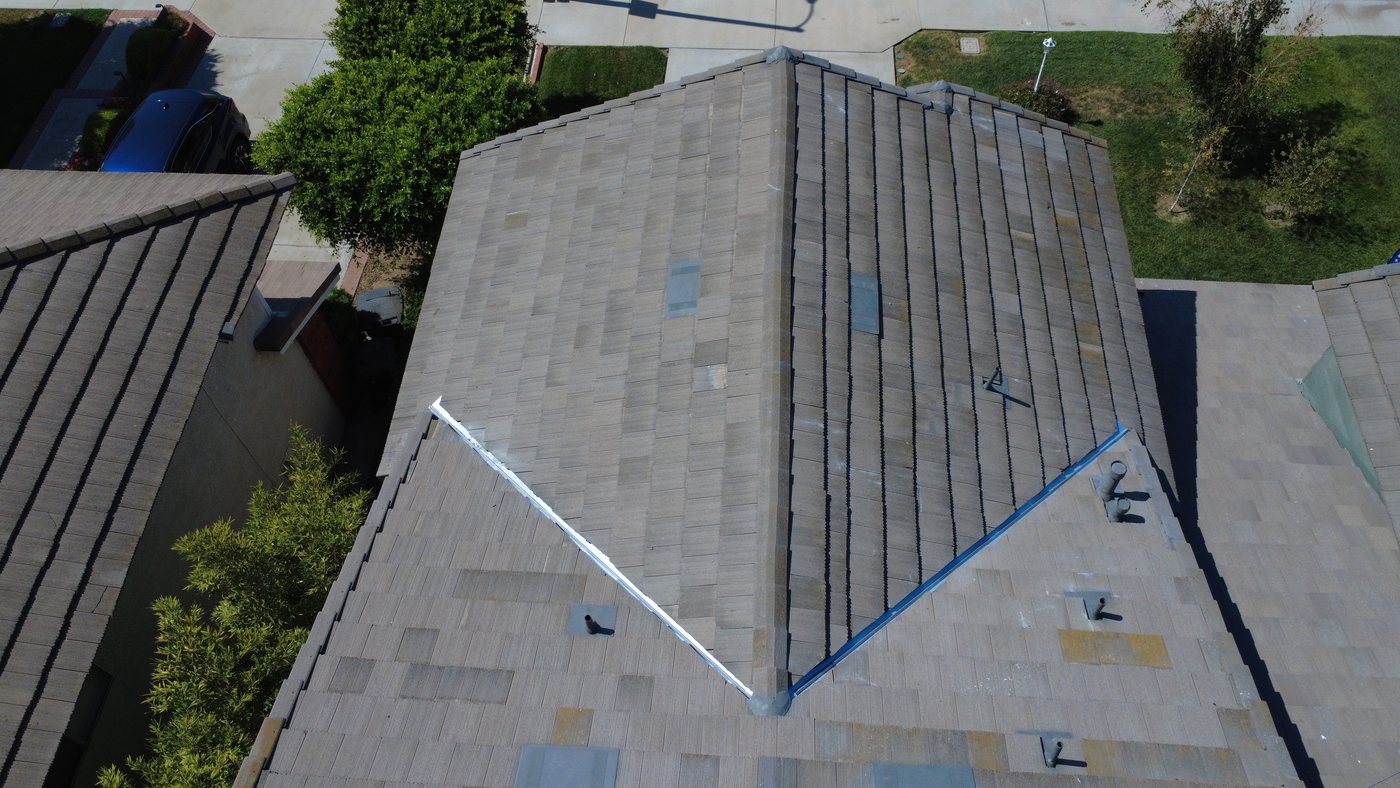
Next summer, when another 100-degree week rolls through, this homeowner feels the difference where it counts: no more blob of hot air hanging over his head, and an AC that finally gets a fair fight.
If your upstairs feels like an oven by 4 PM, your roof might have the same problem this Yorba Linda house had. It is one of the most common things we find, and one of the cheapest things to fix while a roof is already open. If you are getting roof work quoted, ask every contractor what they are doing about ventilation. If the answer is a blank stare, keep looking.
The same answer we would give a family member: a roof that cannot breathe dies young, and it takes your electric bill with it.
We'll get on the roof and into the attic and tell you exactly what your ventilation situation is, and whether your roof is paying for it. No pressure, no obligation.
(909) 819-8394