Roof First, Then Solar. Always.
Drive through Eastvale, Corona, or Fontana and count the solar roofs. Every month I meet a homeowner in one of those neighborhoods caught in the same trap.
Drive through Eastvale, Corona, or Fontana and count the solar roofs. Every month I meet a homeowner in one of those neighborhoods caught in the same trap.
Every month I meet a homeowner caught in the same trap: solar panels on top of a roof that needed replacing before the panels ever went up. Now the roof is leaking, and fixing it means paying to take the panels off and put them back. So let me say the quiet part loud, and this is the same answer I would give a family member: if your roof has less than 10 good years left and you are considering solar, do the roof first. Always.
Solar panels are expensive to remove and reinstall. When the roof under them fails, you pay for the roof AND the panel work. Doing the roof first means the panels land once, on a roof that will outlast them. Measure twice, cut once.
When we reroof a house that already has solar, the panel detach goes to a licensed C-10 electrical contractor we arrange, or to your solar company, we build the roof, and the panels go back on when the roof is done. But here is the part that matters, the part cheap bids skip: solar mounts are penetrations. Every bracket is a hole in your roof, and panel arrays are the hardest places on a roof to inspect later. Those zones need to be sealed like they will never be seen again, because they basically will not be.
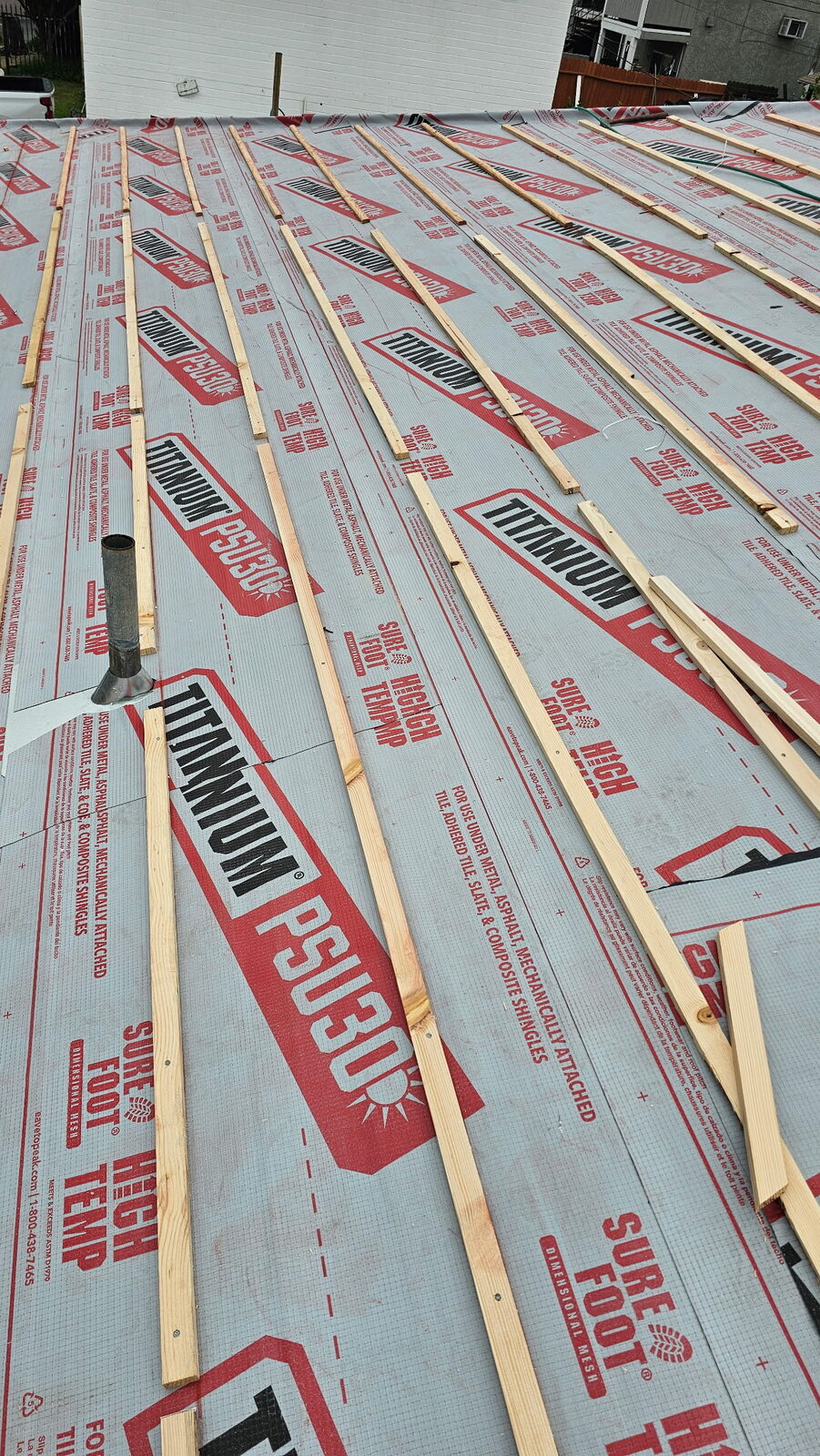
On tile roofs, we run PSU-30 peel and stick underlayment, and its rubberized asphalt seals itself around fasteners, which is what it is rated for and a real second line of defense. A solar lag bolt is a bigger hole than a roofing nail, so we do not count on the membrane alone there. It is not the first line. Every mount still gets the flashing its manufacturer calls for, and on tile that means both a flashing at the tile and a flashing at the deck. The membrane is there for the day a flashing fails, not instead of one. On shingle roofs, we lay WeatherLock membrane exactly where the arrays will sit, so every bracket penetration is sealed against water before a single panel returns. The goal is simple: the day the panels go back on, everything underneath them is bulletproof, because you will not be looking under there again for 25 years.
If you have solar and a tired roof, or you are getting solar quotes and your roof is 15 plus years old, talk to a roofer first. See our solar roof services, or better, have us walk the roof before the panels pick their landing spot.
Five minutes of sequencing advice can save you five figures. Talk to a roofer before you sign with the solar company.
(909) 819-8394