Everybody's Roof Is Fine Until It Rains
Two days of rain from what was left of Hurricane Marie, a phone that would not stop, and zero warranty calls. What the first real storm teaches me every single year about waiting.

Two days of rain from what was left of Hurricane Marie, a phone that would not stop, and zero warranty calls. What the first real storm teaches me every single year about waiting.
What was left of Hurricane Marie finally pushed some real rain into the Inland Empire this weekend. Two days of it. And the phone did not stop. Leaks, stains, drips over the garage, water coming in around skylights. Call after call, and almost every one of them had the same shape: a roof that was already in trouble long before the clouds showed up.
Here's the thing nobody wants to hear. The rain didn't break a single one of those roofs. The rain just told on them.
I get why people wait. A roof problem you can't see doesn't feel like a problem. The cracked tile, the worn pipe boot, the underlayment that quietly gave up two summers ago, none of that shows up on your ceiling in July. So the roof is "fine." It's fine right up until the drywall is swelling and the stain is spreading, and then it's an emergency.
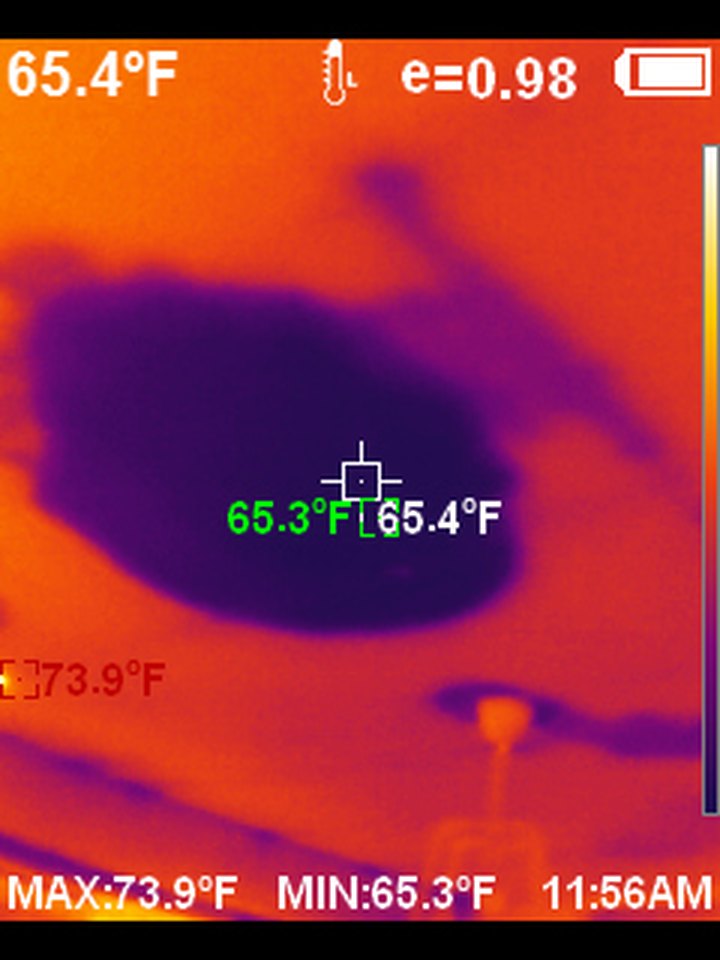
By the time you can see water damage inside the house, water has usually been getting in longer than you think. The ceiling stain is the last stop on the trip, not the first. That's why we run thermal imaging on repairs: the stain is almost never sitting under the actual entry point.
"A roof never fails on the day you notice it. It fails quietly, in the dry months, and then the first real rain turns it into your emergency."
Calling during the storm is the most expensive way to do this, and not because anybody's gouging you. It's because now you're not just fixing a roof. You're fixing drywall, insulation, paint, sometimes flooring. And the work itself has to wait for the roof to dry out either way. Roofing in the rain is how you make new problems.
The same fix, caught in September on a dry roof, is a planned repair on your schedule. Caught in the middle of a storm, it's a tarp, a wait, and an interior repair bill on top.
I'll say this part plainly because it's the whole reason we do things the way we do. Through both days of rain, we did not get one warranty call. Not one leak on a roof we built. Every call was a roof we'd never touched, or one where a homeowner had an estimate from us sitting in a drawer.
That's not luck. That's what real underlayment, real flashing work, and pulled permits look like when the weather finally shows up to check our work.
The rain also brought a wave of calls that start with "you gave us an estimate a while back." I'm glad people kept them. But I have to be straight about this: an estimate is a snapshot of material prices on the day it was written. Shingles, underlayment, lumber, all of it moves, and over the past couple of years it has mostly moved up.
So an estimate from a year ago unfortunately will not hold up. Not because we changed our minds, but because the supplier changed theirs. What we will do is re-quote the same scope at today's prices, no hard feelings and no games. Sometimes the difference is small. But the longer a roof waits, the more often the roof itself got worse in the meantime too, and that changes the scope, not just the price.
The cheapest version of your roof project was the day you got the first estimate. The second cheapest is today. It does not get cheaper by waiting for the next storm.
More rain is coming. It always is, even in Southern California. If your roof made it through this storm dry, this is the moment to make sure the next one goes the same way. And if you found a stain this weekend, don't just paint over it once things dry out. Paint hides the symptom. It does nothing about the entry point.
Get the roof looked at while it's dry and the calendar is open. A free inspection now beats an emergency call in December every single time.
We come to you, walk the roof, and give you a straight answer on where it stands. No pressure, no obligation.
(909) 819-8394