The Sensitive Areas
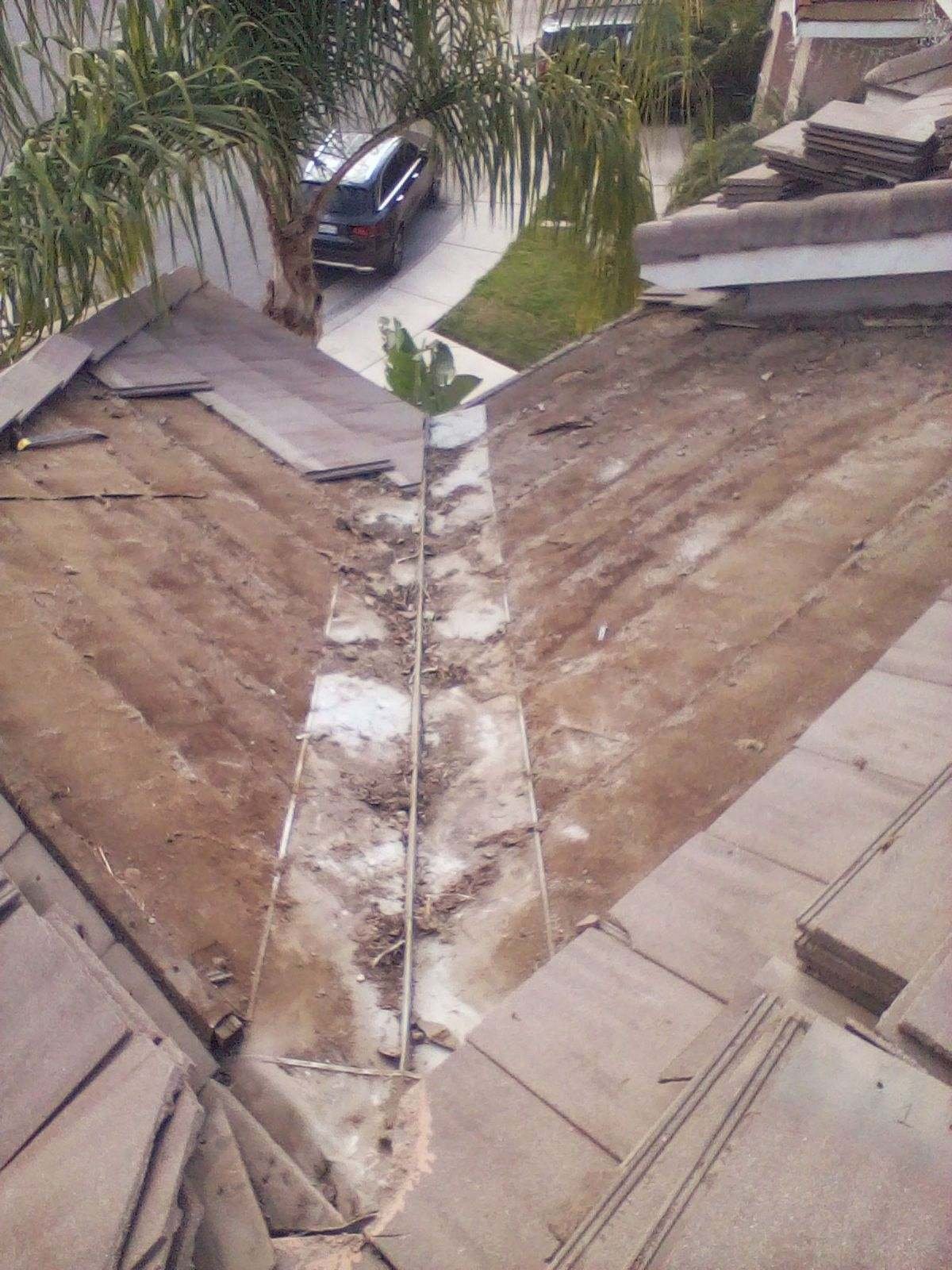
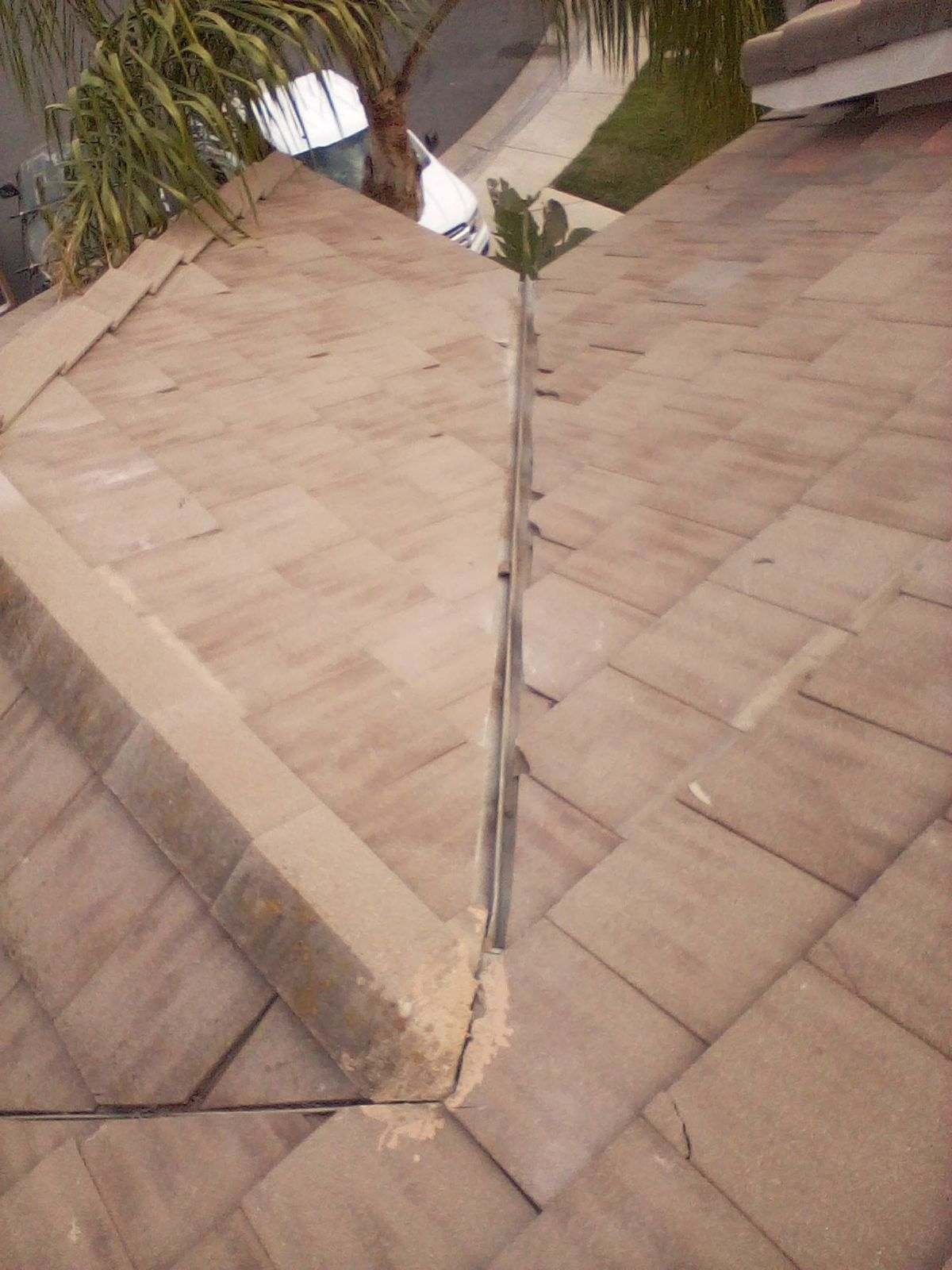
Tile homes in the Inland Empire and Orange County have TONS of valleys and roof-to-wall flashings — way more than a simple gable roof. Those are what we call the sensitive areas of a roof: the places where water is meant to run off. A valley is a highway for rainwater. A roof-to-wall flashing is the seam where a roof plane meets a second story or a wall. When a tile roof leaks, it almost always starts at one of these — not in the middle of a field of healthy tile.
The Dam Effect
Because sensitive areas are where the water travels, they're also where the debris collects — leaves, pine needles, blown-in trash, tennis balls, you name it. And here's the thing about a blocked valley: the water doesn't stop, it backs up. A debris blockage creates a dam effect, and dammed water rises sideways and uphill — over the edges of flashings, past where the system was designed to shed it. Now water is sitting in places it was never supposed to reach, and it starts looking for a way in.
This is why I tell tile homeowners: the cheapest roof maintenance that exists is keeping your valleys clear.
Protrusions: Anything That Pokes Through
The same logic applies to every protrusion on the roof — skylights, chimneys, pipe boots. Anything that interrupts the flow of water is a place where water has to be actively managed around, and every one of those is flashed and sealed. When those flashings age out, or when debris dams water against them, that's your leak.
When the Underlayment Under a Sensitive Area Is Gone
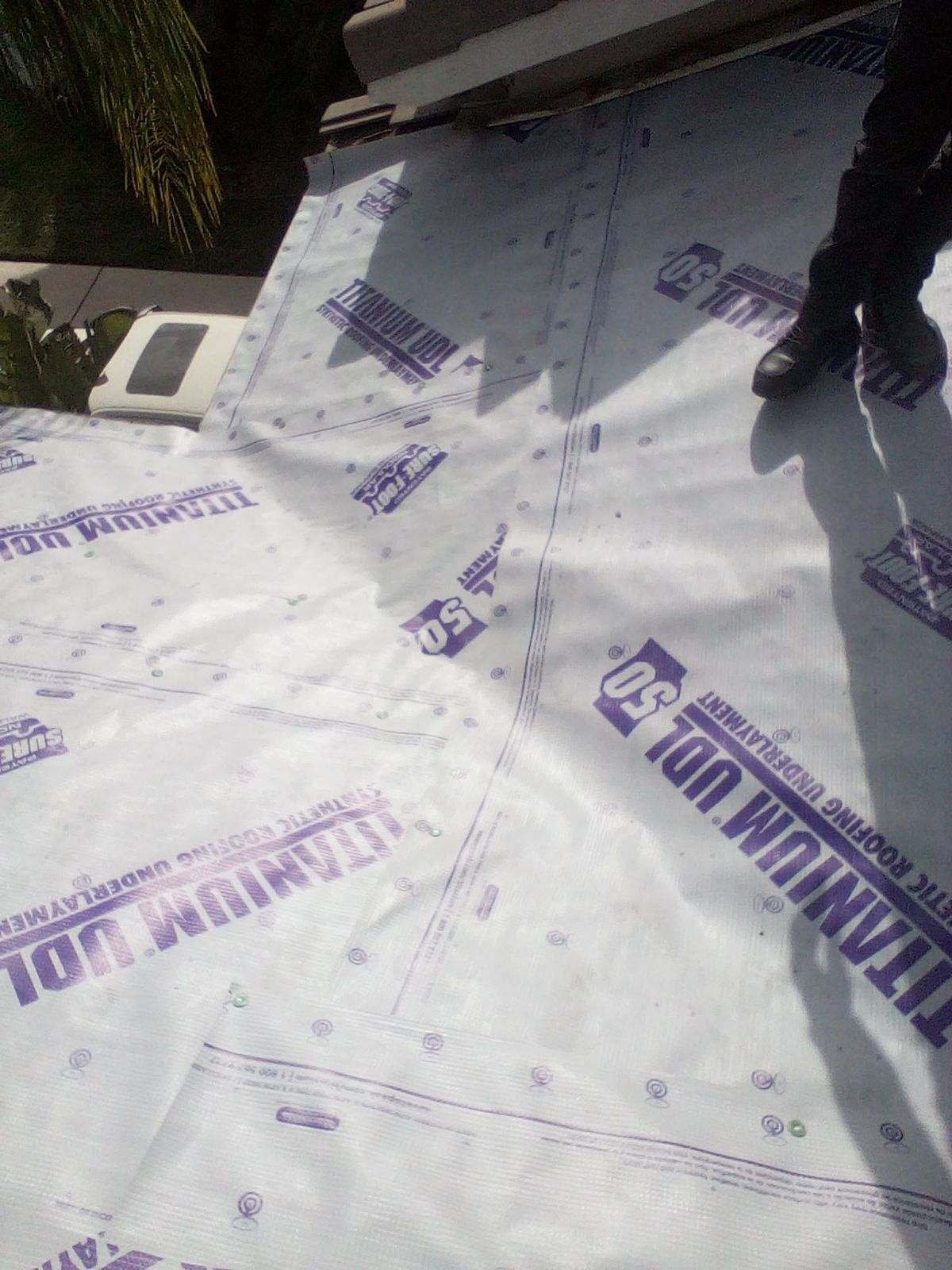
Tile itself doesn't really wear out here — the underlayment beneath it does, and it fails FIRST in the sensitive areas, because that's where the most water runs. Once the underlayment in a valley or along a wall is bad, a surface patch doesn't fix anything. Those sections need a proper facet repair — opening up that section of roof and rebuilding the waterproofing — and if the failure is widespread, that's when a lift & relay or a tile replacement becomes the honest recommendation.
On localized repairs, we rebuild the sensitive area with WeatherLock Mat ice & water shield in the leak zone alongside Titanium UDL50 synthetic underlayment — modern materials in the exact spots doing the hardest work, not a smear of something over the symptom.
"When a tile roof leaks, it almost never starts in the middle of a field of healthy tile. It starts where the water runs — the valleys, the flashings, the protrusions."
The Chimney That Leaked on Two Floors
Let me tell you about my favorite leak, because it shows how weird this work gets.
A homeowner had a chimney leak showing up on the first floor AND the second floor — which is strange on its own. They'd already had a roofer out. I got on the roof and looked at that repair work, and here's the honest part: the other roofer's work was fine. Nothing wrong with it. But the leak kept appearing.
So I brought a hose up and ran a water test on the roof around the chimney. Nothing. Dry as a bone inside. It made no sense — every rain, it leaked; under the hose, nothing. The difference between a hose and a storm is that storms don't just drop water down — wind drives it sideways and up. So I sprayed the water upwards, the way a storm actually hits — and there it was. The spark arrester on top of the chimney had essentially rusted away. Wind-driven rain was getting in through the top of the chimney itself and running down inside the chase, showing up on both floors.
We replaced the spark arrester. Next rainy season: dry. The lesson isn't that the other roofer was bad — his repair was fine. The lesson is that diagnosis is the job. The leak isn't always where the water shows up, and sometimes it isn't even in the roof surface at all.
The Honest Bottom Line
If your tile roof is leaking, the odds say it's a sensitive area: a dammed valley, an aged roof-to-wall flashing, a failed boot or chimney detail — or underlayment that's quietly finished its lifespan right where the water runs hardest. The fix ranges from clearing debris, to a proper facet repair, to a lift & relay when the underlayment is done everywhere. What it's never supposed to be is a guess.
(Shingle roofs leak in their own ways — that post is coming.)
Tile Roof Doing Something It Shouldn't?
We'll get up there, water-test it the way storms actually behave, and tell you exactly where it's coming from and what the honest fix is. No pressure, no obligation.
(909) 819-8394Send Us a Message